
Subscribe now and watch my free trend following VIDEO.

How I Made $2,000,000 in the Stock Market by Nicolas Darvas

Excerpt:

“Hungarian by birth, Nicolas Darvas trained as an economist at the University of Budapest. Reluctant to remain in Hungary until either the Nazis or the Soviets took over, he fled at the age of 23 with a forged exit visa and fifty pounds sterling to stave off hunger in Istanbul, Turkey. During his off hours as a dancer, he read some 200 books on the market and the great speculators, spending as much as eight hours a day studying. Darvas invested his money into a couple of stocks that had been hitting their 52-week high. He was utterly surprised that the stocks continued to rise and subsequently sold them to make a large profit. His main source of stock selection was Barron’s Magazine. At the age of 39, after accumulating his fortune, Darvas documented his techniques in the book, How I Made 2,000,000 in the Stock Market. The book describes his unique “Box System”, which he used to buy and sell stocks. Darvas’ book remains a classic stock market text to this day.”
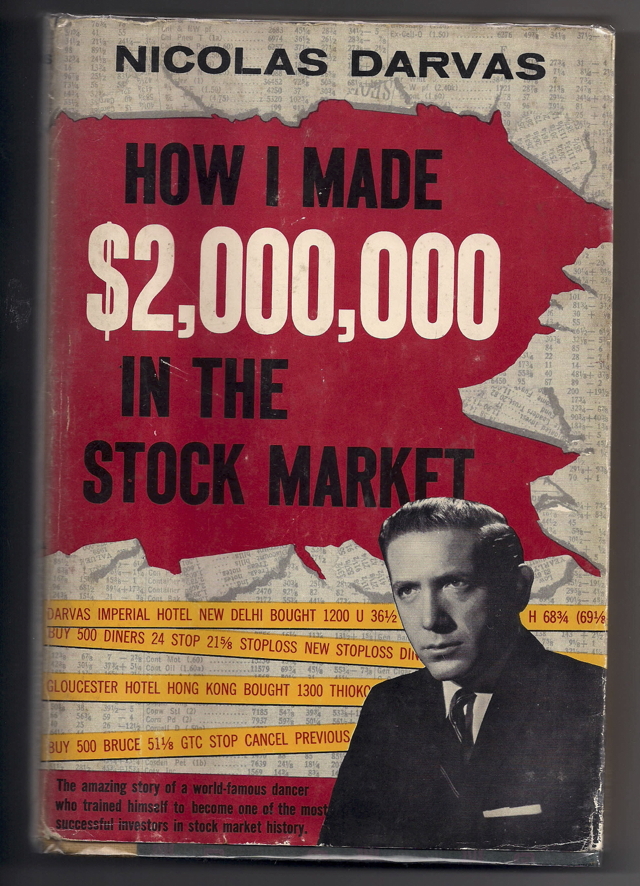
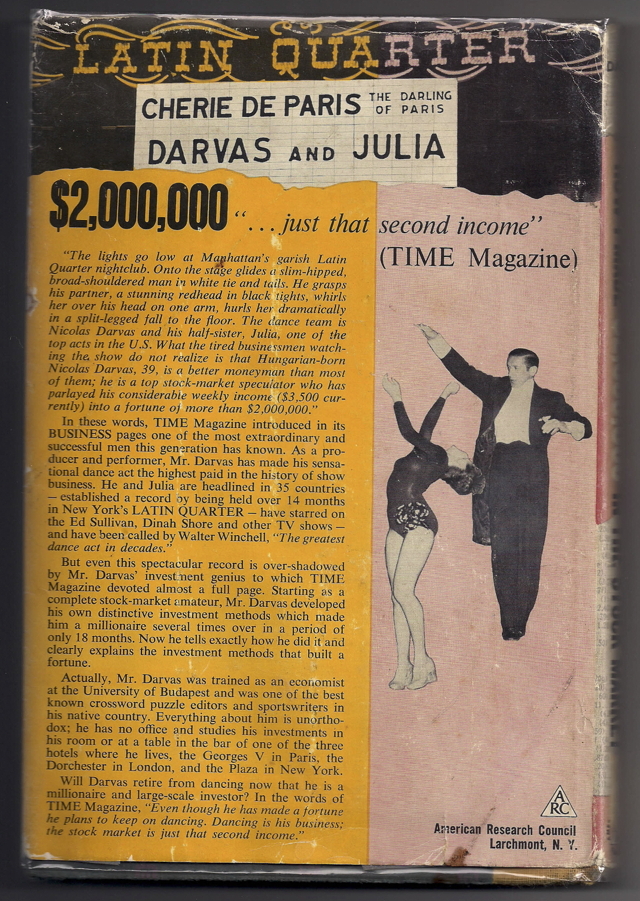
How I Made $2,000,000 in the Stock Market by Nicolas Darvas

On Amazon.

Yes, the Darvis Method is a form of trend following.


How can you move forward immediately to Trend Following profits? My books and my Flagship Course and Systems are trusted options by clients in 70+ countries.

Also jump in:

Trend Following Podcast Guests
Frequently Asked Questions
Performance
Research
Markets to Trade
Crisis Times
Trading Technology
About Us

Trend Following is for beginners, students and pros in all countries. This is not day trading 5-minute bars, prediction or analyzing fundamentals–it’s Trend Following.
The Truth: A Two-Edged Sword

The truth is, almost everything about superior investing is a two-edged sword:

-If you invest, you will lose money if the market declines.
-If you don’t invest, you will miss out on gains if the market rises.

-Market timing will add value if it can be done right.
-Buy-and-hold will produce better results if timing can’t be done right.

-Aggressiveness will help when the market rises but hurt when it falls.
-Defensiveness will help when the market falls but hurt when it rises.

-If you concentrate your portfolio, your mistakes will kill you.
-If you diversify, the payoff from your successes will be diminished.

-If you employ leverage, your successes will be magnified.
-If you employ leverage, your mistakes will be magnified.

HT Howard Marks.

More on stretching the truth.


How can you move forward immediately to Trend Following profits? My books and my Flagship Course and Systems are trusted options by clients in 70+ countries.

Also jump in:

Trend Following Podcast Guests
Frequently Asked Questions
Performance
Research
Markets to Trade
Crisis Times
Trading Technology
About Us

Trend Following is for beginners, students and pros in all countries. This is not day trading 5-minute bars, prediction or analyzing fundamentals–it’s Trend Following.

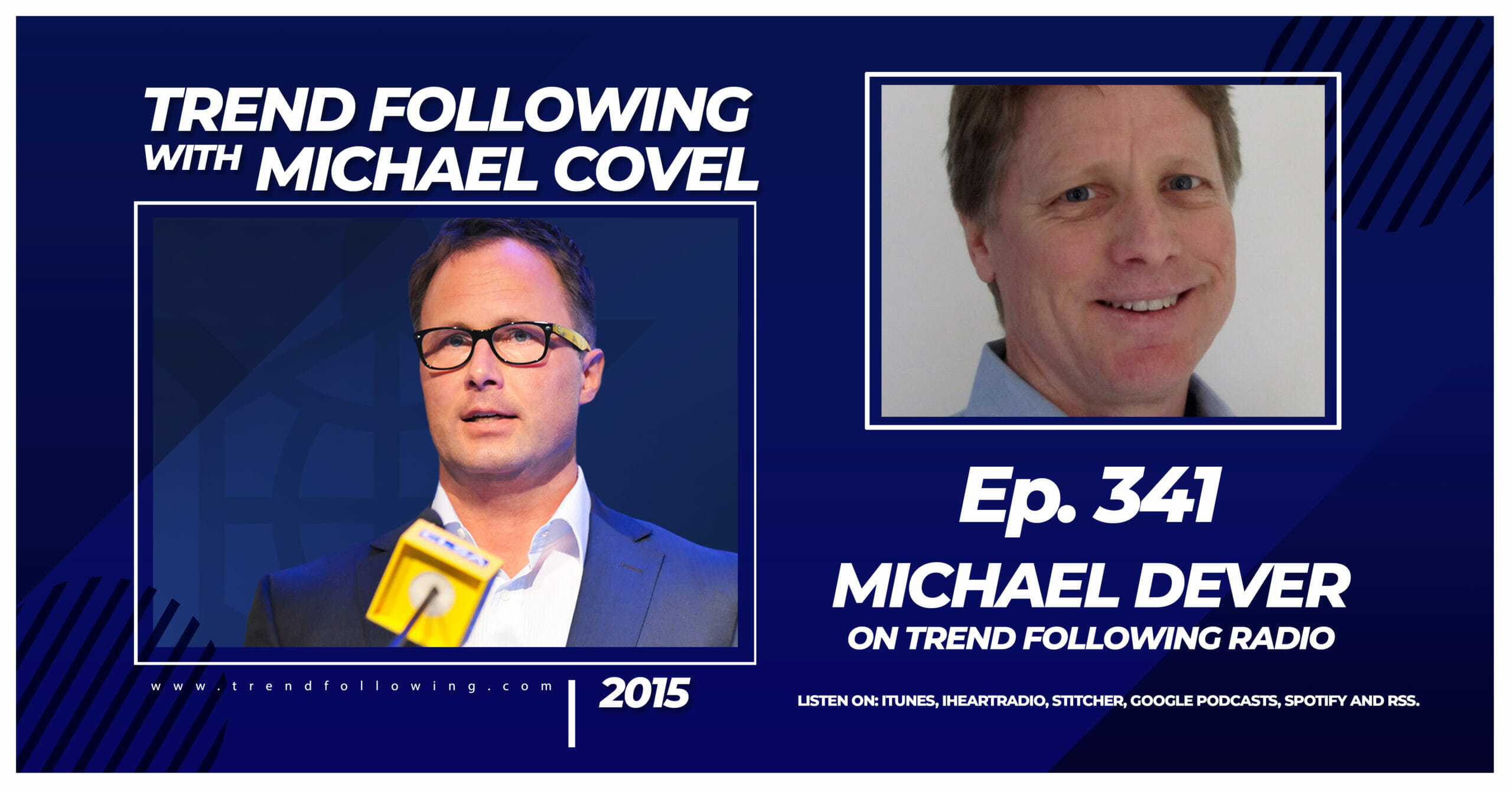
Ep. 341: Michael Dever Interview with Michael Covel on Trend Following Radio

Michael Dever
Michael Dever

My guest today is Michael Dever, an American businessman, futures trader, entrepreneur, and author. Dever is the founder and CEO of Brandywine Asset Management, Inc., an investment management firm founded in 1982.

The topic is Trend Following.

In this episode of Trend Following Radio we discuss:

  • Multiple fundamentally based strategies in a systematic diversified portfolio that trades across more than one hundred global markets; strategy diversification
  • The word “predictable” from Dever’s perspective; lack of correlation to other strategies
  • What Dever means by a “not purely quantitative” strategy
  • How and why this particular suite of strategies came to exist
  • The five strategy types
  • Crisis events and black swans
  • The weakness in the multiple strategy return driver set
  • The importance of speculators
  • The fixation on low volatility strategies
  • True portfolio diversification.

Listen to this episode:

Jump in!

Trend Following Match-Making?

Feedback in:

Hi Mike: I wanted to thank you so much for everything you have shared and taught. I have been working day and night for the last couple of years (it seems) on designing/backtesting my system. It is a blend of styles and EMA crossover (Ed Seykota style). The returns are consistent with other trend following returns. Do you ever link traders with investors? I know this might sound off but I just need funds to execute this system. The podcasts are just so awesome in that they have so much quality meaningful substance. Please keep it up!

I don’t have a mechanism for match-making.


How can you move forward immediately to Trend Following profits? My books and my Flagship Course and Systems are trusted options by clients in 70+ countries.

Also jump in:

Trend Following Podcast Guests
Frequently Asked Questions
Performance
Research
Markets to Trade
Crisis Times
Trading Technology
About Us

Trend Following is for beginners, students and pros in all countries. This is not day trading 5-minute bars, prediction or analyzing fundamentals–it’s Trend Following.

CNBC Calls Trend Followers “Robots” and Yearns for “Gut” Traders


How can you move forward immediately to Trend Following profits? My books and my Flagship Course and Systems are trusted options by clients in 70+ countries.

Also jump in:

Trend Following Podcast Guests
Frequently Asked Questions
Performance
Research
Markets to Trade
Crisis Times
Trading Technology
About Us

Trend Following is for beginners, students and pros in all countries. This is not day trading 5-minute bars, prediction or analyzing fundamentals–it’s Trend Following.

The Trend Following Questions to Answer

Now, let’s get practical. Answer the following five questions, and you have a trend following trading system:

1. What market do you buy or sell at any time?
2. How much of a market do you buy or sell at any time?
3. When do you buy or sell a market?
4. When do you get out of a losing position?
5. When do you get out of a winning position?

Said another way (Bill Eckhardt inspired):

1. What is the state of the market?
2. What is the volatility of the market?
3. What is the equity being traded?
4. What is the system or the trading orientation?
5. What is the risk aversion of the trader or client?

You want to be black or white with this. You do not want gray. If you can accept that mentality, you have got it.


How can you move forward immediately to Trend Following profits? My books and my Flagship Course and Systems are trusted options by clients in 70+ countries.

Also jump in:

Trend Following Podcast Guests
Frequently Asked Questions
Performance
Research
Markets to Trade
Crisis Times
Trading Technology
About Us

Trend Following is for beginners, students and pros in all countries. This is not day trading 5-minute bars, prediction or analyzing fundamentals–it’s Trend Following.

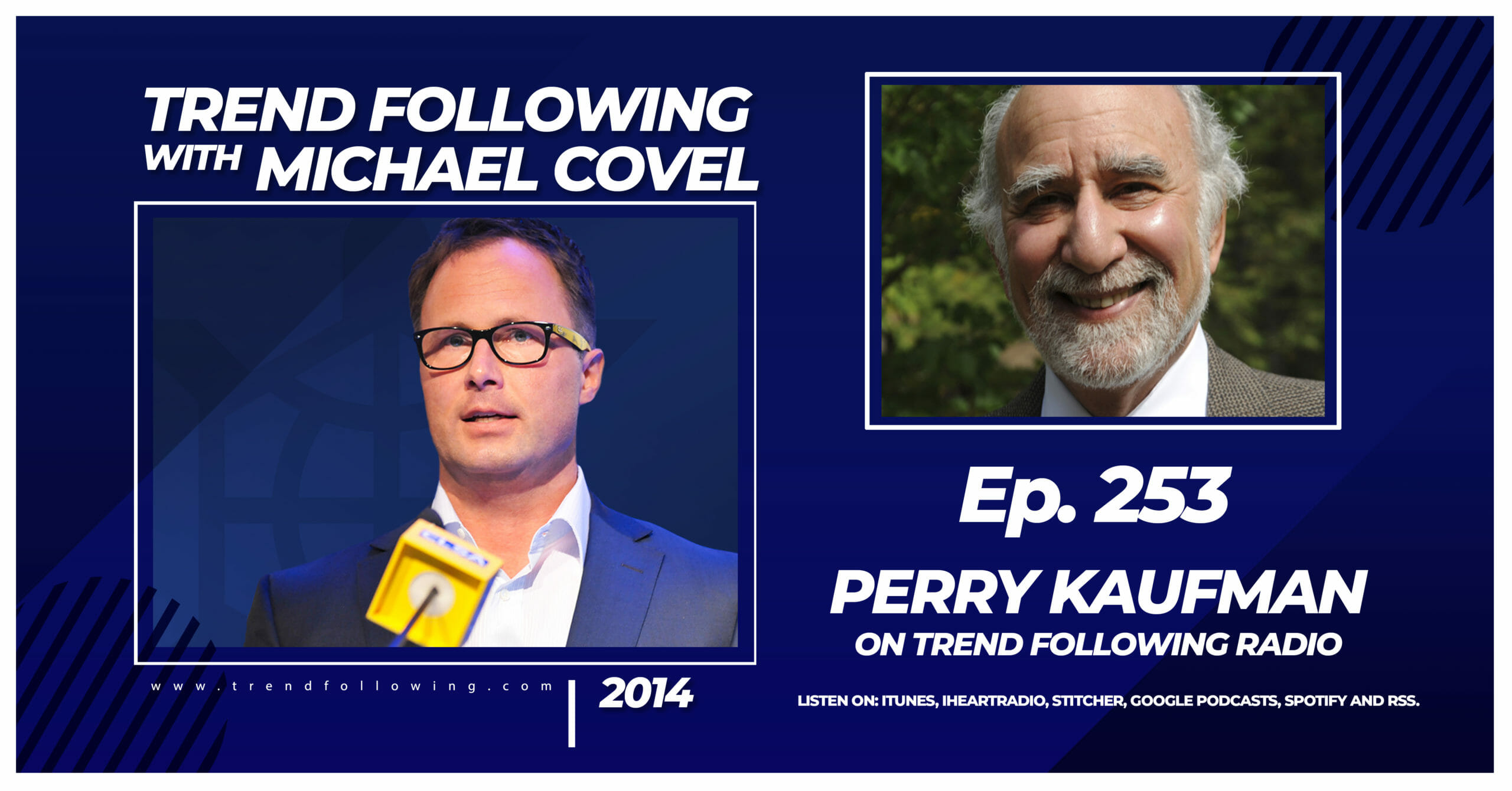
Ep. 253: Perry Kaufman Interview with Michael Covel on Trend Following Radio

Perry Kaufman
Perry Kaufman

My guest today is Perry Kaufman, an American systematic trader, index developer, and quantitative financial theorist. He is considered a leading expert in the development of fully algorithmic trading programs.

The topic is systematic trading.

In this episode of Trend Following Radio we discuss:

  • How Kaufman came to the idea of 100% algorithmic trading systems
  • The difference between being systematic and being automated
  • Optimization vs. validation
  • The biggest advantages of testing
  • Why discretion is not part of Kaufman’s toolbox
  • The problem of tail events
  • Why discipline is the most important characteristic of a systematic trader
  • The “loose pants fit everyone” philosophy
  • Preparing yourself for uncertainty
  • Comparisons between risk management and risk measurement
  • The Sharpe ratio
  • High volatility trades vs. low volatility
  • Why Kaufman places equal weight on both risk management and the underlying system
  • Systematic trading in established mature markets vs. emerging markets

Listen to this episode:

Jump in!