…this is exactly how chess players improve most effectively…by studying the games of grandmasters, trying to reproduce them move by move, and, when they choose a move that is different from what the grandmaster chose, studying the position again to see what they missed. [Ben] Franklin [known chess fan) could not apply the same technique to chess because he had no easy access to the games of masters. Almost all of them were in Europe, and at the time there were no books with their collected games for him to study. If he had had some way to study the masters’ games, he might well have become one of the best chess players of his generation (Source: Peak).
Great thought. Exactly why I put pro trend following performance in my books. His wisdom is also the background foundation of turtle trend following success.
[Trend Following] fills a void in a marketplace inundated with books about buying low and selling high, index investing, and all other types of fundamental analysis, but lacking any resource or, for that matter, practically any reference to what I believe is the single best strategy to consistently make money in the markets. That strategy is known as trend following. Author Van Tharp has described it succinctly:
“Let’s break down the term ‘trend following’ into its components. The first part is ‘trend.’ Every trader needs a trend to make money. If you think about it, no matter what the technique, if there is not a trend after you buy, then you will not be able to sell at higher prices … ‘following’ is the next part of the term. We use this word because trend followers always wait for the trend to shift first, then ‘follow’ it.”
Trend following trading seeks to capture the majority of a market trend, up or down, for profit. It aims for profits in all major asset classes—stocks, bonds, currencies, and commodities. Unfortunately, however simple the basic concepts about trend following are, they have been widely misunderstood by the public. My desire to correct this state of affairs is what, in part, launched my research. I wanted to be as objective as possible, so I based my writing on all available data:
• Trend followers’ published words and comments over the last 30 years
• News accounts of financial disasters
• News accounts of the losers in those financial disasters
• Charts of markets traded by trend followers
• Charts of markets traded by losers in the financial disasters
If I could have written books comprising only numbers, charts, and graphs of trend following performance data, I would have. However, without any explanation, few readers would have appreciated the ramifications of what the data alone showed. Therefore, my approach to writing Trend Following became similar to the one Jim Collins describes in his book Good to Great, in which a team of researchers generated questions, accumulated data in their open-ended search for answers, and then energetically debated it.
However, unlike Collins who was writing about generally well known public companies, trend followers form a sort of underground network of relatively unknown traders who, except for an occasional article, the mainstream press has virtually ignored. What I have attempted to do is lift the veil, for the first time, on who these enormously successful traders are, how they trade, and what is to be learned from their approach to trading that we might all apply to our own portfolios.
Trend Following challenges much of the conventional wisdom about successful trading and traders. To avoid the influences of conventional wisdom, I was determined to avoid being influenced by institutionalized knowledge defined by Wall Street and was adamant about fighting “flat earth” thinking. During my research, starting with an assumption and then finding data to support it was avoided. Instead, questions were asked and then, objectively, doggedly, and slowly, answers were revealed.
If there was one factor that motivated me to work in this manner, it was simple curiosity. The more I uncovered about trend followers, the more I wanted to know.
—
Feedback from a listener:
Hi Michael.
I’ve been listening to your awesome podcast for a few months now and it has intrigued me quite a lot. Thank you so much for putting it up out there.
I never really thought about money before. I’m one of those suckers who has been keeping the money in the bank, too skeptical of financial advisers, too afraid and ignorant of the stock markets. At some point obviously I started to realize that I needed to be in control of my savings and start planning my future. I’ve been reading a lot about the markets, but nothing makes as much sense as your words.
Despite understanding your message (at least I think I do), I actually don’t know how to exactly implement that way of thinking on a personal strategy. I am a dentist living in London, 2 small kids at home, so not a lot of time on my hands. I have been putting some of my savings on a buy and hold strategy with Vanguard equity funds. But without a doubt I am dependent on market timings and on the hope things will always “get better.” And that doesn’t seem to be very sensible.
So, I am contacting you in the hope you could help me to have some more clues on how to start on a trend following strategy that could fit my circumstances.
With great admiration,
[Name]
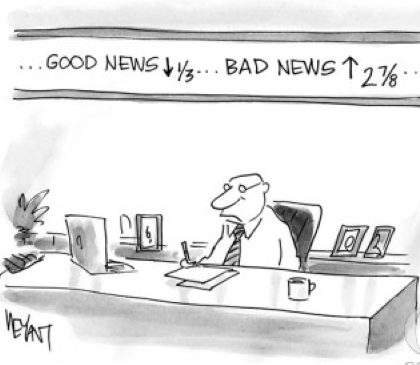
My father is a dentist. I feel a kinship! Good news and bad news: Good? Trend following can help anyone. Bad? Need to do some prep. Here are some starters: Start Now and an Intro Video.
“Most of the misinformation is not deliberate. People want to be led astray. They constantly ask the wrong questions, and those selling information get rewarded by giving them the answers they want.” -Van K. Tharp, Trade Your Way to Financial Freedom
I think CNBC will be around in 50 years, probably answering the same types of questions.
My guest today is Peter Gray, an American psychologist who currently occupies the position of research professor of psychology at Boston College. He is also a well known critic of standard learning systems, and calls himself an evolutionary developmental psychologist. He studies why children are the way they are by asking questions like: Why are children so playful? Why are they so willful? Why do children do what they do?
The topic is his book Free to Learn: Why Unleashing the Instinct to Play Will Make Our Children Happier, More Self-Reliant, and Better Students for Life.
In this episode of Trend Following Radio we discuss:
Hunter gatherer cultures
Self-reliance
Evolution of development in youth
Pros and cons of video games
Ways of implicating free play back into society
“You can’t learn to be an adult unless you can get away from adults.” – Peter Grey
My guest today is Ron Friedman, an award winning social psychologist that specializes in human motivation. He is a frequent contributor to the Harvard Business Review, CNN, Fast Company, and Psychology Today, as well as the author of the best-selling non-fiction book The Best Place to Work: The Art and Science of Creating an Extraordinary Workplace.
The topic is his book The Best Place to Work: The Art and Science of Creating an Extraordinary Workplace.
In this episode of Trend Following Radio we discuss:
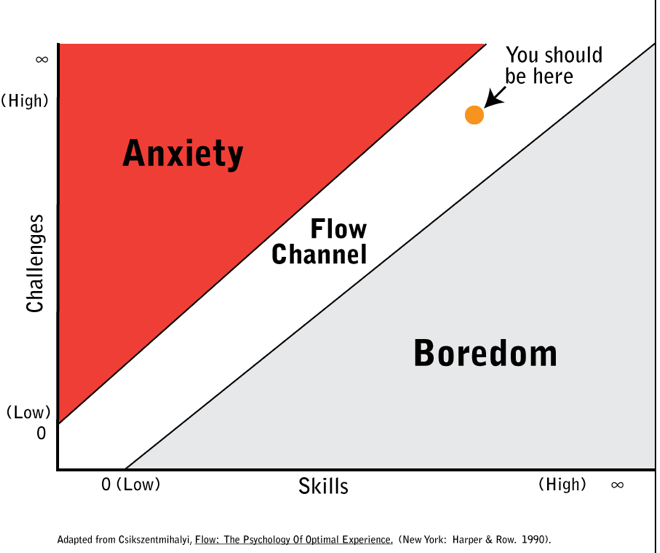
Flow in the Workplace
Creating a good work space
Disconnecting from work after hours
Creating balance in your life
Importance of exercise and naps
“When it comes to happiness, frequency is more important than size.” – Ron Friedman
I like what Lou Holtz says here, but it’s better IMO without “names”. So I made that edit:
—
The [name] are right, there are two Americas. The America that works and the America that doesn’t. The America that contributes and the America that doesn’t. It’s not the haves and the have nots, it’s the dos and the don’ts. Some people do their duty as Americans, obey the law, support themselves, contribute to society and others don’t. That’s the divide in America.
It’s not about income inequality, it’s about civic irresponsibility. It’s about a political party that preaches hatred, greed and victimization in order to win elective office. It’s about a political party that loves power more than it loves its country.
That’s not invective, that’s truth, and it’s about time someone said it.
The politics of envy was on proud display a couple weeks ago when [name] pledged the rest of [name] term to fighting “income inequality.” [name] noted that some people make more than other people, that some people have higher incomes than others, and [name] says that’s not just. That is the rationale of thievery.
The other guy has it, you want it, [name] will take it for you. Vote [name]. That is the philosophy that produced [name].
It is the electoral philosophy that is destroying America. It conceals a fundamental deviation from American values and common sense because it ends up not benefiting the people who support it, but a betrayal.
The [name] have not empowered their followers, they have enslaved them in a culture of dependence and entitlement, of victim-hood and anger instead of ability and hope. The [name] premise – that you reduce income inequality by debasing the successful–seeks to deny the successful the consequences of their choices and spare the unsuccessful the consequences of their choices. Because, by and large, income variations in society are a result of different choices leading to different consequences.
Those who choose wisely and responsibly have a far greater likelihood of success, while those who choose foolishly and irresponsibly have a far greater likelihood of failure.
Success and failure usually manifest themselves in personal and family income. You choose to drop out of high school or to skip college – and you are apt to have a different outcome than someone who gets a diploma and pushes on with purposeful education.
You have your children out of wedlock and life is apt to take one course; you have them within a marriage and life is apt to take another course. Most often in life our destination is determined by the course we take.
My doctor, for example, makes far more than I do. There is significant income inequality between us. Our lives have had an inequality of outcome, but, our lives also have had an in equality of effort. While my doctor went to college and then devoted his young adulthood to medical school and residency, I got a job in a restaurant. He made a choice, I made a choice, and our choices led us to different outcomes. His outcome pays a lot better than mine. Does that mean he cheated and [name] needs to take away his wealth? No, it means we are both free men in a free society where free choices lead to different outcomes.
It is not inequality [name] intends to take away, it is freedom. The freedom to succeed, and the freedom to fail. There is no true option for success if there is no true option for failure. The pursuit of happiness means a whole lot less when you face the punitive hand of government if your pursuit brings you more happiness than the other guy. Even if the other guy sat on his arse and did nothing. Even if the other guy made a lifetime’s worth of asinine and short sighted decisions.
[name] and the [name] preach equality of outcome as a right, while completely ignoring inequality of effort. The simple Law of the Harvest – as ye sow, so shall ye reap – is sometimes applied as, “The harder you work, the more you get.”
[name] would turn that upside down. Those who achieve are to be punished as enemies of society and those who fail are to be rewarded as wards of society. Entitlement will replace effort as the key to upward mobility in American society if [name] gets his way. [name] seeks a lowest common denominator society in which the government besieges the successful and productive to foster equality through mediocrity. [name] and [name] party speak of two Americas, and their grip on power is based on using the votes of one to sap the productivity of the other. America is not divided by the differences in our outcomes, it is divided by the differences in our efforts.
It is a false philosophy to say one man’s success comes about unavoidably as the result of another man’s victimization.
What [name] offered was not a solution, but a separatism. [name] fomented division and strife, pitted one set of Americans against another for [name] own political benefit. That’s what socialists offer. Marxist class warfare wrapped up with a bow. Two Americas, coming closer each day to proving the truth to Lincoln’s maxim that a house divided against itself cannot stand.
“Life is ten percent what happens to you and ninety percent how you respond to it.”
Please enjoy my monologue Flow State with Michael Covel on Trend Following Radio. This episode may also include great outside guests from my archive.
In this episode of Trend Following Radio:
What is flow
How does flow happen
Dealing with worry
Addiction to thoughts
How to obtain happiness
“If you have a fairly comfortable childhood, but without too much support and too much challenge, you don’t see the necessity to stretch yourself, to get into new situations to explore or to break boundaries. You are just comfortable.” – Mihaly Csikszentmihalyi