
Subscribe now and watch my free trend following VIDEO.

What Do Your Beliefs Mean? What is Your Truth?

Guest Article written by Robert Kramer

Smile Robbie, or it might never happen, my grandmother used to say to me. Which usually only pissed me off and made me not want to smile, ever, at anyone. Why should I have to smile if I didn’t want to? It wasn’t like I was sitting alone in the back yard, crying, screaming, jamming sticks into my eyes. I wasn’t doing anything to hurt myself or anyone, so why was it so important that I walk around everywhere I went, lips parsed, baring teeth? It has been my experience in life that people who walk around smiling all the time are either supremely well-adjusted (though not usually), or hiding some form of deep suicidal depression. The point, though, is that I was just being who I was. As a kid I used to think a lot, daydream a lot, and ask a lot of questions. And if I wasn’t smiling it usually meant I wasn’t thinking about anything particularly funny.  Imagine that. But if something was funny or amusing, then guess what – I would smile.  At least a little.

Now I am thirty-four, and am still constantly amazed how so many people I talk to have this underlying belief or attitude that their way in the world is the way in the world.  It may sound like a semantic argument, but there can be significant real-world consequences that come from this rigid type of thinking. Granted, there are many people out there who have the education, experience and ability to understand the difference between an opinion and a fact. But it is disheartening to see how many people speak in absolute truths about different subjects without acknowledging that what they are really talking about are their beliefs. The old saying goes, you are entitled to your own opinions [beliefs], but not your own facts.  Know the difference.

For the purpose of this discussion, a fact is something that exists that can be touched, viewed, heard, measured and verified by others. We can save the Master’s Thesis for later, but many people accept their opinions as facts, and an opinion is not a fact. Someone’s opinion might be their truth, but it is not a fact. I will give you an example. I have a friend who said to me, “We are the only life in the universe – someone has to be at the top of the food chain.” I know I should probably keep better company, and I did attempt to offer some perspective to his statement. I talked about the trillions of other stars that exist and the statistical possibility that some of the planets that orbit those stars might be suitable for some form of life. But those possibilities were immediately rejected. In his mind there were no other perspectives. His belief was his truth, unsupported by any facts (or reason). My response (supporting the possibility for extra-terrestrial life) was also a belief, but at least I acknowledged it as such, presented facts to support my view, and was receptive to further information. To me, there was a definite difference in the quality of thinking in that exchange. As the other adage goes: his mind was made up, don’t confuse him with facts.

You may be asking, who cares about your random geek-level discussion about extra-terrestrial life, or Star Trek, or any other topic? Well, it is not about extra-terrestrial life or Star Trek per se, it is about the process by which people come to conclusions, and the decisions they make based on those conclusions. In the life exists, no it doesn’t discussion, there were no practical, real-world consequences to our beliefs. There were no decisions that had to be made, so our reasoning skills and conclusions were not important. But if you apply my friend’s same rigid, belief-oriented way of thinking to say, government or religious problems, or investment decisions, or any other person or group who has the power to effect real-world change, then all of a sudden those thinking and decision-making processes become very important.  Why you believe something becomes extremely important. What if The Church (using the term generally) believed again that some women are witches and returned to a policy of burning them alive? That’s a pretty real consequence to an unsubstantiated, poorly-reasoned belief. No, of course we don’t burn ‘witches’ (anymore!), but rigid, unsubstantiated, belief-oriented thinking is still everywhere: Jesus is the son of God, gays shouldn’t marry, aliens do or do not exist, democracy is the best form of government, stock markets are or are not efficient, etc. Examples abound. And there are many people who are either unaware of, or do not care about, how much of their world-view is based on this type of thinking — until they find themselves on the detrimental side of it. On an individual basis, someone’s beliefs may not impact me directly. But cumulatively, our thought processes and beliefs are what we call culture, and culture has a massive impact on the world and how we fit into it.

Speaking of culture, if I may digress for a moment, I actually rather like Star Trek, and the character Spock in particular. For those that do not know, Spock is a Vulcan, a race of ‘people’ who are extremely logical and keep their emotions under tight control. I like him not because he lacks emotion, but because I identify with his approach. There is a logical receptiveness to everything he does. I know logic is not an end-all be-all way for every situation, because a person’s logic can be and often is a product of their individual education and experience. I also know emotion and belief are both necessary, healthy, vital parts of the human condition. Beliefs help create value and structure, and give meaning to people’s lives (believing in a higher power, for example, can be a catalyst for positive change in someone’s life, or it can bring strength in times of need). I just think the process of how you come to your beliefs can be equally as important as what your beliefs are. Process matters.

The point I am making is that I didn’t smile at my grandmother simply because she was my grandmother and she told me to.  From my grandmother’s perspective, kids who didn’t smile were considered not well-adjusted.  Those were her experiences and beliefs, learned or taught to her over her eighty-plus years of life. I was only five or six, but even at that age I knew I didn’t want someone telling me what to do, at least not without offering me (what I considered) good reasons for why they were telling me what they were telling me. I never accepted people’s rules “just because.”  Just because why? Because you are my mother/father/grandmother? Because that’s the way it is? Because that is what you were told? Who told you?  What if you are wrong? What if they are wrong? I don’t understand.  I’m not doing it. At which point I was usually threatened with having my video games taken away.  I believe it is necessary for people to evaluate where their beliefs come from and why are they accepted.  This is a learning process which is important. Your beliefs will impact everything you do.

So the question that follows is: do you know where your beliefs come from (assuming you know what they are) and how they impact the decisions that you make? What decisions are you trying to make?  Are you trying to get a job, start a business or go back to school? Maybe marry that girl or guy you’ve had your eye on. But why are you wanting to start that business or marry that girl or guy? These are all questions with real-life consequences. Please tell me that your attitude, opinions, processes and beliefs are yours — that when you speak (like my friend did) and make choices, your words and actions are not simply the noxious, regurgitated by-products of someone else’s bad ideas. No, not everyone is as feeble as that last sentence makes it sound.  But enough are. And I’m just saying that people are people.  Some are good and some are bad and some are well-intentioned and some are misinformed. Pay attention and make your own decisions, that’s all.

It is better to grasp the Universe as it really is, than to persist in delusion, however gratifying or reassuring.

Carl Sagan said that, and I believe it.  It is my truth. It’s just not a fact. Imagine that.

Remember the of keeping an open mind as a trader. Am I weird?


How can you move forward immediately to Trend Following profits? My books and my Flagship Course and Systems are trusted options by clients in 70+ countries.

Also jump in:

Trend Following Podcast Guests
Frequently Asked Questions
Performance
Research
Markets to Trade
Crisis Times
Trading Technology
About Us

Trend Following is for beginners, students and pros in all countries. This is not day trading 5-minute bars, prediction or analyzing fundamentals–it’s Trend Following.

Atlas Shrugged Influence

Joe Capone writes:

“You say that you put books out to ignite conversation. Well, I just finished reading Atlas Shrugged today, at your recommendation. What are your thoughts about this great novel, in relation to trend following and trading? I am curious to hear your thoughts. Thanks Michael.”

Ed Seykota first told me to read Atlas 10 years ago–as a condition to our initial conversation! I have since found that so many top traders look to Rand’s work. For example, David Harding also brought up Atlas Shrugged in conversation as a major influence.


How can you move forward immediately to Trend Following profits? My books and my Flagship Course and Systems are trusted options by clients in 70+ countries.

Also jump in:

Trend Following Podcast Guests
Frequently Asked Questions
Performance
Research
Markets to Trade
Crisis Times
Trading Technology
About Us

Trend Following is for beginners, students and pros in all countries. This is not day trading 5-minute bars, prediction or analyzing fundamentals–it’s Trend Following.

16 Life Rules from Bob Parsons, Founder of Godaddy.com

1. Get and stay out of your comfort zone.

I believe that not much happens of any significance when we’re in our comfort zone. I hear people say, “But I’m concerned about security.” My response to that is simple: “Security is for cadavers.”

2. Never give up.

Almost nothing works the first time it’s attempted. Just because what you’re doing does not seem to be working, doesn’t mean it won’t work. It just means that it might not work the way you’re doing it. If it was easy, everyone would be doing it, and you wouldn’t have an opportunity.

3. When you’re ready to quit, you’re closer than you think.

There’s an old Chinese saying that I just love, and I believe it is so true. It goes like this: “The temptation to quit will be greatest just before you are about to succeed.”

4. With regard to whatever worries you, not only accept the worst thing that could happen, but make it a point to quantify what the worst thing could be.

Very seldom will the worst consequence be anywhere near as bad as a cloud of “undefined consequences.” My father would tell me early on, when I was struggling and losing my shirt trying to get Parsons Technology going, “Well, Robert, if it doesn’t work, they can’t eat you.”

5. Focus on what you want to have happen.

Remember that old saying, “As you think, so shall you be.”

6. Take things a day at a time.

No matter how difficult your situation is, you can get through it if you don’t look too far into the future, and focus on the present moment. You can get through anything one day at a time.

7. Always be moving forward.

Never stop investing. Never stop improving. Never stop doing something new. The moment you stop improving your organization, it starts to die. Make it your goal to be better each and every day, in some small way. Remember the Japanese concept of Kaizen. Small daily improvements eventually result in huge advantages.

8. Be quick to decide.

Remember what General George S. Patton said: “A good plan violently executed today is far and away better than a perfect plan tomorrow.”

9. Measure everything of significance.

I swear this is true. Anything that is measured and watched, improves.

10. Anything that is not managed will deteriorate.

If you want to uncover problems you don’t know about, take a few moments and look closely at the areas you haven’t examined for a while. I guarantee you problems will be there.

11. Pay attention to your competitors, but pay more attention to what you’re doing.

When you look at your competitors, remember that everything looks perfect at a distance. Even the planet Earth, if you get far enough into space, looks like a peaceful place.

12. Never let anybody push you around.

In our society, with our laws and even playing field, you have just as much right to what you’re doing as anyone else, provided that what you’re doing is legal.

13. Never expect life to be fair.

Life isn’t fair. You make your own breaks. You’ll be doing good if the only meaning fair has to you, is something that you pay when you get on a bus (i.e., fare).

14. Solve your own problems.

You’ll find that by coming up with your own solutions, you’ll develop a competitive edge. Masura Ibuka, the co-founder of SONY, said it best: “You never succeed in technology, business, or anything by following the others.” There’s also an old Asian saying that I remind myself of frequently. It goes like this: “A wise man keeps his own counsel.”

15. Don’t take yourself too seriously.

Lighten up. Often, at least half of what we accomplish is due to luck. None of us are in control as much as we like to think we are.

16. There’s always a reason to smile.

Find it. After all, you’re really lucky just to be alive. Life is short. More and more, I agree with my little brother. He always reminds me: “We’re not here for a long time, we’re here for a good time!

Note: Tip to Perry Jonkheer for the list.


How can you move forward immediately to Trend Following profits? My books and my Flagship Course and Systems are trusted options by clients in 70+ countries.

Also jump in:

Trend Following Podcast Guests
Frequently Asked Questions
Performance
Research
Markets to Trade
Crisis Times
Trading Technology
About Us

Trend Following is for beginners, students and pros in all countries. This is not day trading 5-minute bars, prediction or analyzing fundamentals–it’s Trend Following.

Lao Tzu: A Wise Trend Follower

Lao Tzu was wise:

“A good traveler has no fixed plan, and is not intent on arriving.”

“If you look to others for fulfillment, you will never be truly fulfilled.”

“When I let go of what I am, I become what I might be.”

“People in their handlings of affairs often fail when they are about to succeed. If one remains as careful at the end as he was at the beginning, there will be no failure.”

“Respond intelligently even to unintelligent treatment.”

“If you do not change direction, you may end up where you are heading.”

“The power of intuitive understanding will protect you from harm until the end of your days.”

“When you are content to be simply yourself and don’t compare or compete, everybody will respect you.”


How can you move forward immediately to Trend Following profits? My books and my Flagship Course and Systems are trusted options by clients in 70+ countries.

Also jump in:

Trend Following Podcast Guests
Frequently Asked Questions
Performance
Research
Markets to Trade
Crisis Times
Trading Technology
About Us

Trend Following is for beginners, students and pros in all countries. This is not day trading 5-minute bars, prediction or analyzing fundamentals–it’s Trend Following.

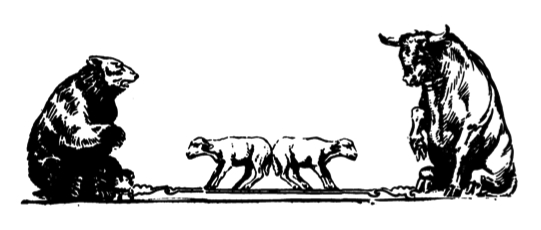
1908 Sketches from Publication “The Ticker”: Timeless Wisdom

More.


How can you move forward immediately to Trend Following profits? My books and my Flagship Course and Systems are trusted options by clients in 70+ countries.

Also jump in:

Trend Following Podcast Guests
Frequently Asked Questions
Performance
Research
Markets to Trade
Crisis Times
Trading Technology
About Us

Trend Following is for beginners, students and pros in all countries. This is not day trading 5-minute bars, prediction or analyzing fundamentals–it’s Trend Following.

Mark Rosenberg of SSARIS: ‘Deal with It’ Wisdom

Back in the mid-nineties I met Mark Rosenberg for the first time in his office in Stamford, CT. Rosenberg was/is a trend following trader. Recently, I caught this line from him describing John W. Henry:

“In 1980, Henry told me, ‘I’m going buy the St. Louis Cardinals.’ I told him, ‘You don’t have any money,’ but he always believed he would.”

Such a good piece of wisdom. Well, Henry did not end up with the Cardinals, but the Boston Red Sox were a nice consolation prize!

Fun story about Rosenberg? When I first met him he shared a great trading/entrepreneurial ‘way’ that always stuck with me. Sitting in his private office, and I still remember the book Future Shock prominently displayed, Rosenberg talked about the ups and downs of trading along with the mental outlook needed to excel. He told me that when the down times came, those losing money times, he would always come home and tell his wife that it was back to “franks and beans”. Meaning, he adjusted. He was pragmatic. He always cut back until trends came back.


How can you move forward immediately to Trend Following profits? My books and my Flagship Course and Systems are trusted options by clients in 70+ countries.

Also jump in:

Trend Following Podcast Guests
Frequently Asked Questions
Performance
Research
Markets to Trade
Crisis Times
Trading Technology
About Us

Trend Following is for beginners, students and pros in all countries. This is not day trading 5-minute bars, prediction or analyzing fundamentals–it’s Trend Following.

Great Line from Seth Godin

From ‘Poke the Box’:

Golf is not safe. My grandfather died playing golf. Speaking up is not safe. People might be offended. Innovation is not safe. You’ll fail. Perhaps badly. Now that we’ve got that out of the way, what are you going to do about it? Hide? Crouch in a corner and work as hard as you can to fit in? That’s not safe, either. Might as well do something that matters instead.

Or said another way, “Don’t be a ****y!”

I live and breathe my firm. Passion for this subject courses through my veins. Why is that? Who knows. It just does. Reaching and teaching people what I have learned — is an adrenaline rush. Take advantage of my work, and you will either make or save a great deal of money.


How can you move forward immediately to Trend Following profits? My books and my Flagship Course and Systems are trusted options by clients in 70+ countries.

Also jump in:

Trend Following Podcast Guests
Frequently Asked Questions
Performance
Research
Markets to Trade
Crisis Times
Trading Technology
About Us

Trend Following is for beginners, students and pros in all countries. This is not day trading 5-minute bars, prediction or analyzing fundamentals–it’s Trend Following.