Subscribe now and watch my free trend following VIDEO.

Ep. 280: Joey Reiman and John Brenkus Interviews with Michael Covel on Trend Following Radio

Joey Reiman and John Brenkus

My guests today are Joey Reiman and John Brenkus.

Reiman, who runs Brighthouse, has been called the “father of ideation”. He’s emerged as the subject matter expert in the area of purpose inspired leadership, marketing, and innovation. His breakthrough purpose methodology and frameworks have been adopted by the likes of the Boston Consulting Group, Procter & Gamble, The Coca-Cola Company, McDonald’s, KPMG, and many other Fortune 500 companies across the globe. As an adjunct professor at the Goizueta School of Business at Emory University, he teaches tomorrow’s executives his revolutionary theories and applications for purpose-inspired profit.

Brenkus is the host of the ESPN show, Sport Science. Sport Science is an ongoing television series that explores the science and engineering underlying athletic endeavors.

The topics are marketing and sports science.

In this episode of Trend Following Radio we discuss:

  • Covel and Reiman discuss Reiman’s background and mission in life; looking for meaning; figuring out your “why”; the process of teaching, and the areas where certain people may get tripped up; looking back to your beginnings; the destructiveness of outside voices; calmness and contemplation; solitude vs. aloneness; “money doesn’t create ideas–ideas create money”; why daydreaming isn’t necessarily a bad thing; creativity and environments; changing the world through changing your routine; routine and creativity; thinking with your heart as much as your mind; Apple vs. Google; raw talent, creativity, and environment; lucky people and “yes” people; the power of “slow”; and the importance of storytelling.
  • Anything about statistics and science has the potential to inspire Covel and with John Brenkus, he goes straight into it; Also discussed: what triggered the science and sports connection in Brenkus’ brain; science and martial arts; measuring human performance; why success doesn’t follow a straight line; Brenkus’ college experiences and how they are relevant to his work today; the idea of physical limits being reached; why Brenkus became a crash test dummy; the advantage of applying science to any aspect of life; and the Iron Man competition.

Listen to this episode:

Jump in!

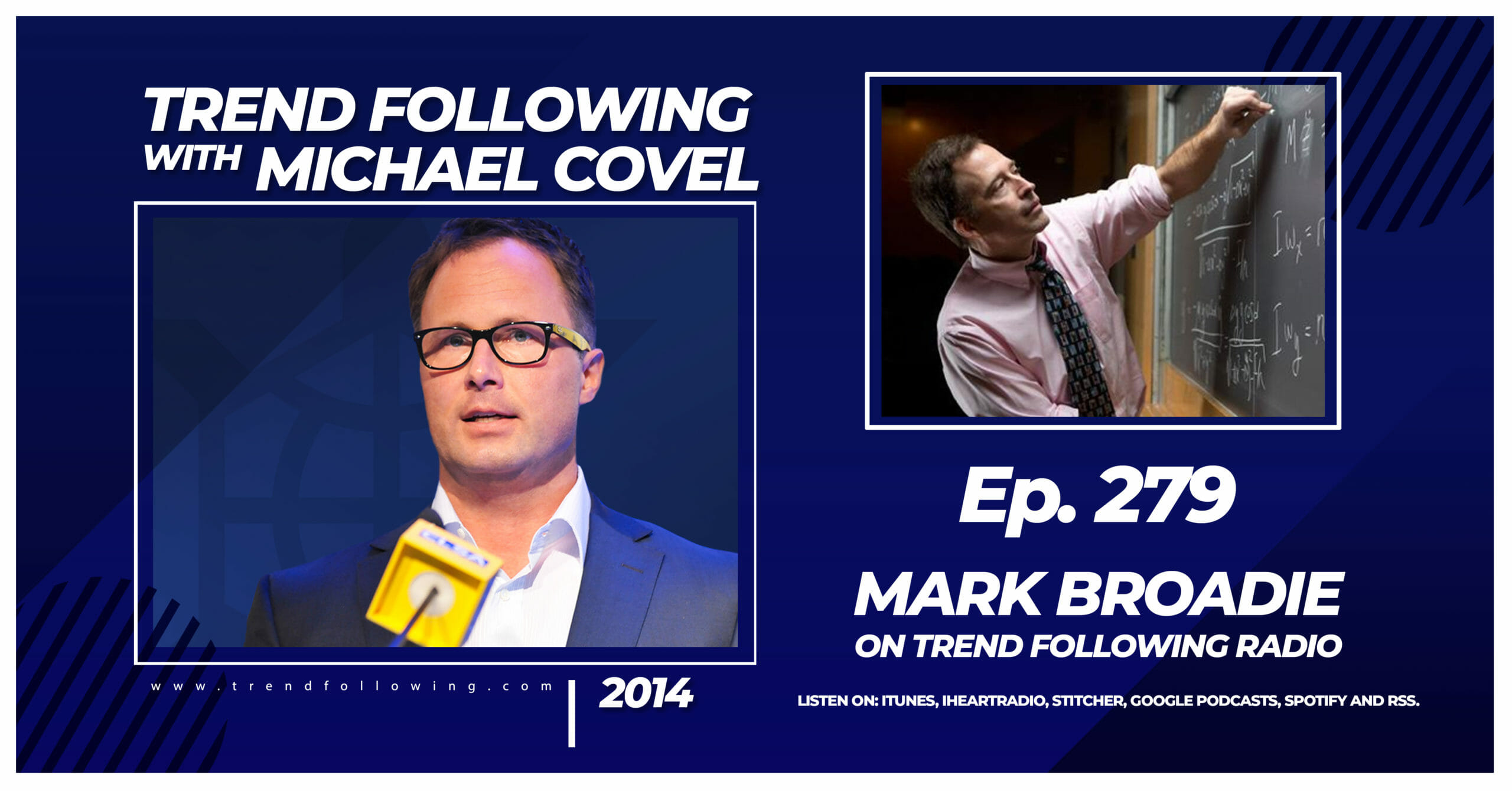
Ep. 279: Mark Broadie Interview with Michael Covel on Trend Following Radio

Mark Broadie
Mark Broadie

My guest today is Mark Broadie, the Carson Family Professor of Business and Vice Dean at the Columbia Business School. His research focuses on quantitative finance and sports analytics. His golf research has appeared in academic journals and many golf publications. He developed the new strokes gained approach to analyze the performance of amateur and professional golfers and worked with the PGA Tour on their implementation of the strokes gained putting stat.

The topic is his book Every Shot Counts: Using the Revolutionary Strokes Gained Approach to Improve Your Golf Performance and Strategy.

In this episode of Trend Following Radio we discuss:

  • How he became, in Covel’s words, the “Bill James of golf”
  • How Broadie connected his finance work to the sport of golf
  • Why certain golfers win
  • Why approach shots are the most important
  • “Drive for show, putt for dough”
  • How Broadie started, the software he used, and how he got better data
  • Whether Broadie had any sense of where the data might go when he first collected it
  • Power as a separator
  • The connection between sports anaylitics, business analytics, and investing
  • The psychology of golf
  • First putts vs. second putts
  • The world golf rankings, and how these can be fixed

Listen to this episode:

Jump in!

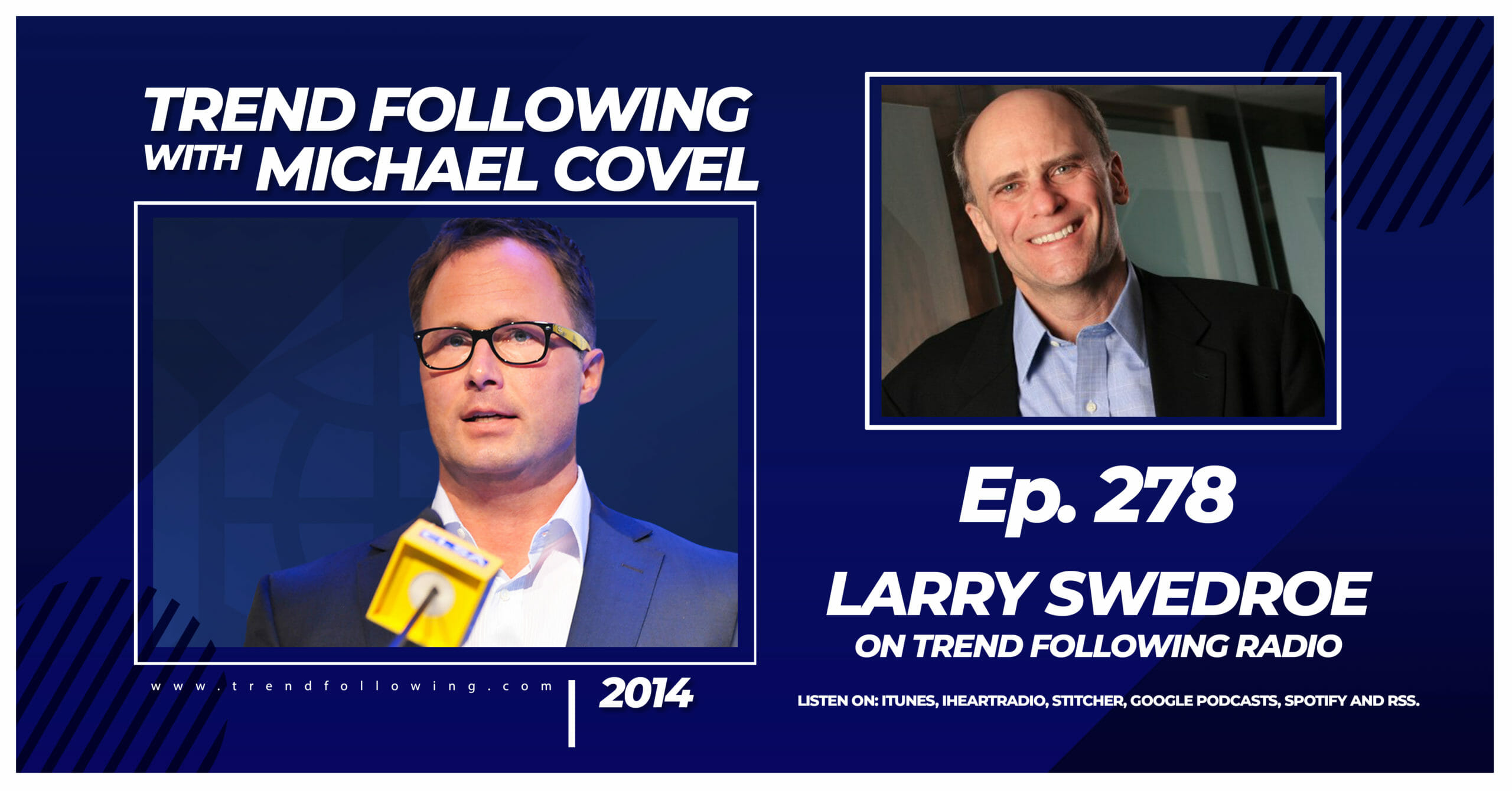
Ep. 278: Larry Swedroe Interview with Michael Covel on Trend Following Radio

Larry Swedroe
Larry Swedroe

My guest today is Larry Swedroe, a Buckingham Asset Management principal. He is also a principal and co-founder of BAM Advisor Services, LLC, and serves as the director of research for both entities. Swedroe has authored or co-authored fourteen books and comes at investing from an evidence-based approach.

The topic is outside the box market perspectives.

In this episode of Trend Following Radio we discuss:

  • Forecasters and prediction
  • The three types of forecasters
  • Confirmation bias
  • How your political affiliation might change your willingness to listen to forecasts
  • Value perspective vs. momentum perspective
  • The anomaly of momentum
  • The evidence-based thinking approach
  • Momentum trading in 2008
  • How Swedroe prepares for the unexpected
  • Not treating the unlikely like it’s impossible
  • Managing your risk
  • Process vs. outcome
  • The equity risk premium and bear markets
  • Commonplace crises
  • Planning ahead
  • Diversification attempts to get outside of equities

Listen to this episode:

Jump in!

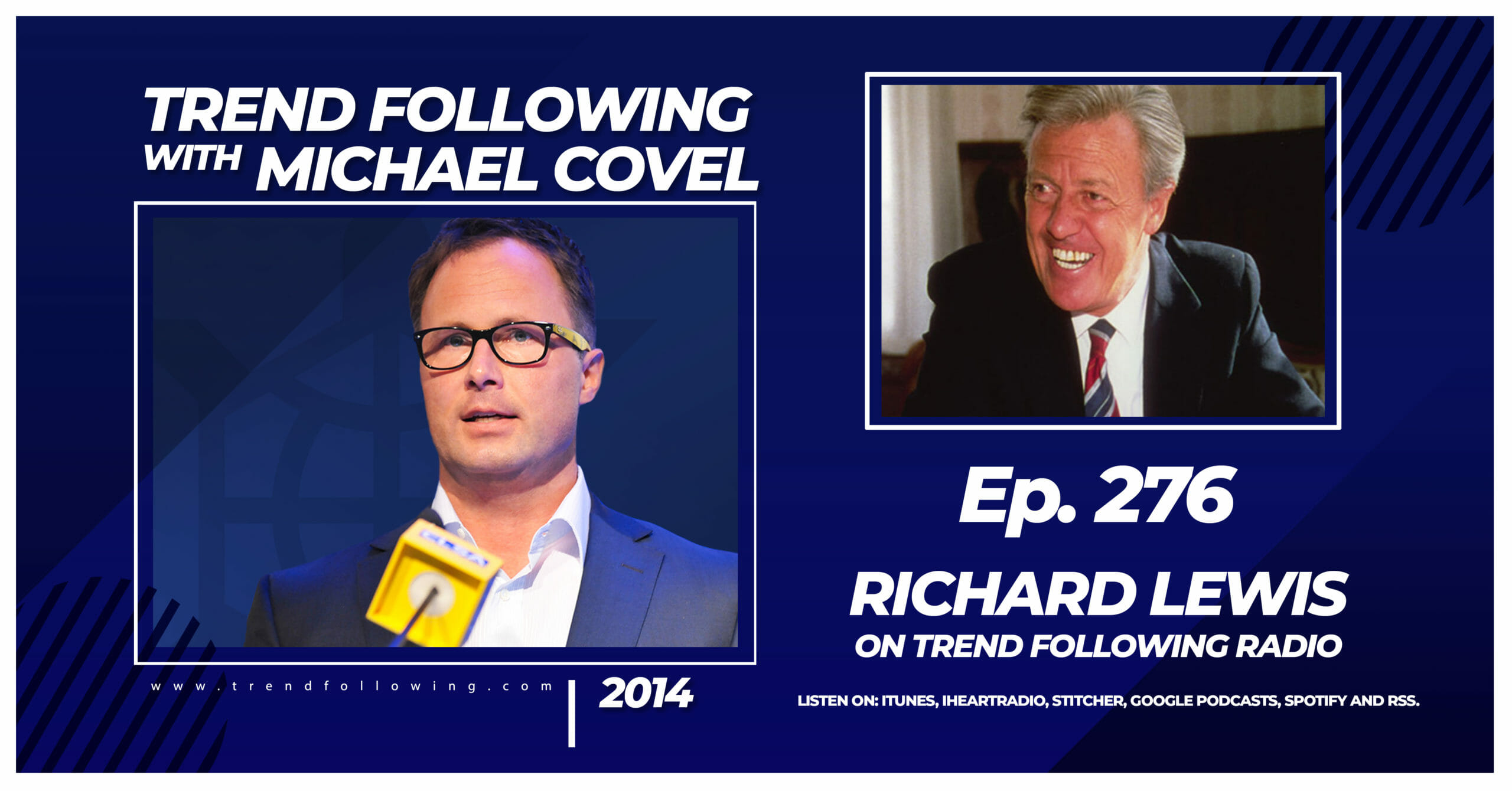
Ep. 276: Richard Lewis Interview with Michael Covel on Trend Following Radio

Richard Lewis
Richard Lewis

My guest today is Richard Lewis, a cross-cultural expert who has been studying language and communication his entire career. He’s traveled to 130+ countries and speaks eleven different languages.

The topics are his books When Cultures Collide: Leading Across Cultures and When Teams Collide: Managing the International Team Successfully.

In this episode of Trend Following Radio we discuss:

  • How Lewis’ love affair with language started
  • The best way to start learning a language
  • Travel as a “magic elixir” of sorts
  • The Lewis model
  • Cultural differences in language, and what Lewis means by linear-active, multi-active, and reactive
  • The idea of losing face in the context of cross-cultural communication
  • Microculture and macroculture
  • Cross-cultural teams vs. homogenous teams
  • Normal and abnormal in a cultural context
  • Paperwork and punctuality in different cultures
  • Why the linear-active person confronts with logic, the multi-active person confronts emotionally, and the reactive person is never confronting
  • Why there’s much more to making a deal than just quantity and price

Listen to this episode:

Jump in!

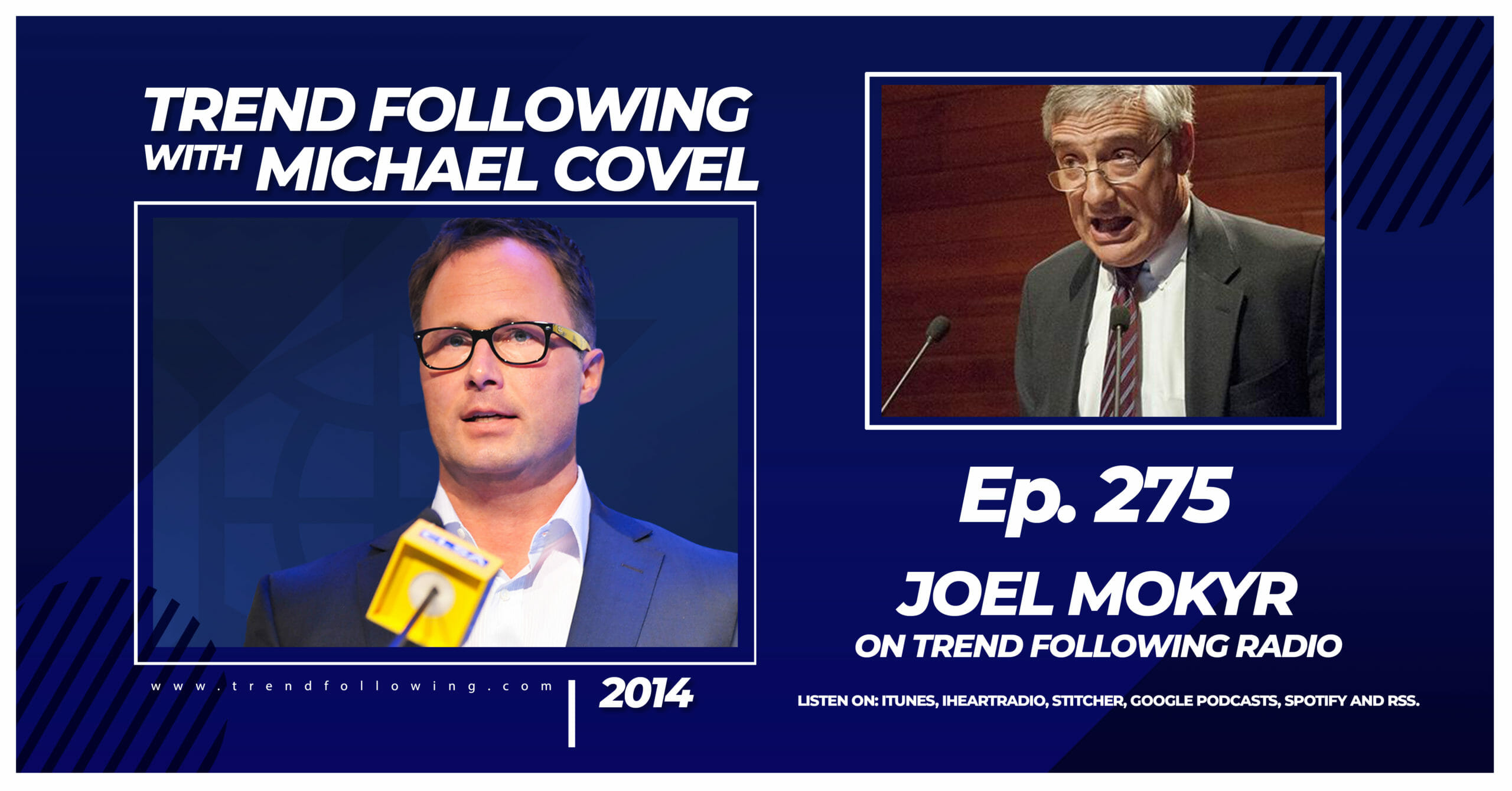
Ep. 275: Joel Mokyr Interview with Michael Covel on Trend Following Radio

Joel Mokyr
Joel Mokyr

My guest today is Joel Mokyr, an economic historian at Northwestern University. He focuses on technological progress, and how it affects growth. From Mokyr’s perspective, we haven’t seen anything yet. He’s not trying to predict what will happen next; he’s just confident and ready that big things will continue to happen.

The topic is technology.

In this episode of Trend Following Radio we discuss:

  • Define technology
  • The notion of playing God with technology
  • How technology and economic growth are intertwined
  • Why screwing up is part of technology
  • The acceleration of technology
  • New ways of measuring growth
  • Anesthesia and antibiotics as technologies and imagining new technologies as revolutionary as them
  • Moving from a wheat and steel economy into an information economy
  • The factory, the separation between firm and household, and the Industrial Revolution
  • The death of distance
  • Why technology is often not reflected in the GDP
  • Solving the language barrier through technology
  • Why the global acceptance of the English language is driven by technology
  • Why innovation isn’t natural to us
  • The declining respect of the writings of previous generations
  • Why the median age will continue to increase
  • Why we are moving into a mass-customization society
  • Changes in material science
  • The best way to think about the future

Listen to this episode:

Jump in!

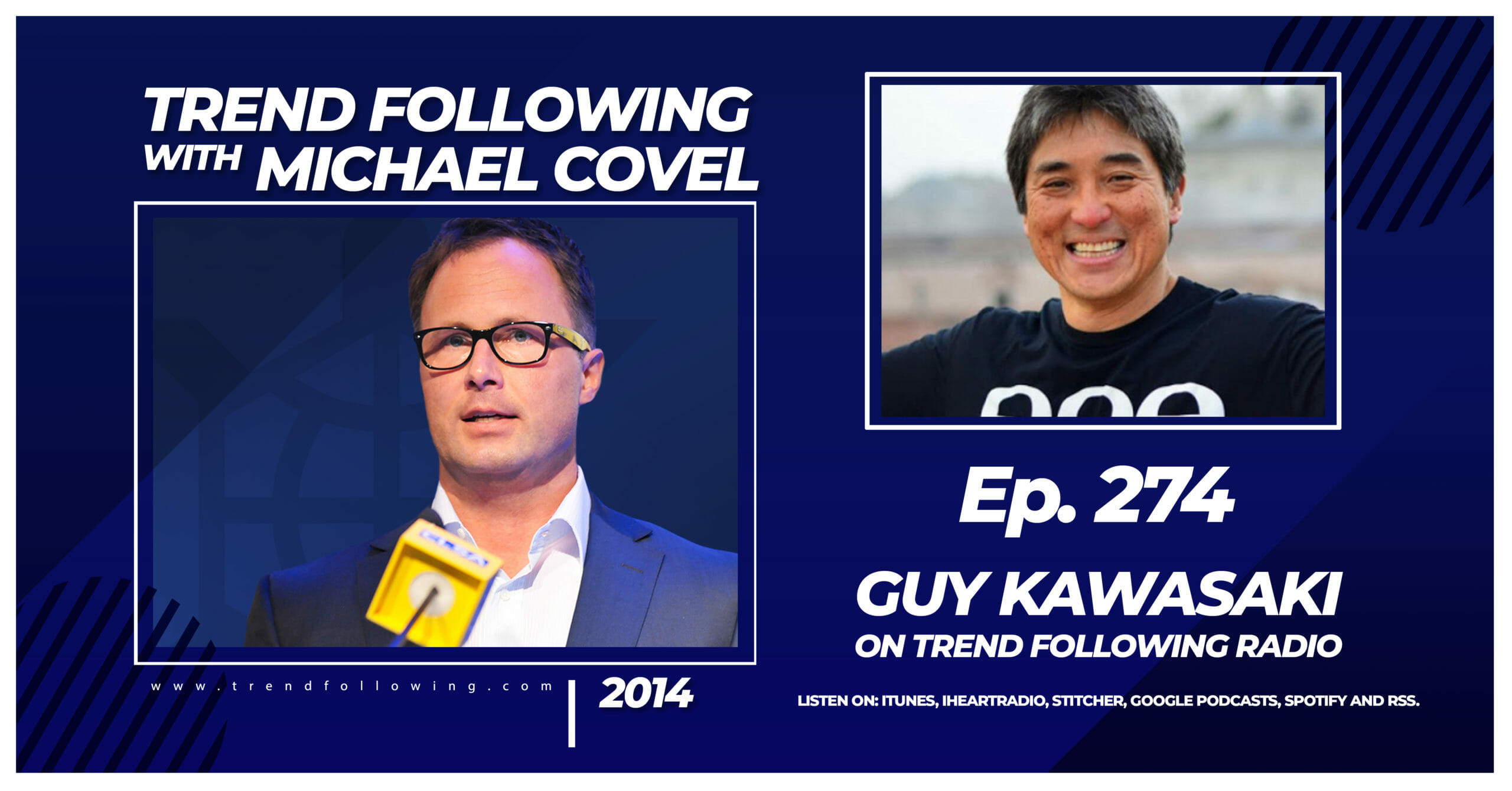
Ep. 274: Guy Kawasaki Interview with Michael Covel on Trend Following Radio

Guy Kawasaki
Guy Kawasaki

My guest today is Guy Kawasaki. For those of you that pay attention to being an entrepreneur, Kawasaki’s books have been invaluable over the last decade. Currently, he is the chief evangelist of Canva, an online graphic design tool. Formerly, he was an advisor to the Motorola business unit of Google and chief evangelist of Apple.

The topic is entrepreneur.

In this episode of Trend Following Radio we discuss:

  • Why being a consultant or an investment banker are two of the worst first jobs you can get
  • Working in sales, and Kawasaki’s early experience in the jewelry business
  • Some of the most valuable attributes of a good salesman
  • Marketing, social media, and why you’d want to have a rabid fan with fifteen followers rather than just another blurb on the back of your book from the so-called big name
  • Why a book review in The New York Times isn’t as important as it used to be
  • The Amazon and Hachette conflict, and why Amazon is still the best thing to happen to authors in a long time
  • The two types of people in the world–baker vs. eater
  • How Kawasaki manages his time
  • Looking at your social media presence as core to your existence
  • Disruptive high growth opportunities
  • Introversion and getting better at standing on stage

Listen to this episode:

Jump in!

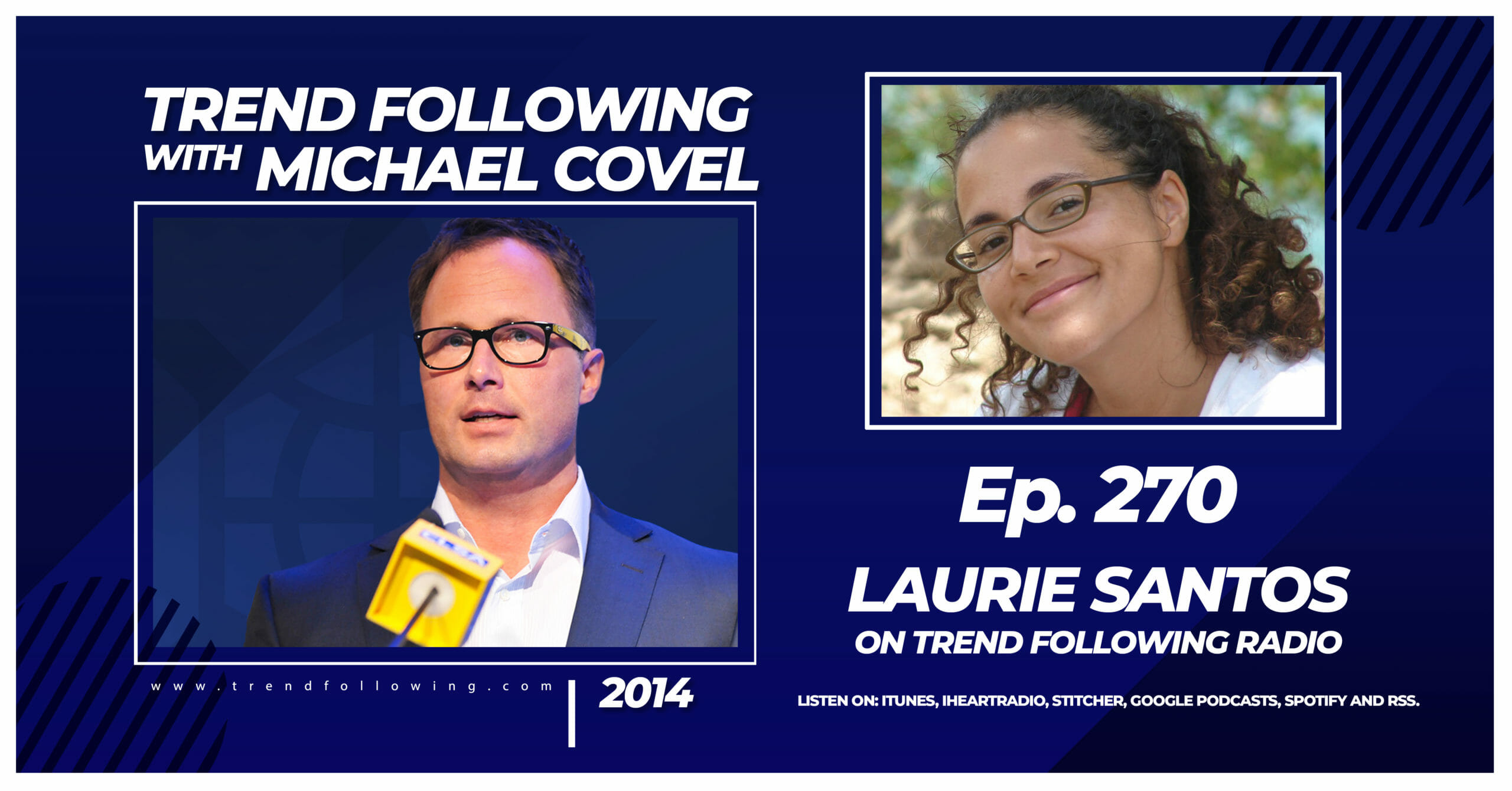
Ep. 270: Laurie Santos Interview with Michael Covel on Trend Following Radio

Laurie Santos
Laurie Santos

My guest today is Laurie Santos, a professor of psychology and cognitive sciences at Yale University. Her research explores the evolutionary origins of the human mind by comparing the cognitive abilities of human and non-human primates. Santos is able to look at monkeys and their behavior in markets and money, and see the similarities with humans.

The topic is cognitive abilities.

In this episode of Trend Following Radio we discuss:

  • Santos’ early “ah-ha” moments
  • Teaching monkeys about currencies
  • Whether the monkey economy is as irrational as ours
  • The endowment effect
  • How monkeys’ behavior in markets quantitatively matches human behavior
  • Whether some monkeys took to the experimental economy better than others
  • Mistakes and predictable errors
  • Why humans might be uniquely irrational when it comes to enjoying what we pay more for
  • Vernon Smith’s work
  • Relationships between Santos’ work and the financial crisis of 2008
  • Bubbles, monkeys, and Daniel Kahneman
  • The “G.I. Joe fallacy”
  • Why we have trouble accepting cognitive limitations rather than our biological limitations

Listen to this episode:

Jump in!