My guest today is Jason Fried, the co-founder and President of 37signals, a privately-held Chicago-based company committed to building the best web-based tools possible with the least number of features necessary.
The topic is his book Rework.
In this episode of Trend Following Radio we discuss:
The first dollar Fried made online and other formative experiences
Keeping business simple
Making something more valuable than the dollars people give you
The intimacy of exchanging money
The idea of doing less than your competitors to beat them
Building an audience
The “real world”
Why an MBA program might not teach you much about entrepreneurism
Corporate structure
Focusing on what will not change
Zen and the moment of right now
Not focusing too far into the future
Fried’s experience with Jeff Bezos
Idea of improvisation or “winging it” in business
Listen to this episode:
Listen to this podcast on iTunes. (Please leave a rating!)
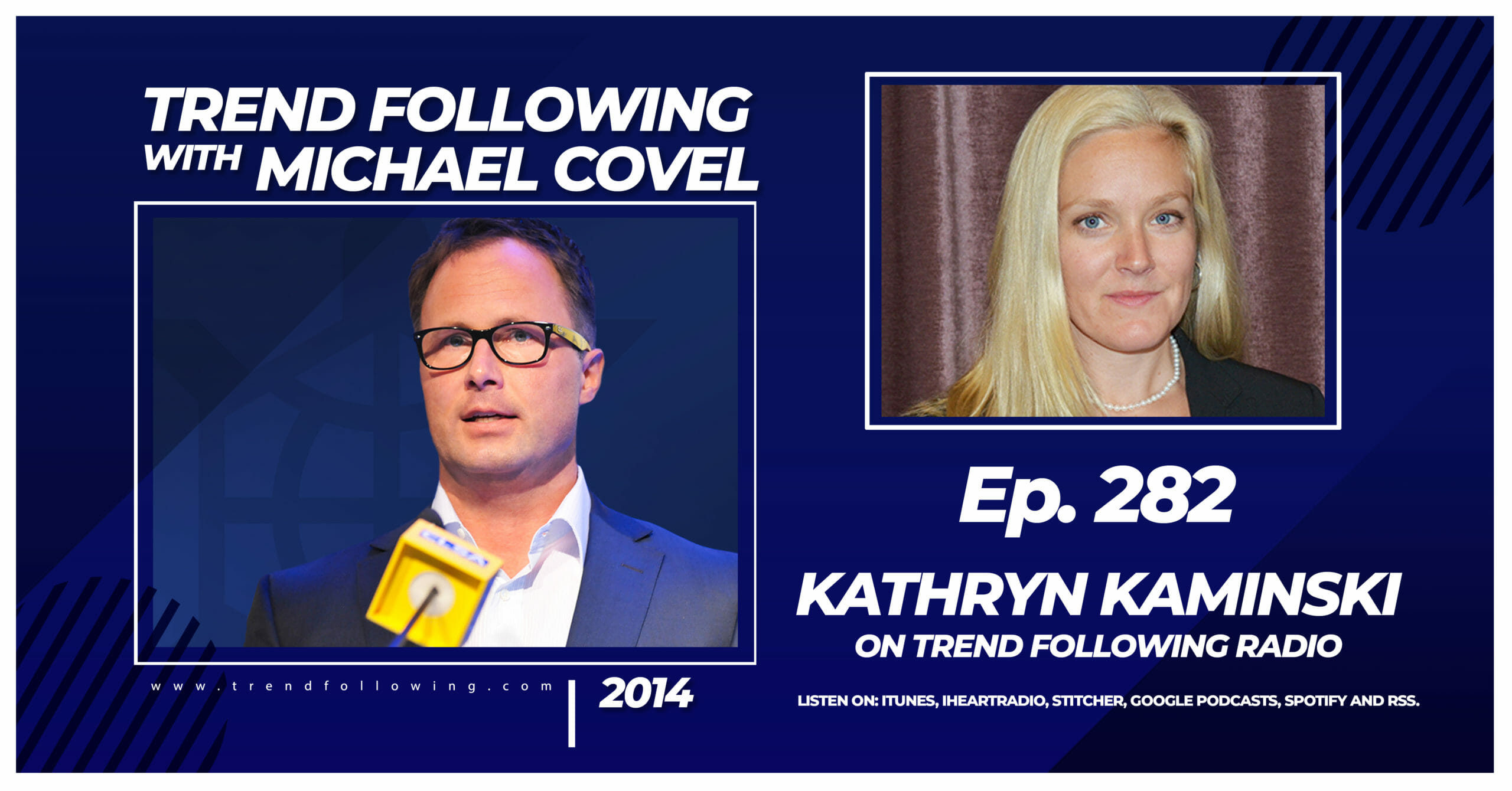
My guest today is Kathryn Kaminski, the deputy managing director the institute for financial research (SIFR) Stockholm Sweden. She’s also a contributor to CME Group. She earned her PhD at the MIT Sloan School of Management. At the MIT Laboratory for Financial Engineering, she conducted research on financial heuristics in collaboration with Professor Andrew W. Lo. Her new book, with Alex Greyserman, is “Trend Following with Managed Futures: The Search for Crisis Alpha.”
The topic is Trend Following.
In this episode of Trend Following Radio we discuss:
Survivorship bias
Kaminski’s background and upbringing
Convergent risk-taking strategies and divergent risk-taking strategies
Social networking as an example of risk
Apple as an example of convergent/divergent
The importance of failure
The efficient market hypothesis, the idea that trend following is “voodoo”, and the lack of transparency in trend following
Critics of trend following
Kaminski’s “ah-ha” moment with trend following
Why trend following works in times of crisis
The adaptive markets hypothesis
Looking at markets like ecologies
Divergence and “punctured equilibrium”
The process of going back 800 years analyzing trend following
The idea of black boxes
The acceptance of trend following
Listen to this episode:
Listen to this podcast on iTunes. (Please leave a rating!)
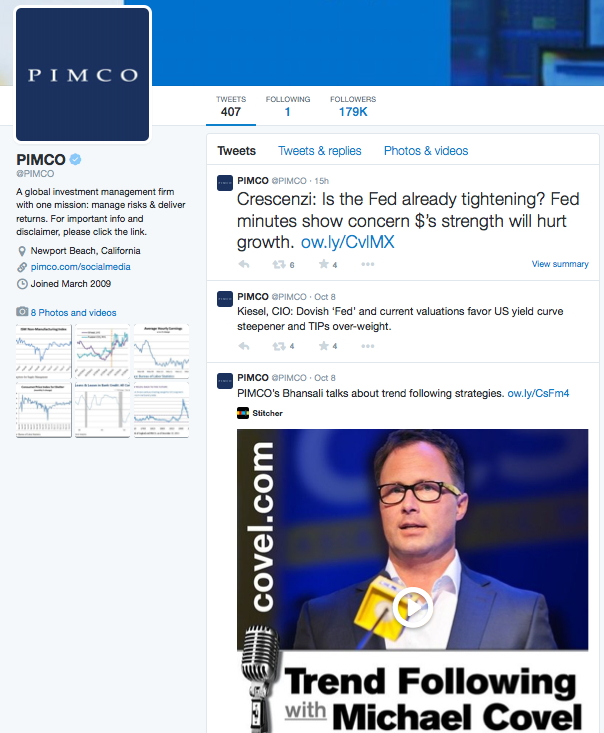
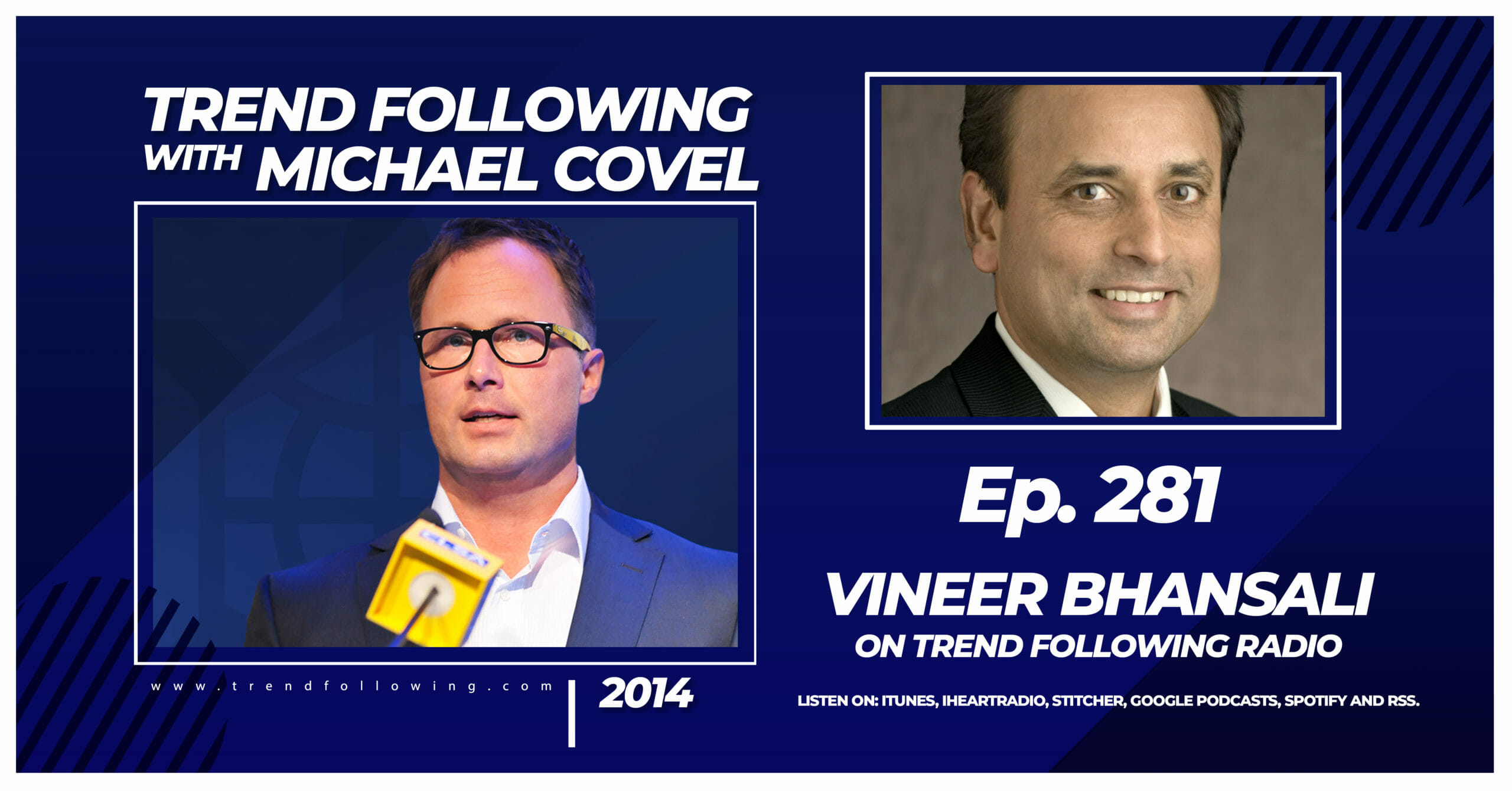
My guest today is Vineer Bhansali, the managing director and portfolio manager at PIMCO. His most recent book is “Tail Risk Hedging”. He has 24 years of investment experience and holds a Ph.D. in theoretical particle physics from Harvard University.
The topic is Trend Following.
In this episode of Trend Following Radio we discuss:
“Trend Following Through The Rates Cycle”
Trend following in the classical sense
How trend following started to become part of the discussion at PIMCO
Introducing new ideas to PIMCO, corporate culture, and to clients
The three hypotheses tested in “Trend Following Through The Rates Cycle”
Currency trading and trend following returns
Why larger trend following shops may have trouble getting into smaller markets
Trend following across a diversified portfolio and classical trend following approaches
Connecting Bhansali’s hobbies to the quantitative world
Structure and thinking in terms of code
Imagining and building simulations
Being distribution aware
Why being at all-time highs is not the time to feel satisfied
Listen to this episode:
Listen to this podcast on iTunes. (Please leave a rating!)
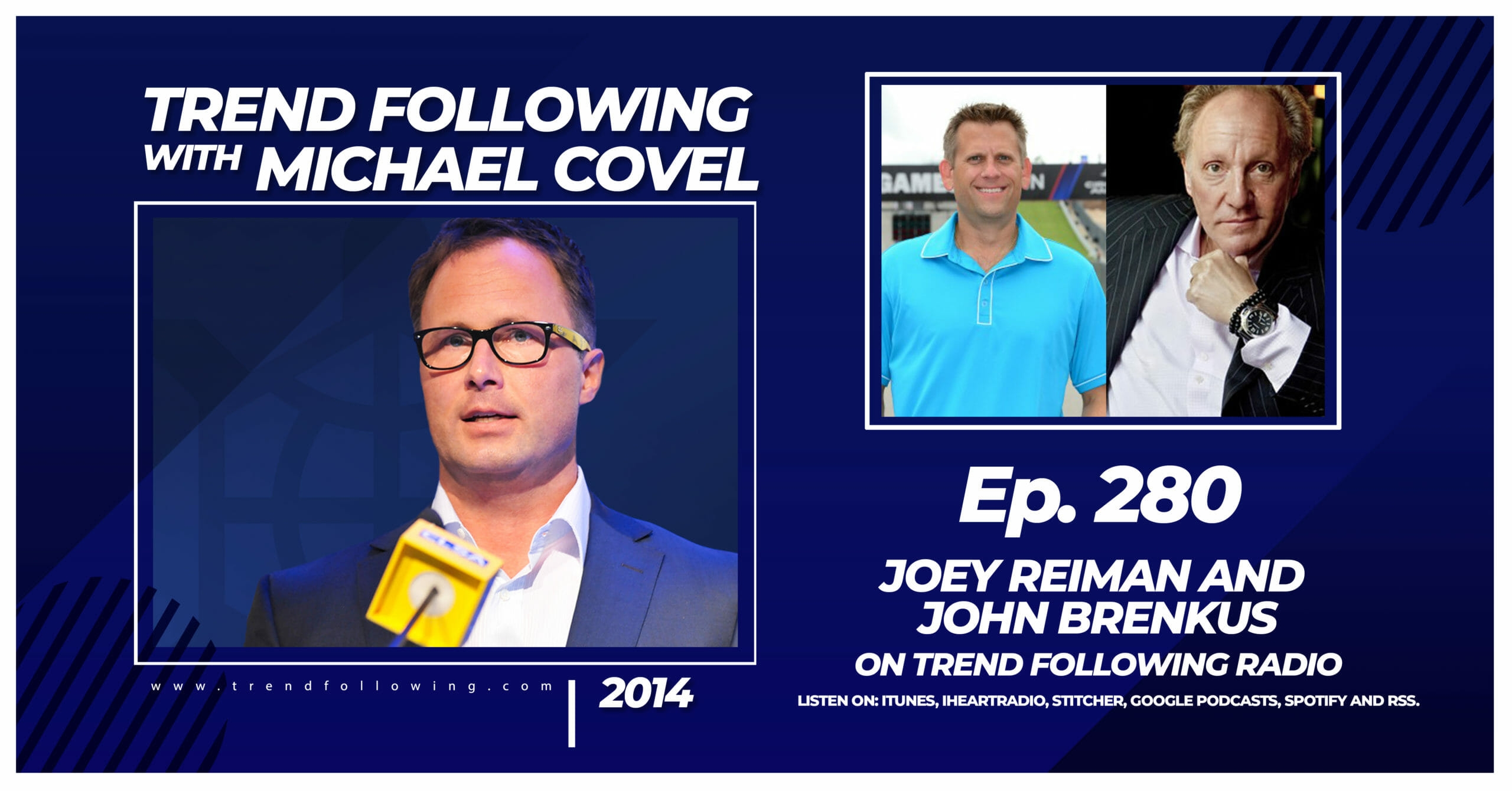
Reiman, who runs Brighthouse, has been called the “father of ideation”. He’s emerged as the subject matter expert in the area of purpose inspired leadership, marketing, and innovation. His breakthrough purpose methodology and frameworks have been adopted by the likes of the Boston Consulting Group, Procter & Gamble, The Coca-Cola Company, McDonald’s, KPMG, and many other Fortune 500 companies across the globe. As an adjunct professor at the Goizueta School of Business at Emory University, he teaches tomorrow’s executives his revolutionary theories and applications for purpose-inspired profit.
Brenkus is the host of the ESPN show, Sport Science. Sport Science is an ongoing television series that explores the science and engineering underlying athletic endeavors.
The topics are marketing and sports science.
In this episode of Trend Following Radio we discuss:
Covel and Reiman discuss Reiman’s background and mission in life; looking for meaning; figuring out your “why”; the process of teaching, and the areas where certain people may get tripped up; looking back to your beginnings; the destructiveness of outside voices; calmness and contemplation; solitude vs. aloneness; “money doesn’t create ideas–ideas create money”; why daydreaming isn’t necessarily a bad thing; creativity and environments; changing the world through changing your routine; routine and creativity; thinking with your heart as much as your mind; Apple vs. Google; raw talent, creativity, and environment; lucky people and “yes” people; the power of “slow”; and the importance of storytelling.
Anything about statistics and science has the potential to inspire Covel and with John Brenkus, he goes straight into it; Also discussed: what triggered the science and sports connection in Brenkus’ brain; science and martial arts; measuring human performance; why success doesn’t follow a straight line; Brenkus’ college experiences and how they are relevant to his work today; the idea of physical limits being reached; why Brenkus became a crash test dummy; the advantage of applying science to any aspect of life; and the Iron Man competition.
Listen to this episode:
Listen to this podcast on iTunes. (Please leave a rating!)
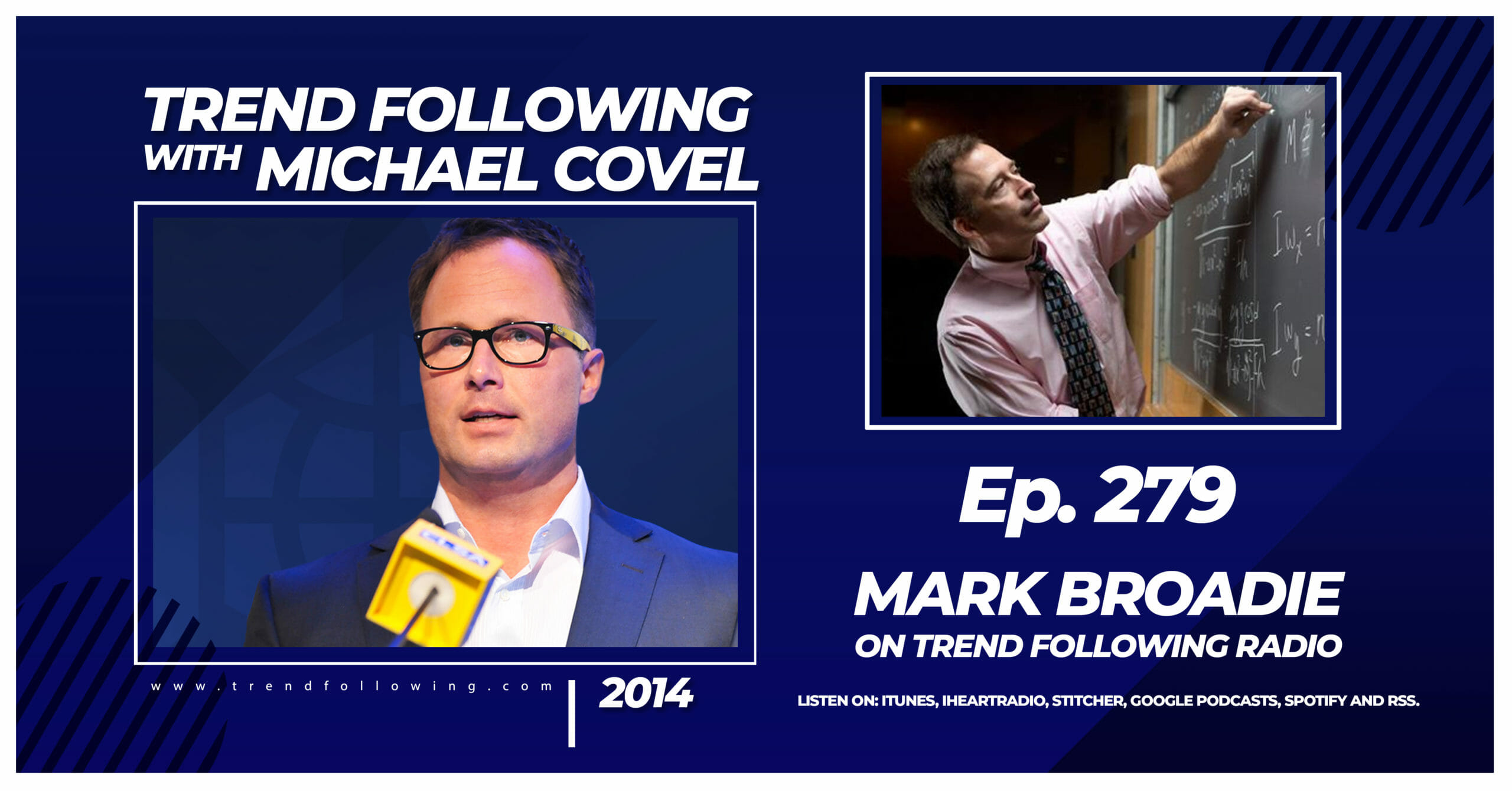
My guest today is Mark Broadie, the Carson Family Professor of Business and Vice Dean at the Columbia Business School. His research focuses on quantitative finance and sports analytics. His golf research has appeared in academic journals and many golf publications. He developed the new strokes gained approach to analyze the performance of amateur and professional golfers and worked with the PGA Tour on their implementation of the strokes gained putting stat.
The topic is his book Every Shot Counts: Using the Revolutionary Strokes Gained Approach to Improve Your Golf Performance and Strategy.
In this episode of Trend Following Radio we discuss:
How he became, in Covel’s words, the “Bill James of golf”
How Broadie connected his finance work to the sport of golf
Why certain golfers win
Why approach shots are the most important
“Drive for show, putt for dough”
How Broadie started, the software he used, and how he got better data
Whether Broadie had any sense of where the data might go when he first collected it
Power as a separator
The connection between sports anaylitics, business analytics, and investing
The psychology of golf
First putts vs. second putts
The world golf rankings, and how these can be fixed
Listen to this episode:
Listen to this podcast on iTunes. (Please leave a rating!)
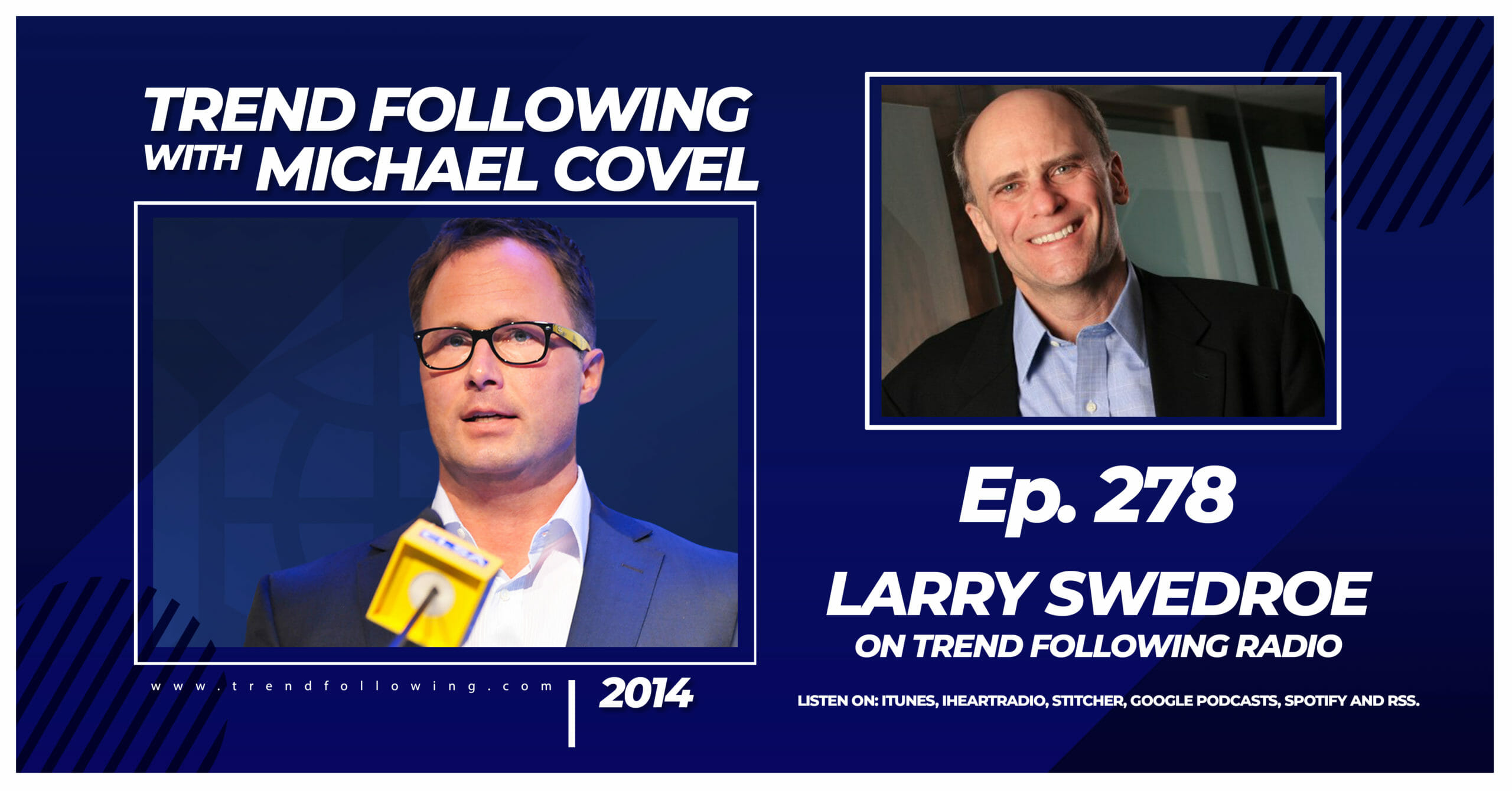
My guest today is Larry Swedroe, a Buckingham Asset Management principal. He is also a principal and co-founder of BAM Advisor Services, LLC, and serves as the director of research for both entities. Swedroe has authored or co-authored fourteen books and comes at investing from an evidence-based approach.
The topic is outside the box market perspectives.
In this episode of Trend Following Radio we discuss:
Forecasters and prediction
The three types of forecasters
Confirmation bias
How your political affiliation might change your willingness to listen to forecasts
Value perspective vs. momentum perspective
The anomaly of momentum
The evidence-based thinking approach
Momentum trading in 2008
How Swedroe prepares for the unexpected
Not treating the unlikely like it’s impossible
Managing your risk
Process vs. outcome
The equity risk premium and bear markets
Commonplace crises
Planning ahead
Diversification attempts to get outside of equities
Listen to this episode:
Listen to this podcast on iTunes. (Please leave a rating!)