
Subscribe now and watch my free trend following VIDEO.

Blog

Trend Following, Momentum, Systematic Quant? Avoid the Mental Masturbation of the “Name” of the Game!

Article seen by Francois Sicart titled “Don’t Get Sidetracked by Momentum Chasing”:

In an early philosophy course, to introduce the concept (and danger) of extrapolation, our professor used the example of an Englishman landing in France for the first time. Seeing two red-headed women on the dock, he immediately calls his friends in London to report that all French women are red heads. The title of a recent Casey Research paper, “Extrapolation Fever”, recently reminded me of this example and its title seemed particularly timely. Extrapolation is the assumption that you can generalize from limited samples and/or that current trends will continue forever. Sadly, we all have a tendency to extrapolate and I have long believed that this is one of the worst biases of investing, responsible for the destruction of innumerable portfolios. This was the reason for my early adoption of a contrarian investment approach. Possibly the second worst investment bias is our need to believe a good story. As a trend matures, its causes become obvious to the average investor. He or she comes to assume that this is the way the world always works, forgetting that by the time a story is obvious to a majority, it is already reflected in the price of a stock or of the market. My view, and that of many contrarian investors, is that the world is cyclical. Economic indicators, for example, tend to fluctuate around either a long-term trend or a historical average, periodically “reverting to the mean”, as statisticians say. Financial markets, which are importantly influenced by the excesses of crowd psychology, do not only revert to the mean, but usually go through it, toward a more “exuberant” high or low. In financial markets, the most common use of extrapolation is called momentum investing, which consists of buying what has been going up on the assumption that it will continue to go up. Numerous studies have documented that momentum investing works most of the time: stocks and markets tend to do as they have been recently doing. The only problem is that many studies also show that (almost by definition) momentum does not work when it counts most, i.e. at major market turning points. And as I have pointed out before, in investments it is not how often you are right that counts; it is how much money you make when you are right. There is no need to revive an old argument about momentum versus value. Let me just say that I personally don’t know any rich momentum investors – at least not any that made and kept a fortune in the stock market. I do know a few rich and successful value contrarian investors, however. There also are some that I have mentioned in the past, whom I do not know but enjoy watching and reading: besides Warren Buffett and Charlie Munger, they include Jeremy Grantham, at GMO.; Howard Marks at Oaktree; and William Browne, of Tweedy, Browne. We not only have a commonality of views, but also similar experiences and career paths. All three gentlemen can also claim superior long-term investment records—and by long-term, I do not mean five year; I mean more than thirty years…There is no lack of successful investors besides those I mentioned above, and my requirement for a thirty-year-plus record may seem self-serving, since only an older investor can have such a record. For example, 56-year-old Seth Klarman, founder of the Baupost Group, has a stellar 25-year record and writes highly stimulating shareholders’ letters, BUT… I will respond like famous Chinese leader Zhou Enlai who, when asked what he thought was the significance of the French Revolution of 1789, reportedly answered: “It is too soon to say”. Today, there is one trend that has been in effect for a very long time and whose causes are well understood and routinely enunciated by even the financially less-literate: declining and low interest rates. Interest rates approached 14% in 1984 and, although recently doubling, have remained under 3% since mid-2011. And, while interest rates declined by 80% almost without interruption for 30 years, the Standard & Poor’s 500 Index gained a remarkable 1041%. Interestingly, I am finding the investor consensus is now overwhelmingly anticipating that interest rates will eventually rise again. So, expecting them to do so is not exactly contrarian. But my concern goes beyond just the stock and bond markets. Thirty years of “suppressed” interest rates, as economists say to describe the central banks’ aggressive role in reducing and almost eliminating financing costs in the economy, must have been addictive. All our instincts and economic reflexes are now unconsciously geared to this misleading environment and, for investors who have no experience pre-dating the early 1980s, it would take an exceptional imagination to picture what it was like to invest in an environment of high and rising inflation, high and rising interest rates. Some of the successful “old guard” may provide some guidance: Jeremy Grantham, in a Barron’s interview in March, believes the stock market may go higher, but for the wrong reasons: We do think the market is going to go higher because the Fed hasn’t ended its game, and it won’t stop playing until we are in old-fashioned bubble territory and it bursts … But to invest our clients’ money on the basis of speculation being driven by the Fed’s misguided policies doesn’t seem like the best thing to do with our clients’ money… We invest our clients’ money based on our seven-year prediction. And over the next seven years, we think the market will have negative returns. Howard Marks, in a lecture at Wharton (March 17, 2014), remembered his early career experiences, which taught him that with its Nifty 50 policy [early 1970s], Citibank had invested in the best companies in America and lost a lot of money; then it invested in the worst companies in America [junk bonds] and made a lot of money. He noted that “it shouldn’t take you too long to figure out that success in investing is not a function of what you buy. It’s a function of what you pay.” An asset of high quality can be overpriced and be a bad investment; an asset of low quality can be bought cheaply and be a good investment. Then focusing on the present, he warned that the current low return on credit instruments, due to low interest rates, has spawned some risky behavior in the market. “If the market is pro-risk, then risky securities can be issued. We have to make sure that it’s not we who buy them.” It would be hard to find a better conclusion than these two quotes, from investors who, over the years, have learned to let wisdom and prudence prevail over greed and short-term competition.

That disproved trend following?

You may also enjoy some of my other Trend Following Podcasts and Articles:

I walk the Line

Vineer Bhansali Podcast

Striving for Excellence

Knowing Your Financial Edge

A Solution to negative interest rates


How can you move forward immediately to Trend Following profits? My books and my Flagship Course and Systems are trusted options by clients in 70+ countries.

Also jump in:

Trend Following Podcast Guests
Frequently Asked Questions
Performance
Research
Markets to Trade
Crisis Times
Trading Technology
About Us

Trend Following is for beginners, students and pros in all countries. This is not day trading 5-minute bars, prediction or analyzing fundamentals–it’s Trend Following.


Ep. 229: William Adams Interview with Michael Covel on Trend Following Radio

My guest today is William Adams, a private trader and systems developer. He is based in Zurich and works with institutional clients.

In this episode of Trend Following Radio we discuss:

  • If Adams views himself as a trend following trader
  • Why the word futures can be problematic
  • Broad diversification and diversifying on a number of different tiers
  • Risk-based diversification
  • Why making sure you’re in the game is the most important factor
  • Why every business is seasonal
  • Why price is the most important aspect to a trade
  • How Adams has (or doesn’t have) the “expertise” to trade certain markets
  • Informing your system of various events as a quantitative or systematic trader
  • Thinking about Adams’ strategy in the context of evolution
  • Core baskets vs. satellite baskets
  • The adaptive aspect of what Adams does
  • The philosophical and operational aspects of volatility
  • Average true range as a volatility measure
  • Trading to make a return vs. trading as an economist
  • Adams’ greatest areas of challenge and frustration
  • Michael Lewis and whether the markets are “rigged”
  • Execution strategy

Listen to this episode:

Jump in!

The Mechanical System Light Bulb Moment!

A recent email:

…read your book “Trend Following” on the plane. Your style of writing is amazing simple, clear, and direct. I used to be a journalist in the Marines so I appreciate well written thoughts. I especially love the stories and analogies you’ve captured. They are truth to me and have started the mindset shift I need to receive what trading has to offer. I’m not a college graduate. Just a simple knuckle-dragger who goes around Southern California to close deals and consult. I went to college to learn how to trade (never did and never finished). Since 1991 that’s all I’ve ever wanted to do–trade. Don’t know why, it’s just been calling me for years. Without being too long winded, I stumbled across Courtney Smith’s mechanical trading strategies. I never fully grasped the magnitude of mechanical trading until reading your work and I’m grateful and thankful to discover it. I look forward to riding the bucking bronco until I die. Thanks again for everything.

Welcome! More Lightbulb moments here.


How can you move forward immediately to Trend Following profits? My books and my Flagship Course and Systems are trusted options by clients in 70+ countries.

Also jump in:

Trend Following Podcast Guests
Frequently Asked Questions
Performance
Research
Markets to Trade
Crisis Times
Trading Technology
About Us

Trend Following is for beginners, students and pros in all countries. This is not day trading 5-minute bars, prediction or analyzing fundamentals–it’s Trend Following.
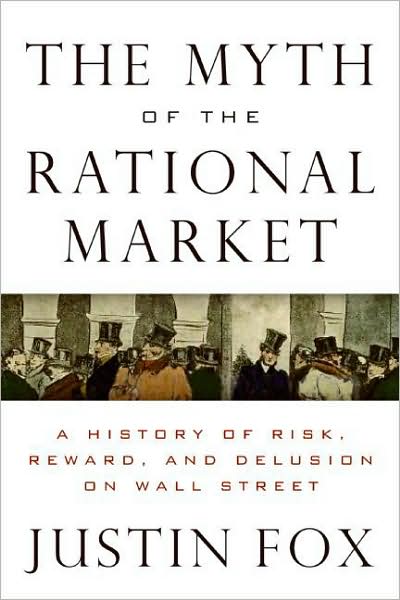
Ep. 227: Justin Fox Interview with Michael Covel on Trend Following Radio

Justin Fox
Justin Fox

My guest today is Justin Fox, an American financial journalist, commentator, and writer born in Morristown, New Jersey. He is a Bloomberg Opinion columnist and former editorial director of the Harvard Business Review Group and business and economics columnist for Time magazine.

The topic is his book The Myth Of The Rational Market: A History of Risk, Reward, and Delusion on Wall Street.

In this episode of Trend Following Radio we discuss:

  • Harry Markowitz, Bayesian statistics, and making smart decisions in an uncertain world using quantitative tools
  • Stocks, beta, and the importance of making useful predictions
  • Commodities Corporation and trend following trading in the early 1970’s
  • Why a market in which everyone was rationally anticipating the future would be a random market
  • Amos Hostetter
  • How the behavioral mindset started to unfold in the 1970’s
  • Eugene Fama and the efficient market hypothesis
  • The Capital Asset Pricing Model
  • Why well-designed markets and well-informed investors are prone to manias and panics
  • Individuals making errors vs. the group getting it right

Listen to this episode:

Jump in!

Justin Fox

Day Trading… Not My World

Feedback in:

Hi Michael, I see a few weeks ago you were after a new laptop 13 inch Air. Just trying to work out do you use that laptop on your travels to trade personally? Or have you got staff trading for you? You see the reason I ask is I know you are a trend trader and wondered if you trade on the go? And what time-frame do you use? Because I have been using daily time-frame, but now looking at 5 min time-frame because I believe even with small time frames like the 5 minute chart there are still trends, but just a lot smaller. But I know I will be paying more spreads, but there is a lot more action. Just wanted to know your thoughts. Thanks Michael.

All the best,
Simon

I have absolutely no feedback on day trading, 5 min bars etc. Not my world. And to paraphrase Ed Seykota, if you want to trade the really fast stuff, why not go for the speed of light?

Heavy sarcasm.


How can you move forward immediately to Trend Following profits? My books and my Flagship Course and Systems are trusted options by clients in 70+ countries.

Also jump in:

Trend Following Podcast Guests
Frequently Asked Questions
Performance
Research
Markets to Trade
Crisis Times
Trading Technology
About Us

Trend Following is for beginners, students and pros in all countries. This is not day trading 5-minute bars, prediction or analyzing fundamentals–it’s Trend Following.

I Give You The Head Start Trend Following Advantage

A recent email exchange:

Michael, How well does your system perform? What is the rate if wins over losses? What is the largest gain and largest loss on all your trades? What is the average length of time in a trade? What is the average gain of all your trades? I am trying to get an idea if your system will benefit me.

Thank you.

Sincerely,
Marcus

Beyond details here a few extra points to the service I provide:

    1. Classic trend following systems.
    2. Winners will typically be 3-4 x the size of losers. Winners typically 30-50% (of course “expectation” is the issue, not “winners”).
    3. Portfolios can vary, performance will vary.
    4. Risk/reward are related, so the end user can try to achieve a greater or lesser return. Drawdown of course related to these choices, and will vary too.
    5. Trades can be stopped out in days or weeks. Winners could exceed 1 year.

Are you a trend following trader now?

Mike, I don’t know what it takes to be a trend following trader. I have read all of your books, and I still have yet to get an idea of what your system is like. Most I read is about how well people (like the turtle traders) do, but not very much substance. I have been scammed multiple times before so I am very hesitant to buy anything that has not been tested out.

Sincerely,
Marcus

If you think my world is a scam please don’t join up. Just want to be upfront. I am simply giving you a head start and charging for it. You could figure it out on your own, but might spend years. There is no Holy Grail, it all takes work, but I do help people get there faster with actual systems they can apply.


How can you move forward immediately to Trend Following profits? My books and my Flagship Course and Systems are trusted options by clients in 70+ countries.

Also jump in:

Trend Following Podcast Guests
Frequently Asked Questions
Performance
Research
Markets to Trade
Crisis Times
Trading Technology
About Us

Trend Following is for beginners, students and pros in all countries. This is not day trading 5-minute bars, prediction or analyzing fundamentals–it’s Trend Following.