Subscribe now and watch my free trend following VIDEO.

Ep. 336: Colin Camerer Interview with Michael Covel on Trend Following Radio

Colin Camerer
Colin Camerer

My guest today is Colin Camerer, an American behavioral economist and a Robert Kirby Professor of Behavioral Finance and Economics at the California Institute of Technology (Caltech). Camerer’s research is on the interface between cognitive psychology and economics. This work seeks a better understanding of the psychological and neurobiological basis of decision-making in order to determine the validity of models of human economic behavior. His research uses mostly economics experiments—and occasionally field studies—to understand how people behave when making decisions (e.g., risky gambles for money), in games, and in markets (e.g., speculative price bubbles).

The topics are cognitive psychology and economics.

In this episode of Trend Following Radio we discuss:

  • Why Camerer was called a child prodigy, and how he looks at that term in the context of nurture vs. nature
  • Synthesizing behavioral economics and neuroscience; understanding Camerer’s studies when traders aren’t looking at the market on a day-to-day basis; how we can stimulate the brain to create a bubble
  • The ethical issues surrounding Camerer’s work
  • Machine learning and data mining
  • Neuroscience and game theory
  • Comparing humans and chimps in the study of neuroscience
  • How trust correlates with economic growth
  • How emotion functions in the modern world

Listen to this episode:

Jump in!

Gotta Lie To Get Invited Back

After posting the below commentary on my Facebook page I got an interesting response:

This exchange followed:

Alan: Thank you for your thoughtful analysis of my market commentary March 16th. A “Trend Follower” should appreciate my confidence and reasoning that the bull run is still intact. As a market veteran of 25 years with thousands of TV appearances this may be a great opportunity to discuss the insignificance of news nonsense with your podcast listeners. Pick a time I would like to come on to talk media and its negative impact on trading discipline. I am the first to tell traders to turn off the TV as there is very little to help you make money. It is mostly infotainment to keep you emotional and tuned in to pay advertisers. In fact, I have developed a financial news aggregator to search, sort and share market video. The time saving app breaks down the markets into categories and plots the videos from news sources on price and time charts for perspective. That said I make the best effort to give a well thought out actionable trade idea on each of my appearances as opposed to speaking in broad generalizations. Trading is all about risk control, probability, money management and implementation of a trading plan. It should be methodical and boring and as we all know watching television to cheer lead positions does not add to profitability. Looking forward to schedule the podcast interview.

Covel: Hold on. You are the guy on CNN? The guy with videos literally every day providing near useless fundamental factoids and interpretations of what will happen next? And now you are emailing me to say trading is all about risk control, probability, money management and implementation of a trading plan. Don’t you think that is disingenuous? You tell me you have made 1000s of appearances, but [now] you tell people not to watch? I am not [Jim] Cramer. My podcast is not that. Best we agree to disagree right here, unless you can convince me how my eyes are lying to me when I watch your videos of broad generalizations.

Alan: I cannot change the game if I do not appear on TV. Producers and hosts do not understand the markets and create a crisis de jour. My job is to be optimistic of opportunities in any and all market conditions. Stressing a plan of action instead of fear is what I do. Having CNBC on for 10 hours a day or watching Cramer doesn’t help anybody make money. At best it may give 2-3 nuggets of information that could be explored for profit potential. People think news helps when in fact the WHY is of no importance compared to the HOW the market is moving.

Covel: You can’t let the TV hand feed you non-stop and then bite the same hand. None of what you are saying to me was on CNN.

Alan: I gave CNN reasons why I remain optimistic at a time when investors have renewed fears. Calm confidence. Participating in the TV discussion is more productive than not doing so to showcase my disciplined approach. My development of the [name] shows my recognition of this news noise issue and the need to better inform investors.

Covel: Maybe you know the truth, but to appear on TV so much is for you to play a game–their game. Try appearing on TV and tell the real truth. They won’t ask you back. Then you will have made a real advance in your credibility.


How can you move forward immediately to Trend Following profits? My books and my Flagship Course and Systems are trusted options by clients in 70+ countries.

Also jump in:

Trend Following Podcast Guests
Frequently Asked Questions
Performance
Research
Markets to Trade
Crisis Times
Trading Technology
About Us

Trend Following is for beginners, students and pros in all countries. This is not day trading 5-minute bars, prediction or analyzing fundamentals–it’s Trend Following.

Ep. 333: Gary Dayton Interview with Michael Covel on Trend Following Radio

Gary Dayton
Gary Dayton

My guest today is Gary Dayton. Dayton stands apart as a trading psychologist in his use of the Mindfulness-Acceptance-Commitment (MAC) approach to peak performance, a model of human behavior based on mindfulness. Dayton is a psychologist and holds a doctorate in clinical psychology and a certificate in human performance/sport psychology from Rutgers University. He is President of Peak Psychology, Inc., a consulting firm that specializes in developing “peak” performance in traders.

The topic is his book Trade Mindfully: Achieve Your Optimum Trading Performance with Mindfulness and Cutting-Edge Psychology.

In this episode of Trend Following Radio we discuss:

  • Mindfulness, yoga, and a turnaround in a particularly depressed patient
  • Defining mindfulness
  • How Dayton went from a clinical psychologist to integrating money, markets, trading, and investing into his work
  • The importance of a trading process
  • Looking at the lessons and research of Daniel Kahneman
  • The endowment effect
  • Price action as a heuristic
  • The importance of an exit strategy
  • Why mindfulness is the most important skill a trader can develop

Listen to this episode:

Jump in!

Trader W and Trader Q

Preparing for a podcast interview with Victor Ricciardi.

Some excerpts from his book regarding trader “W” and trader “Q” that caught my eye:

Trader W manages a small hedge fund involving more than $ 10 million of assets under management. Several years ago he received the industry accolade of fund manager of the year. He subsequently closed that event-driven fund and opened a new fund using a “global macro” strategy. W is highly intelligent and analytical: “I was in the 99.9th percentile of SAT scores.” He comes from a family of high achievers and his wife has a doctorate from an Ivy League university. Struggling with performance in his new fund, W sought help. “My analysis is spot on, but I need help following through and executing trades based on it. Even if it’s a high conviction idea and I am confident in it, I end up doing trades that are impulsive.” “How can I control myself?” he asked. W explained the success of his previous fund as follows: “My analysis led me to the right market position. I was a hero to my investors and I need to be a hero again. I want to bask in the glory again.” W’s new fund uses a discretionary approach requiring many more decisions about market entries and exits , whereas his previous event-driven fund required fewer decisions. W routinely held losers well beyond his predetermined stop-loss and averaged down on losing positions. Taking a loss frequently resulted in a sequence of impulsive trades. W stated, “I have a strong need to be right, being wrong is difficult to tolerate.” When asked to explain his need to be right, he replied, “It’s as if loss is unacceptable to me; it’s an existential threat; I’ll do anything to avoid this existential threat.” When asked to describe what the existential threat feels like, he was at a loss for words, saying only, “It’s extreme.” Source: Baker, H. Kent; Ricciardi, Victor (2014-02-06). Investor Behavior: The Psychology of Financial Planning and Investing (Wiley Finance).

And:

“I need the market to talk to me […]. I need to know it, I need to just look at it and know which way it’s going to move, the eyes, the legs, you know, I want to move the way the market goes; I’m trying to get that extrasensory perception.” So began a three-year coaching relationship with Trader Q, who traded at a proprietary trading firm. He sought help for both his quantitative and discretionary trading. Q was a PhD physicist with multiple additional academic credentials including a master’s degree in financial engineering. Q wanted to increase his ability to access his intuition to improve his trading performance. This case highlights using interventions for increased psychophysical awareness designed to help Q to better execute his decisions confidently in the midst of financial market uncertainty. Q was implicitly displaying the realization that the ability to envision the thoughts and feelings of others–a construct called Theory of Mind—could improve his performance. According to Q, the market is “an object with tons of people implementing something in that software; they are debating within themselves; probably their emotions are incorporated in that chart.” Source: Baker, H. Kent; Ricciardi, Victor (2014-02-06). Investor Behavior: The Psychology of Financial Planning and Investing (Wiley Finance).

And:

Q’s personality tended toward anxiety, obsessive thinking, interpersonal insecurity, and a compulsive drive for control. He managed his anxiety through elaborate analysis that ironically tended to obscure the phenomena he was trying to understand. Spontaneity was lacking as deliberate routines were his strong, even debilitating, preference. When gripped with self-doubt, as was frequently his situation, he resorted to acquiring more intellectual knowledge, believing it would settle emotional turmoil. Nevertheless, no matter how many mathematical models he used to make sense of his world, they always seemed to produce a repetitious conclusion and feeling state: I’m not safe. Source: Baker, H. Kent; Ricciardi, Victor (2014-02-06). Investor Behavior: The Psychology of Financial Planning and Investing (Wiley Finance).

Interesting. You can see Trader W and Trader Q get some of it, but are clearly lost on other parts of it.

It?

You need to figure that out.

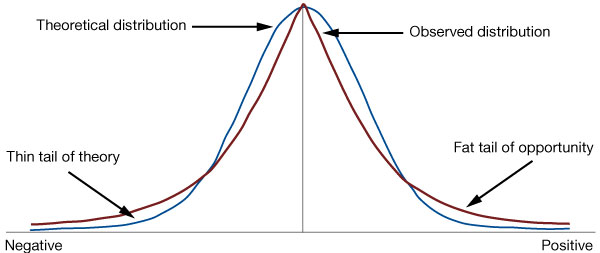
Watch the Tails
Watch the Tails

How can you move forward immediately to Trend Following profits? My books and my Flagship Course and Systems are trusted options by clients in 70+ countries.

Also jump in:

Trend Following Podcast Guests
Frequently Asked Questions
Performance
Research
Markets to Trade
Crisis Times
Trading Technology
About Us

Trend Following is for beginners, students and pros in all countries. This is not day trading 5-minute bars, prediction or analyzing fundamentals–it’s Trend Following.

The Hard Part About Surfing

Feedback in:

Hey Michael, Not sure if you caught Seth Godin’s most recent blog post, so I thought I’d pass it along:


Surfing, the conceptual kind, is more essential than ever, it’s not optional. And the hardest part of surfing, by far, is paddling out, not surfing in. Carrying the board, getting back into the water, paddling through the waves, waiting for the next set…it’s exhausting, and surfers spend far more time doing this than they do on the other part. Having the guts to surf is what change demands. And finding the stamina to paddle back out is a key part of surfing.


I thought it had many parallels to trend following. Enjoy!

[Name]

Thanks!


How can you move forward immediately to Trend Following profits? My books and my Flagship Course and Systems are trusted options by clients in 70+ countries.

Also jump in:

Trend Following Podcast Guests
Frequently Asked Questions
Performance
Research
Markets to Trade
Crisis Times
Trading Technology
About Us

Trend Following is for beginners, students and pros in all countries. This is not day trading 5-minute bars, prediction or analyzing fundamentals–it’s Trend Following.
“The typical person is afraid of math…”


How can you move forward immediately to Trend Following profits? My books and my Flagship Course and Systems are trusted options by clients in 70+ countries.

Also jump in:

Trend Following Podcast Guests
Frequently Asked Questions
Performance
Research
Markets to Trade
Crisis Times
Trading Technology
About Us

Trend Following is for beginners, students and pros in all countries. This is not day trading 5-minute bars, prediction or analyzing fundamentals–it’s Trend Following.
This Is Your Brain on Magic

Psychologists and neuroscientists have an unlikely ally in their quest to understand human nature: professional magicians:

“We want to explain at a fundamental level why you are so thoroughly vulnerable to sleights of mind,” Martinez-Conde and Macknik wrote in their book Sleights of Mind. “We want you to see how deception is part and parcel of being human. That we deceive each other all the time.”

Read.


How can you move forward immediately to Trend Following profits? My books and my Flagship Course and Systems are trusted options by clients in 70+ countries.

Also jump in:

Trend Following Podcast Guests
Frequently Asked Questions
Performance
Research
Markets to Trade
Crisis Times
Trading Technology
About Us

Trend Following is for beginners, students and pros in all countries. This is not day trading 5-minute bars, prediction or analyzing fundamentals–it’s Trend Following.