Subscribe now and watch my free trend following VIDEO.

Ep. 216: Jack Schwager Interview with Michael Covel on Trend Following Radio

Jack Schwager
Jack Schwager

My guest today is Jack Schwager, a recognized industry expert in futures and hedge funds and the author of a number of widely acclaimed financial books. Schwager is one of the founders of Fund Seeder. Previously, he was a partner in the Fortune Group, a London-based hedge fund advisory firm. His prior experience also includes 22 years as Director of Futures research for some of Wall Street’s leading firms, most recently Prudential Securities.

The topic is his book The Little Book of Market Wizards.

In this episode of Trend Following Radio we discuss:

  • How Fund Seeder acts as a liason for traders and investors
  • The difficulty of starting out as a new trader
  • How Fund Seeder is a global opportunity
  • Schwager’s last book, Hedge Fund Market Wizards
  • The timeless quality of the Market Wizards books
  • Jesse Livermore’s Reminiscences of a Stock Operator
  • How human nature is the only thing that will never change
  • Looking for a “secret recipe” in the Market Wizards book
  • “The Upside of Down: Why Failing Well Is The Key To Success” by Megan McArdle
  • Why failure is smart and an essential part of success
  • The importance of failure in the context of education
  • Behavioral economics
  • Jack Horner and thinking outside of the box
  • The importance of loving what you do for a living
  • The importance of travel

Listen to this episode:

Jump in!

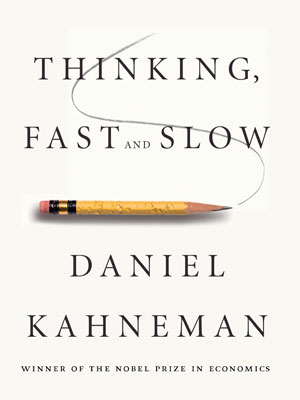
Ep. 214: Trend Following Winners, Daniel Kahneman & Tina Turner with Michael Covel on Trend Following Radio

Trend Following Winners, Daniel Kahneman & Tina Turner with Michael Covel on Trend Following Radio

Please enjoy my monologue Trend Following Winners, Daniel Kahneman, and Tina Turner with Michael Covel on Trend Following Radio. This episode may also include great outside guests from my archive.

Listen to this episode:

Want to learn more Trend Following? Watch my video here.

Book_cover

Legacy of the Legendary Trader Jesse Livermore

Jesse Livermore was an outstanding trader. The insights he shared with the world are invaluable. Josh Brown wrote a great article featured on www.ritholtz.com pointing out some of his great nuggets of wisdom as well as how he would react in this day and age with news outlets streaming 24/7:

There are those who would convince you that it is somehow smart or in your best interest to be manically switching your investments around, back and forth, long and short, on a daily basis. To pay attention to this kind of overstimulation is the height of madness, even for professional traders.

The most storied and important trader who ever lived, Jesse Livermore, would be tuning these daily buy and sell calls out were he alive and operating today. Because while he was a trader, he was not of the mindset that there was always some kind of action to be taking.

Jesse Livermore’s legacy is a bit of a double-edged sword…

On the one hand, he was the first to codify the ancient language of supply and demand that is every bit as relevant 100 years later as it was when he first relayed it to biographer Edwin Lefèvre. Livermore himself sums it up thusly: “I learned early that there is nothing new in Wall Street. There can’t be because speculation is as old as the hills. Whatever happens in the stock market today has happened before and will happen again. I’ve never forgotten that.”

On the other hand, Livermore’s undoing came at precisely the moments in which he ignored his own advice. After repeated admonitions about tipsters, for example, Jesse allowed a tip on cotton to lead to a massive loss which grew even larger as he sat on it – violating yet another of his own cardinal rules.

And of course, other than for a few moments of temporary triumph in the trading pits and bucket shops of the era, Jesse Livermore was not a happy man. “Things haven’t gone well with me,” he informed one of his many wives by handwritten note, before putting a bullet through his own head in the cloakroom of the Sherry-Netherland Hotel.

But he did leave behind a wealth of knowledge about the art of speculation. His exploits (and cautionary tales of woe) have educated, influenced and inspired every generation of trader since Reminiscences was first published in 1923.

In my opinion, some of the most useful bits of knowledge we get from the book concern Jesse’s discussion of timeframes and patience. Many traders, particularly rookies, approach the game with the idea that they’re supposed to be constantly doing something – in and out, with a trembling finger poised to click the mouse again and again. Consequently, they get on the treadmill of booking wins and losses without ever really moving the needle. They end up with tons of brokerage commissions and taxes to show for their efforts, but not much else.

Being a trader doesn’t mean one must always be executing a trade, just as being a house painter doesn’t mean that every surface needs an endless series of coats.

Many rookies are surprised to learn that Livermore, the idol of so many great traders, advocated a lower maintenance, higher patience approach as he matured. In his early days, Livermore was dependent on the short-term funding and scalping activity of the bucket shops. Once he graduated and had his own capital, he was able to lengthen position holding times and could even afford to do nothing for extended periods.

Here are nine surprising things Jesse Livermore said regarding excessive trading:

  • “Money is made by sitting, not trading.”
  • “It takes time to make money.”
  • “It was never my thinking that made the big money for me, it always was sitting.”
  • “Nobody can catch all the fluctuations.”
  • “The desire for constant action irrespective of underlying conditions is responsible for many losses in Wall Street even among the professionals, who feel that they must take home some money everyday, as though they were working for regular wages.”
  • “Buy right, sit tight.”
  • “Men who can both be right and sit tight are uncommon.”
  • “Don’t give me timing, give me time.”

and finally, the most important thing: “There is a time for all things, but I didn’t know it. And that is precisely what beats so many men in Wall Street who are very far from being in the main sucker class. There is the plain fool, who does the wrong thing at all times everywhere, but there is the Wall Street fool, who thinks he must trade all the time. Not many can always have adequate reasons for buying and selling stocks daily – or sufficient knowledge to make his play an intelligent play.”

Jesse was a trader but he knew the value of staying with positions and sometimes not trading at all. Once he began to follow tips from others or trade when he should have abstained, all of his progress had come undone, and with it, his sanity.

We are fortunate to be able to learn from his mistakes and to sidestep the errors that eventually cost him everything.

Jesse Livermore Books:

• How to Trade in Stocks (PDF)
• Reminiscences of a Stock Operator (PDF)


How can you move forward immediately to Trend Following profits? My books and my Flagship Course and Systems are trusted options by clients in 70+ countries.

Also jump in:

Trend Following Podcast Guests
Frequently Asked Questions
Performance
Research
Markets to Trade
Crisis Times
Trading Technology
About Us

Trend Following is for beginners, students and pros in all countries. This is not day trading 5-minute bars, prediction or analyzing fundamentals–it’s Trend Following.

Ep. 213: Jonathan Hoenig Interview with Michael Covel on Trend Following Radio

Jonathan Hoenig
Jonathan Hoenig


My guest today is Jonathan Hoenig, an American, founding member of the Capitalist Pig hedge fund, and a regular contributor to and regular panelist on Fox News Channel’s Cashin’ In, Your World with Neil Cavuto, Red Eye w/ Greg Gutfeld and WLS 890’s morning show, Don Wade & Roma.

The topic is his documentary Pit Trading 101.

In this episode of Trend Following Radio we discuss:

  • Hoenig’s branding for his hedge fund, Capitalist Pig
  • Why capitalism has become demonized
  • The difference between capitalism and crony capitalism
  • Ayn Rand and capitalism as the “unknown ideal”
  • How Hoenig ended up in the Chicago trading pits, and what we can learn from studying pit trading today
  • The physical type of pit traders
  • The subculture of the pits
  • Where Hoenig sees futures markets going
  • The blame of speculators
  • America’s place in the world today

Listen to this episode:

Jump in!

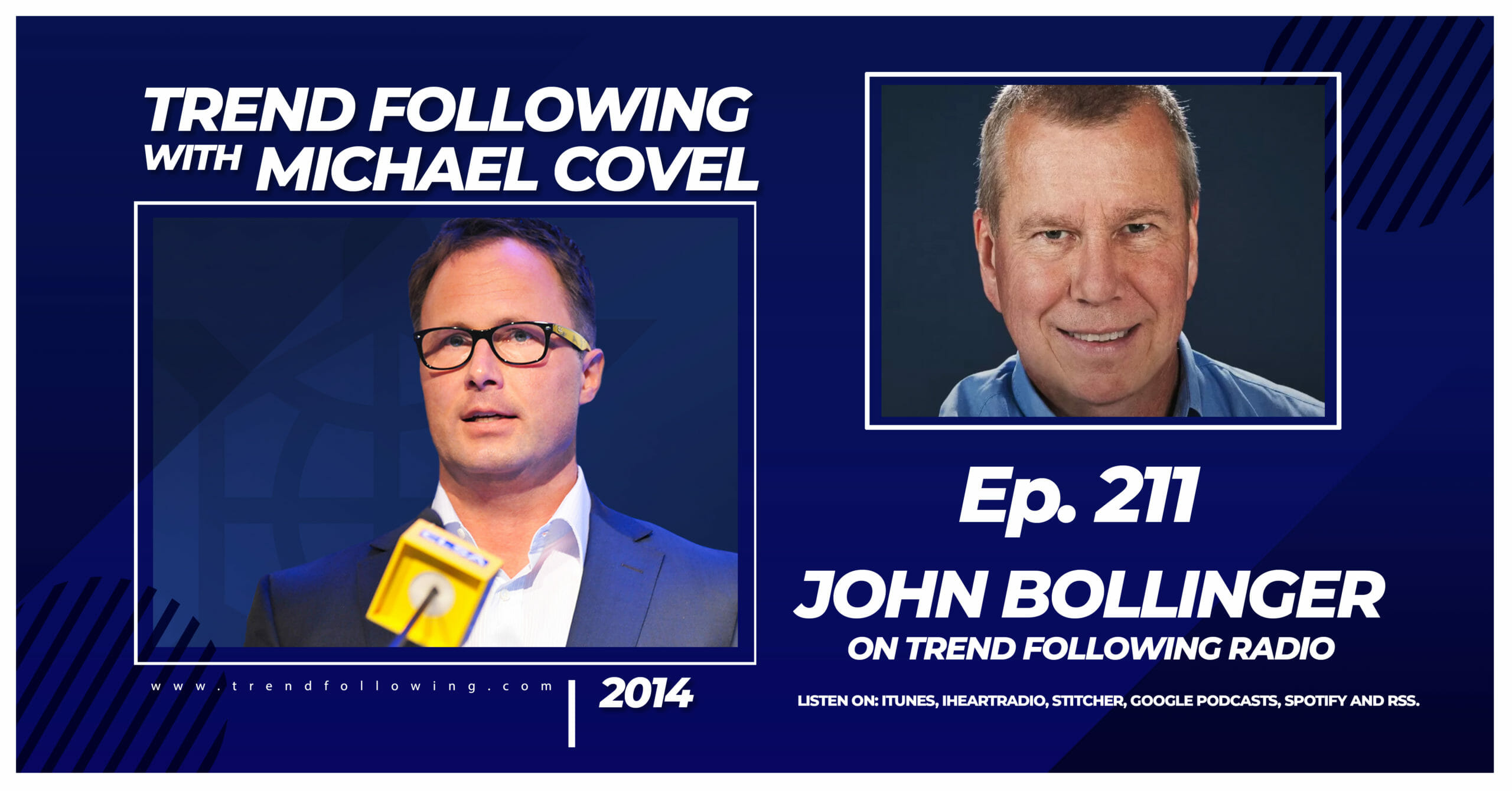
Ep. 211: John Bollinger Interview with Michael Covel on Trend Following Radio

John Bollinger
John Bollinger

My guest today is John Bollinger, an American author, financial analyst, contributor to the field of technical analysis and the developer of Bollinger Bands. Since 1987, he has published the Capital Growth Letter, a newsletter which provides technical analysis of the financial markets.

The topic is Trend Following.

In this episode of Trend Following Radio we discuss:

  • Bollinger Bands as described for the lay person
  • Defining when a price is relatively high or relatively low
  • Defining “relatively high” and “relatively low”
  • Measuring volatility to determine the “width” of a Bollinger Band
  • Standard deviation
  • The beginnings of Bollinger Bands, and how John Bollinger came to put it together
  • Different ideas about volatility in the 1980s
  • Some of Bollinger’s early curiosity triggers, and why he started digging into finance after going to art school
  • Light, film, and Bollinger’s experience at the School of Visual Arts
  • Bollinger’s experience in his apprenticeship to learn technical analysis
  • “The best authority is the price itself”, and why this statement isn’t very well accepted in the mainstream
  • Differences between fundamental and technical analysts
  • Bollinger’s look at media and the presentation of his message over the years
  • Why Bollinger would be known as a quantitative analyst instead of a technician if he started his career now
  • Position sizing
  • Why volatility is the least understood aspect of the market

Listen to this episode:

Jump in!

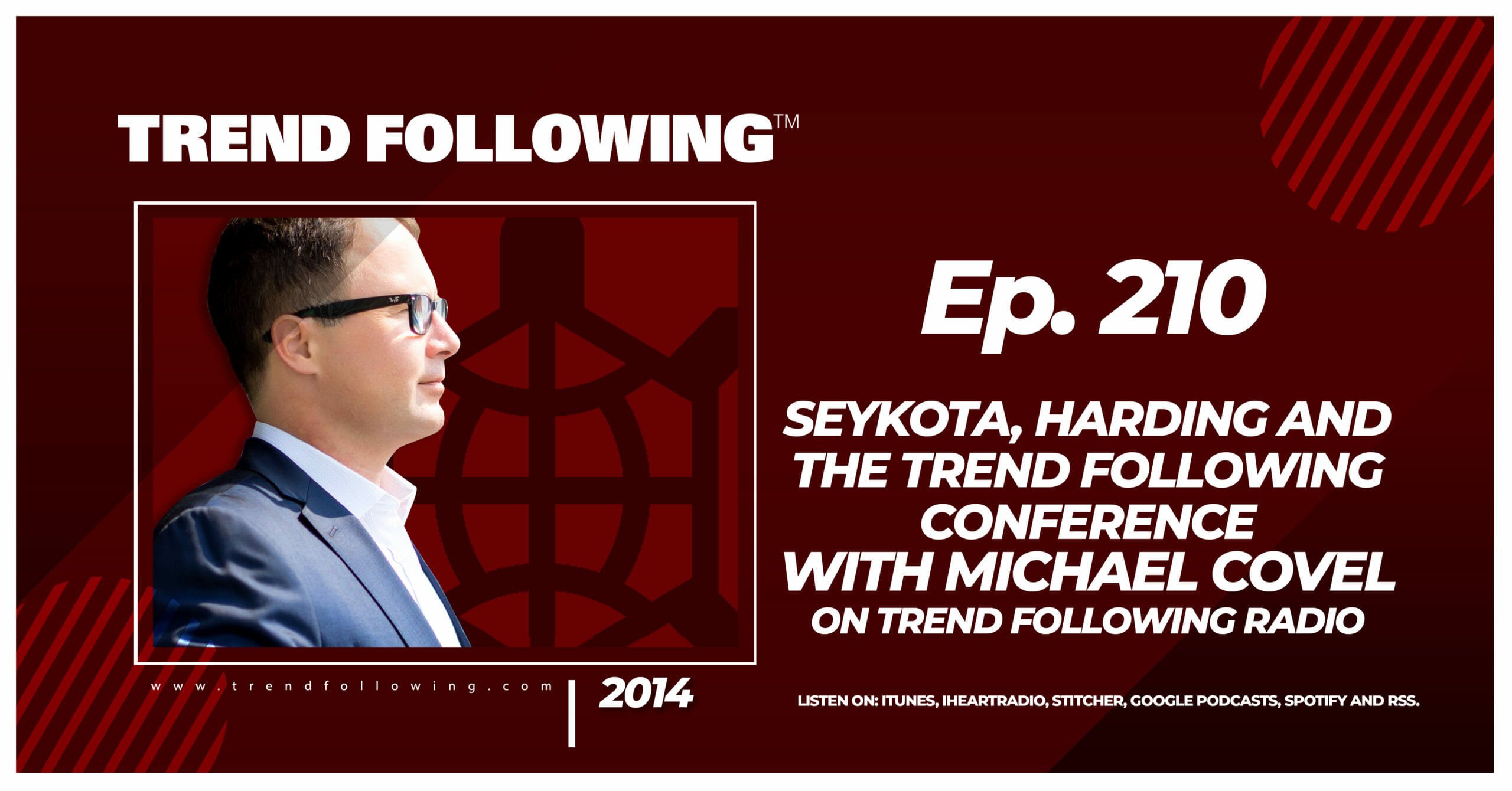
Ep. 210: Seykota, Harding and the Trend Following Conference with Michael Covel on Trend Following Radio

Seykota, Harding and the Trend Following Conference with Michael Covel on Trend Following Radio

Please enjoy my monologue Seykota, Harding & the 2014 Trend Following Conference with Michael Covel on Trend Following Radio. This episode may also include great outside guests from my archive.

Listen to this episode:

Want to learn more Trend Following? Watch my video here.

Ep. 209: Dave Rapach Interview with Michael Covel on Trend Following Radio

Dave Rapach
Dave Rapach

My guest today is Dave Rapach, an internationally renowned researcher in the area of asset return forecasting. His research is highly cited and published in leading scholarly and practitioner journals in Finance and Economics. Rapach is a Professor of Economics and holds the John Simon Endowed Chair in Economics at the Saint Louis University Chaifetz School of Business.

The topic is Trend Following.

In this episode of Trend Following Radio we discuss:

  • Why trend following works from an academic standpoint
  • “Publish or perish” and the difficulty of publishing scholarly articles on trend following
  • Early research on trend following, the random walk theory, and Burton Malkiel’s “A Random Walk Down Wall Street”
  • Warren Buffett, Bill Dunn, and survivorship bias
  • A paper that Rapach traces to the reintroduction of trend following and technical analysis to the academic community
  • Measuring systematic risk
  • Eugene Fama’s recent nobel prize
  • How the trend following world has been neglected by the academic community
  • How Rapach found his way into the academic finance world
  • Covel’s experience digging in to trend following research in the early to mid 1990’s
  • Some of Rapach’s recent papers
  • Why recessions are good for trend following

Listen to this episode:

Jump in!