My guest today is Leo Melamed, a pioneer of financial futures, currencies, and stock indexes. Melamed became Chairman of the Chicago Mercantile Exchange in 1969. In 1972, under his leadership, the CME created the International Monetary Market (IMM), the world’s first financial futures exchange, and launched currency futures. He is currently Chairman Emeritus of CME Group (formerly the Chicago Mercantile Exchange).
The topic is his book Leo Melamed: Escape to the Futures.
In this episode of Trend Following Radio we discuss:
Overcoming odds
China’s futures markets
The middle class in China
Melamed’s experience meeting Milton Friedman and some of the lessons learned
Melamed’s early experiences escaping Nazi-controlled Poland, and eventually going to work for Merrill Lynch
Stock futures
The importance of speculation
Listen to this episode:
Listen to this podcast on iTunes. (Please leave a rating!)
Michael Covel talks with John H. Cochrane on today’s podcast. Cochrane is the AQR Capital Management Distinguished Service Professor of Finance at the University of Chicago Booth School of Business. Covel and Cochrane cover wide territory today. Covel and Cochrane discuss Warren Buffett’s quote that he “would have made a fortune” if the banks weren’t bailed out; crony capitalism; why “a good Bear failure may have saved us from a bad Lehman failure”; the cost of regulation; Uber, taxi service, and regulation; why commodities keep getting cheaper and cheaper, but people with expertise keep getting more and more expensive; the idea of discretion; and healthcare.
My guest today is Meir Statman, the Glenn Klimek Professor of Finance at the Leavey School of Business, Santa Clara University. His research focuses on behavioral finance. He attempts to understand how investors and managers make financial decisions and how these decisions are reflected in financial markets. Meir’s latest book, “Finance for Normal People: How Investors and Markets behave” has been published by Oxford University Press.
The topic is his book What Investors Really Want: Know What Drives Investor Behavior and Make Smarter Financial Decisions.
In this episode of Trend Following Radio we discuss:
How we make decisions, and how these decisions are reflected in markets
What investors want besides the utilitarian aspect of money
Philanthropy and status
Why Madoff’s clients’ own greed helped them fall into a trap
Envy and happiness
The fear of losing and the fear of missing out
Mental accounting
Statman’s drivers and early influences
Libertarianism vs. paternalism
Social Security and mandatory retirement savings
Listen to this episode:
Listen to this podcast on iTunes. (Please leave a rating!)
My guest today is Terry Burnham, an economist who studies the biological and evolutionary basis of human behavior. He has a Ph.D. in Business Economics from Harvard University, a Masters from the MIT Sloan School with a concentration in finance. Terry was a professor at the Harvard Kennedy School, the University of Michigan, and the Harvard Business School. His non-academic experiences include working briefly for Goldman, Sachs & Co., being the chief financial officer for Progenics Pharmaceuticals , a start-up biotechnology company, and being the director of portfolio management for Acadian Asset Management, a quantitative equity manager.
The topic is his book Mean Markets and Lizard Brains: How to Profit from the New Science of Irrationality.
In this episode of Trend Following Radio we discuss:
Burnham removed $1 million from his Bank of America account and said “I don’t trust the banks”
The two ways to think about risk
Separating the ideas of luck and skill
The lizard brain and how it relates back to our choices
A story about interacting with Paul Tudor Jones
Why markets have momentum
The great driver of conformity
Rationality and irrationality
Captive chimps vs. chimps in the wild and the differences in behavior
Predicting when the Fed will step in
Thinking of the worst case scenario for equities and looking to Japan for an example
Negative interest rates
Listen to this episode:
Listen to this podcast on iTunes. (Please leave a rating!)
My guest today is Megan McArdle, a Bloomberg View columnist who writes on economics, business and public policy. She founded the blog “Asymmetrical Information”.
The topic is her book The Up Side of Down: Why Failing Well Is the Key to Success.
In this episode of Trend Following Radio we discuss:
“Trophy kids” and taking the monkey bars away
The idea of a regulator out there trying to guarantee our safety
Why the companies that make it aren’t the ones with the best strategic plan–it’s the ones that execute (and fail well)
The power of experimentation
Nobel winner Vernon Smith and experimentation
The idea of learning in crisis
How sunk costs are difficult for a large part of the population to grasp
Van Halen, errors, and M&M’s
Normative error
Small, manageable risks
Forager morality vs. farmer morality
A story about Kentucky Fried Chicken (KFC)
Listen to this episode:
Listen to this podcast on iTunes. (Please leave a rating!)
New York (May 02, 2014, 6:27 PM ET) — The special master in the Refco Inc. securities fraud multidistrict litigation on Friday recommended that a New York federal judge enter a $669 million judgment against five defendants, for their roles in the scheme that brought down the massive commodity brokerage.
Under Ronald Hedges’ proposal, ex-Refco Group Ltd. President Tone Grant, former Refco CEO Phillip R. Bennett, former Refco Vice President Thomas Hackl [see: Acies Asset Management, S.A.], PlusFunds Group Inc. Founder and Chairman Christopher Sugrue, and Refco Group Holdings Inc. would pay $669,370,9991, plus $78,430 in interest for each day after April 29 until the judgments are entered.
While the defendants had already been judged years earlier to be liable by default, Hedges’ report focused on the damages the group owed stemming from the massive losses Sphinx and PlusFunds investors incurred.
The special master indicated that the group should be held “jointly and severally liable” for the mutlimillion- dollar judgment, leaving the individuals’ portion of the damages owed unclear.
The recommendation will now head to U.S. District Judge Jed S. Rakoff, who is overseeing proceedings for the consolidated suits.
The five defendants are all named in the sprawling litigation brought by liquidators and trustees for Sphinx Ltd., which was induced into depositing hundreds of millions of dollars into accounts that were exposed in the $1.5 billion Refco scheme.
Sphinx and PlusFunds, which helped manage its investments, lost approximately $263 million when Refco collapsed in 2005. Sphinx has since entered liquidation proceedings, and PlusFunds filed for Chapter 11 bankruptcy protection in 2006.
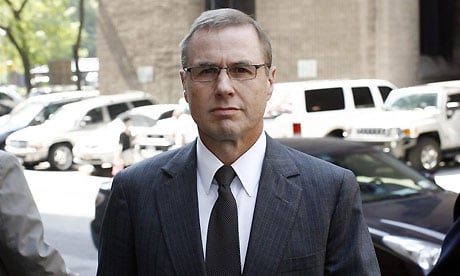
Many were found guilty of criminal charges related to the con, including Bennett, who is serving a 16-year sentence, and Grant, who received a 10-year term of his own.
The suits arose from revelations that Refco executives had concealed $430 million in debt through complex trading and lending schemes and shell companies, in an effort to bolster the company’s financial reports.
Refco sought Chapter 11 protection in October 2005, two months after a $583 million initial public offering, and about a year after it was purchased for $1.9 billion in a leveraged buyout by Thomas H. Lee Partners LP.
Five days before Refco sought protection, more than $312 million was transferred from the Sphinx accounts at Refco to unprotected offshore accounts. The hedge fund group ultimately settled with Refco creditors, agreeing to turn over $263 million.
Meanwhile, federal investigators believe Refco had been covering up customer trading losses by transferring securities to appear as debts owed by Refco Group Holdings Inc., a holding company controlled by former directors. Directors later hid RGHI’s receivables from auditors by transferring funds to make the debt appear to be from an entity not related to RGHI, prosecutors alleged.
The plaintiffs are represented by Lee M. Andelin, Leo R. Beus and Dennis K. Blackhurst of Beus Gilbert PLLC; and David J. Molton, Andrew S. Dash and Mason C. Simpson of Brown Rudnick LLP.
Counsel information for the defendants named in the recommendation was not immediately available Friday.
The case is In re: Refco Securities Litigation, case number 1:07-md-01902, in the U.S. District Court for the Southern District of New York.
Refco Inc.’s former Chief Executive Officer Phillip Bennett and two of his ex-colleagues were ordered to pay $671.7 million to Sphinx Providence Ltd. and its hedge funds for losses stemming from a $2.4 billion fraud at Refco.
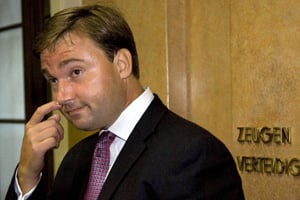
U.S. District Judge Jed Rakoff assessed the damages, including interest, against Bennett, former senior vice president Christopher Sugrue, former executive vice president Thomas Hackl [Acies Asset Management, S.A.] and Refco Group Holdings Inc., an entity Bennett owned and used to hide more than $1 billion of debt.
Once the biggest independent U.S. futures trader, New York-based Refco collapsed in 2005, two months after raising $670 million in an initial public offering. Refco Inc., as it was known after the IPO, filed one of the biggest bankruptcies in U.S. history, after having revealed Bennett’s holding company owed it hundreds of millions of dollars.
In the ruling, which was made public today in Manhattan federal court, Rakoff followed last month’s recommendation of a special master assigned to the case. Rakoff didn’t address the special master’s conclusion that former Refco Group Ltd. President Tone Grant should also be held responsible for the damages.
Bennett is serving a 16-year prison sentence. Grant is serving 10 years.
Sugrue was chairman of PlusFunds, which filed for bankruptcy in March 2006 after the disclosure of its relationship with Refco helped spur investor withdrawals.
My guest today is Cullen Roche, the founder of Orcam Financial Group, a financial services company based out of San Diego. He also runs a very well-known blog called Pragmatic Capitalism (pragcap.com).
The topic is his book Pragmatic Capitalism: What Every Investor Needs to Know About Money and Finance.
In this episode of Trend Following Radio we discuss:
Entrepreneurism
Investing in yourself
The advantages of starting a blog
Why the word “pragmatic” is a word that has become central to Roche’s universe
Eliminating your biases
Why the US going bankrupt is a myth
The myth that central banks exist to enrich bankers
Dr. Laurie Santos and her work with monkeys
Bringing risk down to something we can measure
Warren Buffett
Hedging your bets
Listen to this episode:
Listen to this podcast on iTunes. (Please leave a rating!)