Subscribe now and watch my free trend following VIDEO.

The TurtleTraders Had 5 Questions for Their Trading

The Turtles’ core axioms were the same ones practiced by the great speculators from one hundred years earlier:

“Do not let emotions fluctuate with the up and down of your capital.”
“Be consistent and even-tempered.”
“Judge yourself not by the outcome, but by your process.”
“Know what you are going to do when the market does what it is going to do.”
“Every now and then the impossible can and will happen.”
“Know each day what your plan and your contingencies are for the next day.”
“What can I win and what can I lose? What are probabilities of either happening?”

However, there was precision behind the familiar-sounding euphemisms. From the first day of training, William Eckhardt outlined five questions that were relevant to what he called an optimal trade. The Turtles had to be able to answer these questions at all times:

1. What is the state of the market?
2. What is the volatility of the market?
3. What is the equity being traded?
4. What is the system or the trading orientation?
5. What is the risk aversion of the trader or client?

There was no messing around in Eckhardt’s tone, as he suggested that these were the only things that had any importance.

What is it the state of the market? The state of the market simply means. “What is the price that the market is trading at?” If Microsoft is trading at 40 a share today, then that is the state of that market.

What is the volatility of the market? Eckhardt taught the Turtles that they had to know on a daily basis how much any market goes up and down. If Microsoft on an average trades at 50, but typically bounces up and down on any given day between 48 and 52, then Turtles were taught that the volatility of that market was four. They had their own jargon to describe daily volatilities. They would say that Microsoft had an “N” of four. More volatile markets generally carried more risk.

What is the equity being traded? The Turtles had to know how much money they had at all times, because every rule they would learn adapted to their given account size at that moment.

What is the system or the trading orientation? Eckhardt instructed the Turtles that in advance of the market opening, they had to have their battle plan set for buying and selling. They couldn’t say, “Okay, I’ve got $100,000; I’m going to randomly decide to trade $5,000 of it.” Eckhardt did not want them to wake up and say, “Do I buy if Google hits 500 or do I sell if Google hits 500?” They were taught precise rules that would tell them when to buy or sell any market at any time based on the movement of the price. The Turtles had two systems: System One (S1) and System Two (S2). These systems governed their entries and exits. S1 essentially said you would buy or sell short a market if it made a new twenty-day high or low.

What is the risk aversion of the trader or client? Risk management was not a concept that the Turtles grasped immediately. For example, if they had $10,000 in their account, should they bet all $10,000 on Google stock? No. If Google all of a sudden dropped, they could lose all $10,000 fast. They had to bet a small amount of the $10,000, because they didn’t know whether or not a trade was going to go in their favor. Small betting (for example, 2 percent of $10,000 on initial bets) kept them in the game to play another day, all the while waiting for a big trend.

Note: Excerpt from The Complete TurtleTrder.


How can you move forward immediately to Trend Following profits? My books and my Flagship Course and Systems are trusted options by clients in 70+ countries.

Also jump in:

Trend Following Podcast Guests
Frequently Asked Questions
Performance
Research
Markets to Trade
Crisis Times
Trading Technology
About Us

Trend Following is for beginners, students and pros in all countries. This is not day trading 5-minute bars, prediction or analyzing fundamentals–it’s Trend Following.
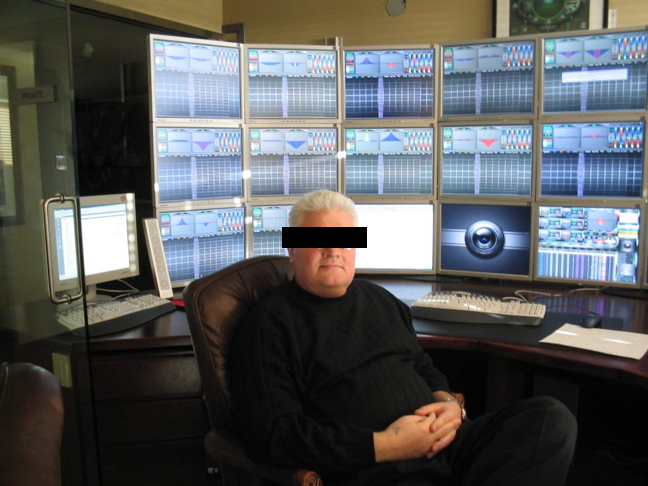
Do You Have 21 Monitors on Your Desk? If So, Why?

This desk has 21 monitors on it. Why?


How can you move forward immediately to Trend Following profits? My books and my Flagship Course and Systems are trusted options by clients in 70+ countries.

Also jump in:

Trend Following Podcast Guests
Frequently Asked Questions
Performance
Research
Markets to Trade
Crisis Times
Trading Technology
About Us

Trend Following is for beginners, students and pros in all countries. This is not day trading 5-minute bars, prediction or analyzing fundamentals–it’s Trend Following.

Trend Following Does Not Involve Prediction

John Thomas, The Mad Hedge Fund Trader, writes:

Fundamental researchers are asserting that at $100 per share in earnings, generating a price earnings multiple of 11.5, stocks are at the historical bottom of a 10-22  range. Q3 earnings are imminent, and will outperform on the upside, although not with the magnitude seen in recent quarters. Plus, QE3 is on the table, and the Federal Reserve may deliver a surprise at its upcoming September 20-21 meeting.

Furthermore, risk assets are about to enter a period of seasonal strength. If you “sell in May and go away”, you should then “return in September and buy.”

No, no, cry the technicians. The S&P 500 is in an ABC corrective pattern. Wave 4 is complete, and the beginning of wave 5 is imminent, crashing the market to new lows. This argument is most clearly elicited by my friend, Arthur Hill, at StockCharts.com in the space below. He sees a downside target of 1,025, the July 2010 low.

What is a befuddled individual investor to make of all this? My belief is that fundamentals always win out over the long term, and that technical cues are at best, a lagging indicator. I use technicals for guidelines on where to place orders on a short term basis. The longer you stretch out your time frame, the less relevant they become.

At best, technicals are right 50% of the time, right in the same league as a coin toss. How many technical analysis hedge funds are out there? None. They are all fundamentally driven.

Trend followers are technical traders. How are those left out John? Wow. He continues:

The same technicians making the incredibly bearish prognostications today were making equally convincing bullish arguments in July.

However, since we are descended from prehistoric hunter gatherers, we are all visually oriented. We respond to stimuli we can see much more rapidly than those we can conceive. A picture truly is worth 1,000 words. And probably a lot more. That’s why so many brokerage firms use them to sell research. I employ charts to back up my fundamental arguments because they are so easy to understand, definitely not the other way around.

So I think the fundamentals will eventually win out, and that we will get the autumn rally that I have been predicting. Exactly when will that happen? Don’t ask me. Go ask a technician.

Trend following is not fundamental trading. It is not predictive technical trading. Trend following is technical trading, but it reacts to market moves over trying to predict them. That is a massive distinction. Few seem to see that clearly.


How can you move forward immediately to Trend Following profits? My books and my Flagship Course and Systems are trusted options by clients in 70+ countries.

Also jump in:

Trend Following Podcast Guests
Frequently Asked Questions
Performance
Research
Markets to Trade
Crisis Times
Trading Technology
About Us

Trend Following is for beginners, students and pros in all countries. This is not day trading 5-minute bars, prediction or analyzing fundamentals–it’s Trend Following.
Michael Gibbons: There Is Only the Current Trend and What Is

Feedback in from Michael Gibbons of Gibbons Trading:

As with most things in trading, the least accepted methods are also the most efficacious. One of the least accepted trading methods by both academia and the financial media is the concept of trend following. In it’s most elementary form, trend following is about being long when markets are rising and being short when they are declining. There are no forecasts or shoulds. There is only the current trend and what is.

One of the most effective journalists to popularize trend following is author Michael Covel. He almost single-handedly has raised the consciousness of investors around the world to the effectiveness of trend following. He has brought many of the world’s greatest trend followers to light, and I cannot thank him enough for that.

If trend following was widely accepted, there would be no need for about 95% of the people employed in the securities industry. Needless to say, this fact alone is one of the main causal reasons that trend following is out of the mainstream. Most simply ignore it’s incomparable track record in both rising and declining markets.

Michael Covel has provided the research and the data to a mass audience to show what we trend followers are all about. I cannot express properly how grateful I am for Michael’s efforts. His impeccable journalism is rare in any context, but especially in the field of trading and investments. As a result of his work, the great achievements of trend followers can no longer be ignored nor viewed as just an anomaly.

Michael R Gibbons
Managing Partner
Gibbons’ Trading LLC

Thanks Michael.


How can you move forward immediately to Trend Following profits? My books and my Flagship Course and Systems are trusted options by clients in 70+ countries.

Also jump in:

Trend Following Podcast Guests
Frequently Asked Questions
Performance
Research
Markets to Trade
Crisis Times
Trading Technology
About Us

Trend Following is for beginners, students and pros in all countries. This is not day trading 5-minute bars, prediction or analyzing fundamentals–it’s Trend Following.

Trend Following in Singapore, Malaysia and Indonesia

More ads:

1
2
3
4
5
6
7


How can you move forward immediately to Trend Following profits? My books and my Flagship Course and Systems are trusted options by clients in 70+ countries.

Also jump in:

Trend Following Podcast Guests
Frequently Asked Questions
Performance
Research
Markets to Trade
Crisis Times
Trading Technology
About Us

Trend Following is for beginners, students and pros in all countries. This is not day trading 5-minute bars, prediction or analyzing fundamentals–it’s Trend Following.
Laurence Fletcher at Reuters Pens Diss Headline; The Media Still Marginalize Trend Followers with “Black Box” Line

Laurence Fletcher of Reuters writes “Black Box” Hedge Funds Profit in Volatile Markets”:

LONDON (Reuters) – Hedge funds run by sophisticated computer programs are profiting from large falls in stock markets and a rocketing gold price this month, even as funds managed by human beings struggle to cope with high market volatility.

Insiders say so-called managed futures funds [read: trend following], which try to latch onto market trends, are making money from declining bond yields and falling equities, as investors seek safe havens amid the eurozone debt crisis and after the U.S.’s credit rating downgrade.

These “black box” funds are up 4.2 percent so far this month, according to Hedge Fund Research’s HFRX index, while the average hedge fund is down 4.0 percent and managers betting on rising and falling stock prices have lost a hefty 7.3 percent on average.

Why does he use the word “black box”? If he was just “reporting” he would not immediately use a pejorative to describe trend followers like Winton. Bottom line, trend following is making a killing because it is sound trading strategy that performs especially well when the rest of the world ***** their pants. Why is THAT still news after all these decades?

Aug 25th Note: I asked Laurence why he used the term. His reply:

Hi Michael, thanks for your email. I’ve used ‘black box’ as a quick way to describe to the man on the street what computer-driven funds do. Why do you ask?

I asked back, “But how does that tell them? Meaning, how does the word black box tell folks what Winton does?” No word yet.


How can you move forward immediately to Trend Following profits? My books and my Flagship Course and Systems are trusted options by clients in 70+ countries.

Also jump in:

Trend Following Podcast Guests
Frequently Asked Questions
Performance
Research
Markets to Trade
Crisis Times
Trading Technology
About Us

Trend Following is for beginners, students and pros in all countries. This is not day trading 5-minute bars, prediction or analyzing fundamentals–it’s Trend Following.

The TurtleTrader Want Ad

Back in the early 80s trader Richard Dennis ran this famous ad looking for trader trainees. The full story is my second book The Complete TurtleTrader.


How can you move forward immediately to Trend Following profits? My books and my Flagship Course and Systems are trusted options by clients in 70+ countries.

Also jump in:

Trend Following Podcast Guests
Frequently Asked Questions
Performance
Research
Markets to Trade
Crisis Times
Trading Technology
About Us

Trend Following is for beginners, students and pros in all countries. This is not day trading 5-minute bars, prediction or analyzing fundamentals–it’s Trend Following.