Subscribe now and watch my free trend following VIDEO.

Ep. 409: Thomas Sterner Interview with Michael Covel on Trend Following Radio

Tom Sterner
Tom Sterner

Subscribe to Trend Following Radio on iTunes

My guest today is Thomas Sterner, the founder and CEO of The Practicing Mind Institute. As a successful entrepreneur he is considered an expert in Present Moment Functioning or PMF tm. He is a popular and in demand speaker who works with high performance individuals including, athletes, industry groups and individuals, helping them to operate effectively within high stress situations so that they can break through to new levels of mastery. He self published the first edition of “The Practicing Mind,” and as it snowballed into a phenomenon, publishers started knocking at his door for wider distribution.

The topic is his book The Practicing Mind: Developing Focus and Discipline in Your Life Master Any Skill or Challenge by Learning to Love the Process.

In this episode of Trend Following Radio we discuss:

  • Attention combined with intention
  • Non-judgment
  • Perils of multitasking
  • Controlling your mind
  • Constant media chatter

“If your not in control of your thoughts, then you are not in control of yourself.” – Thomas Sterner

“All of life is practice in one form or another. Actively practicing something is very different from passively learning. You will never reach a level of performance that feels complete so learn to love the art of practicing your skill.” – Thomas Sterner

Mentions & Resources:

Listen to this episode:

Jump in!

Get the foundation to making money in up, down and *surprise markets on the Trend Following mailing list.

Ep. 403: Barbara Fredrickson Interview with Michael Covel on Trend Following Radio

Barbara Fredrickson
Barbara Fredrickson

Subscribe to Trend Following Radio on iTunes

My guest today is Barbara Fredrickson, a professor at the University of North Carolina at Chapel Hill. She is the Kenan Distinguished Professor of Psychology, and the Principal Investigator of the Positive Emotions and Psychophysiology Lab at the University of North Carolina. She is a social psychologist that conducts research in emotions and positive psychology.

The topic is her book Love 2.0: Finding Happiness and Health in Moments of Connection.

In this episode of Trend Following Radio we discuss:

  • Inner-experiences and well being
  • The undoing effect
  • Positive negative ratio
  • The body’s definition of love
  • Depression
  • The idea of soul mates
  • Emotional connections
  • Relationship of health and positive emotion

“When two people connect over shared positivity there is a biochemical cascade within each person.” – Barbara Fredrickson

“Positive emotions are equally altering our action urges but instead of narrowing them, they broaden our thought and action repertoire so that we can see the big picture and potentially go in many possible directions, not just one direction.” – Barbara Fredrickson

Mentions & Resources:

Listen to this episode:

Jump in!

Get the foundation to making money in up, down and *surprise markets on the Trend Following mailing list.

Human Behavior: Core to Trend Following

Calm
Calm

Consider an excerpt from Trend Following:

Perhaps not surprising, trend followers have spent as much time observing and understanding human behavior as they have trading. Understanding human behavior and how it relates with markets is commonly referred to as behavioral finance.

Behavioral finance evolved out of a contradiction between classical economic theory and reality. Economic theory is based on the assumption that people act rationally, have identical values and access to information, and use rational decision making. The truth is people are irrational and seldom make completely rational decisions even if they think they do. I have had the good fortune to learn from some of the top minds in the field of behavioral finance. From Nobel Prize winner Vernon Smith to Charles Faulkner, my eyes have been opened. Faulkner outlined the core issues:

“The current proliferation of electronic technologies— computers, the Internet, cell phones, 24-hour news, and instant analysis—tend to distract us from the essentially human nature of markets. Greed, hope, fear, and denial, herd behavior, impulsiveness, and impatience with process (‘Are we there yet?’) are still around, and if anything, more intensely so. Few people have absorbed the hard neuroscience research that reasons arrive afterwards. That given the choice between a simple, easy-to-understand explanation that works and a difficult one that doesn’t, people tend to pick the latter. People would rather have any story about how a series of price changes happened than that there is no rational reason for it. Confusing hindsight with foresight and complexity with insight are a few more ‘cognitive illusions’ of Behavioral Finance.”

Faulkner is correct, but that doesn’t make his words easy. The problem is that by not accepting that truth, you will get into trouble one way or another, as Carl Sagan reminds us:

“It is far better to grasp the universe as it really is than to persist in delusion, however satisfying and reassuring.”

A few years after writing Trend Following I came across another great mind in the field of human behavior and psychology, Alan Watts. Consider some feedback from a listener:

Mike,

Thanks for turning me on to Alan Watts through your podcasts. Below is a link to an audiobook that I think you may find interesting, considering your interests in yoga and other eastern traditions. Andrew is a Lama (not a llama) and an old friend of mine: Here

Enjoy!
[Name]

Thanks!


How can you move forward immediately to Trend Following profits? My books and my Flagship Course and Systems are trusted options by clients in 70+ countries.

Also jump in:

Trend Following Podcast Guests
Frequently Asked Questions
Performance
Research
Markets to Trade
Crisis Times
Trading Technology
About Us

Trend Following is for beginners, students and pros in all countries. This is not day trading 5-minute bars, prediction or analyzing fundamentals–it’s Trend Following.

Curiosity Should Take The Drivers Seat

I have written multiple books. All from a different perspective, but still all having trend following connective tissue. Consider an excerpt from the preface of my first book Trend Following:

Trend Following challenges much of the conventional wisdom about successful trading and traders. To avoid the influences of conventional wisdom, I was determined to avoid being influenced by institutionalized knowledge defined by Wall Street and was adamant about fighting “flat earth” thinking. During my research, starting with an assumption and then finding data to support it was avoided. Instead, questions were asked and then, objectively, doggedly, and slowly, answers were revealed.

If there was one factor that motivated me to work in this manner, it was simple curiosity. The more I uncovered about trend followers, the more I wanted to know. For example, one of the earliest questions (without an answer already) was learning who profited when Barings Bank collapsed. My research unearthed a connection between Barings Bank and trend follower John W. Henry (now the majority owner of the Boston Red Sox). Henry’s track record generated new questions, such as, “How did he discover trend following in the first place?” and “Has his approach changed in any significant way in the past 30 years?”

For those that follows my work, you can see how my foundation has remained the same over the past 15+ years:

Hi Michael,

Would you please clarify the chronology of your 4 books? What order were they written and published? Thank you.

[Name]

Trend Following
The Complete TurtleTrader
Trend Commandments
The Little Book of Trading

That is the order, but the content can be read in any order. Timeless.


How can you move forward immediately to Trend Following profits? My books and my Flagship Course and Systems are trusted options by clients in 70+ countries.

Also jump in:

Trend Following Podcast Guests
Frequently Asked Questions
Performance
Research
Markets to Trade
Crisis Times
Trading Technology
About Us

Trend Following is for beginners, students and pros in all countries. This is not day trading 5-minute bars, prediction or analyzing fundamentals–it’s Trend Following.

Overpopulation: A Trend Following Debate

When asked about trend following becoming “overpopulated” a Richard Dennis quote is often best:

“I don’t think trading strategies are as vulnerable to not working if people know about them, as most traders believe. If what you are doing is right, it will work even if people have a general idea about it. I always say you could publish rules in a newspaper and no one would follow them. The key is consistency and discipline.”

Psychology and following the rules are paramount–bottom line. Consider more from an excerpt from The Complete Turtle Trader:

The techniques that Dennis and Eckhardt taught the Turtles were different from Dennis’s seasonal spread techniques from his early floor days. The Turtles were trained to be trend-following traders. In a nutshell, that meant that they needed a “trend” to make money. Trend followers always wait for a market to move; then they follow it. Capturing the majority of a trend, up or down, for profit is the goal.

The Turtles were trained this way because by 1983, Dennis knew the things that worked best were “rules”: “The majority of the other things that didn’t work were judgments. It seemed that the better part of the whole thing was rules. You can’t wake up in the morning and say, ‘I want to have an intuition about a market.’ You’re going to have way too many judgments.”

While Dennis knew exactly where the sweet spot was for making big money, he often fumbled his own trading with too many discretionary judgments. Looking back, he blamed his pit experience, saying, “People trading in the pit are very bad systems traders generally. They learn different things. They react to the [price] ‘tick’ in your face.”

Feedback from a listener that addresses Richard Dennis:

Hi Michael,

Hope you are doing well. Again, I appreciate everything, specially your commitment to the trend following podcast. In a recent back to back [other podcast] between [name] and [name] they address an important question:

Q: What lessons do you take from the fall of Richard Dennis? One of the biggest swingers at the Board of Trade…great trader…not only that but he believed he could replicate trading skills and did so successfully. He trained a whole generation of people who came up [and] manged billions…and then he basically goes and explodes. What is the practical lesson for your audience here?

A: Speaking to the trend following school in particular (and various trend followers who blew up or bled out): I do believe that certain trading styles and methodologies can suffer greatly from overpopularity. When there are too many people following a widespread strategy, and not enough differentiation among that active group, the strategy can be degraded to the point of no longer working.

Personally, I don´t agree with that argument because market trends have been persistent over time. As Howard Marks said: “We don´t have to worry about everybody becoming to prudent or to wise, because we are talking about human nature.”

I would appreciate your insight on this argument.

Peace,
[Name]

I don’t see any argument. My views on this are answered across 2 books comprehensively (the question above has some inaccuracies for starters):

1: The Complete TurtleTrader
2: Trend Following

My best response is in about 180,000 combined words (that is not a dodge; reality is that my answer is long). And yes I talk about the good and bad of Richard Dennis, but the good far outweighed the bad.


How can you move forward immediately to Trend Following profits? My books and my Flagship Course and Systems are trusted options by clients in 70+ countries.

Also jump in:

Trend Following Podcast Guests
Frequently Asked Questions
Performance
Research
Markets to Trade
Crisis Times
Trading Technology
About Us

Trend Following is for beginners, students and pros in all countries. This is not day trading 5-minute bars, prediction or analyzing fundamentals–it’s Trend Following.
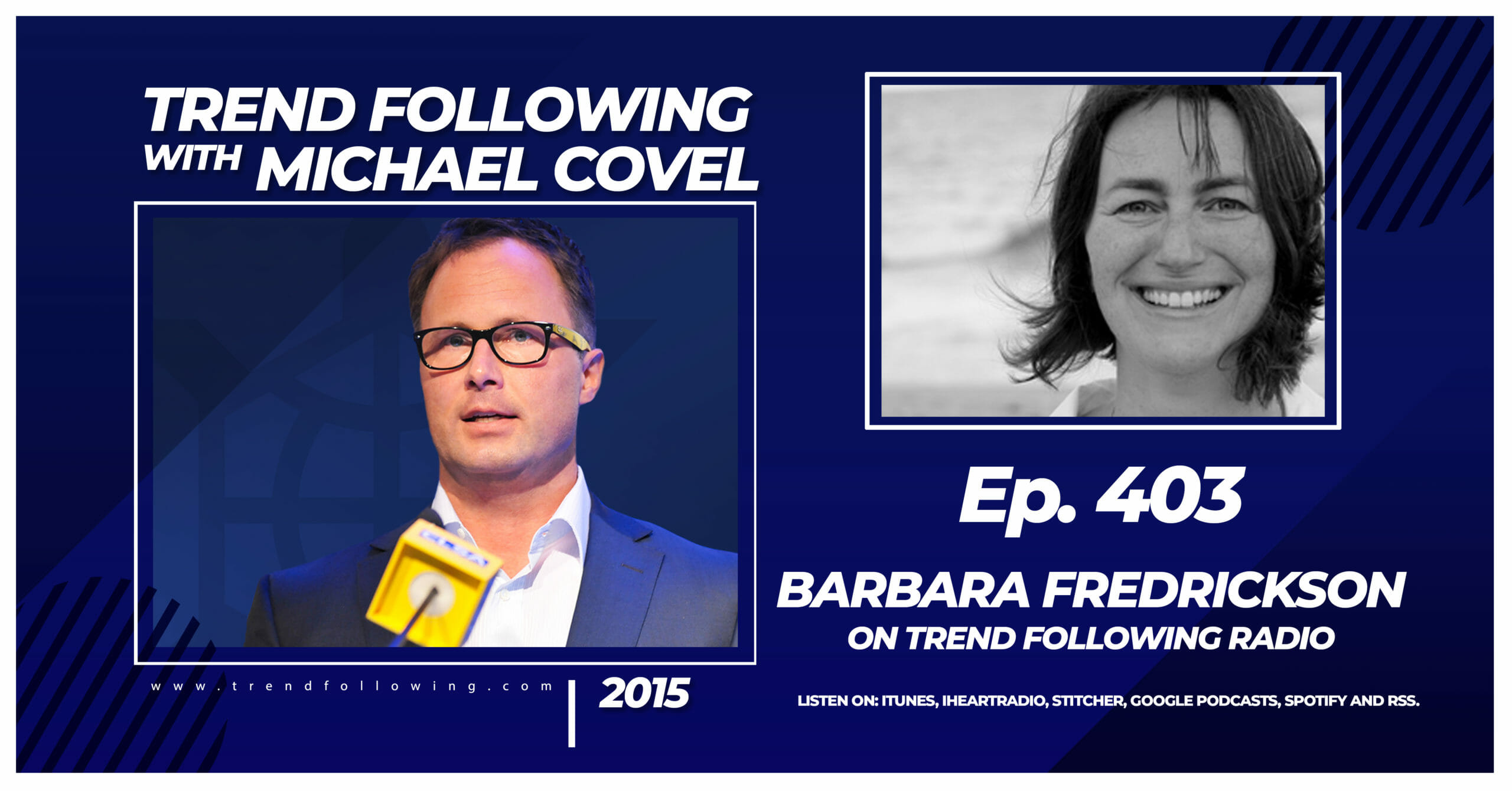
Ep. 389: Joey Yap Interview with Michael Covel on Trend Following Radio

Joey Yap
Joey Yap

Subscribe to Trend Following Radio on iTunes

Please enjoy my monologue Logic Over Faith with Michael Covel on Trend Following Radio. This episode may also include great outside guests from my archive.

In this episode of Trend Following Radio:

  • Experts: get close to them and learn
  • You can’t predict the future, you can only see patterns
  • If you don’t like your destiny, go the other direction
  • Change your environment, change your life
  • Corporate culture: an energy determined by leaders
  • You don’t have to invent – fix something

“There are two kinds of people. People who make things complex, and people who simplify.” – Joey Yap

Mentions & Resources:

Listen to this episode:

Want to learn more Trend Following? Watch my video here.

Get the foundation to making money in up, down and *surprise markets on the Trend Following mailing list.

My Thoughts on Gaining Quick Riches from Day and Short Term Trading

Consider an excerpt from Trend Following:

When you trade more or with higher frequency, the profit that you can earn per trade decreases, whereas your transaction costs stay the same. This is not a winning strategy. Yet, traders still believe that short-term trading is less risky. Short-term trading, by definition, is not less risky, as evidenced by the catastrophic blowout of Victor Niederhoffer and Long Term Capital Management (LTCM). Do some short-term traders excel? Yes. However, think about the likes of whom you might be competing with when you are trading short term. Professional short-term traders, such as Jim Simons, have hundreds of staffers working as a team 24/7. They are playing for keeps, looking to eat your lunch in the zero-sum world. You don’t stand a chance.

Unfortunately, the flaws in day trading are often invisible to those who must know better. Sumner Redstone, CEO of Viacom, was interviewed recently and talked of constantly watching Viacom’s stock price, hour after hour, day after day. Although Redstone is a brilliant entrepreneur and has built one of the great media companies of our time, his obsession with following his company’s share price is not a good example to follow. Redstone might feel his company is undervalued, but staring at the screen will not boost his share price.

The logic is clear. However, emails still arrive:

Listener: Good morning. I am fairly knowledgeable about Trend Following as a result of reading some of your books. My current plan is to successfully and consistently day trade the e-Mini S&P, then take those profits and learn Trend Following via your course and then successfully trade that way as well. So for the past almost 6 months I have been studying, following and recording daily price action and trading the S&P futures with varying degrees of success and failure. I believe that I am poised for a major breakthrough in my trading plan. As a result of hundreds of hours of studying and recording I have noticed some correlations of overnight price activity with daily price activity, price movement that is inter-related and occurs on a regular basis. To me, these are identifiable events (patterns) on the charts that reveal the “invisible hands” that influence and drive market activity, and perhaps tip off their thinking of where they are going to move the market to. I am now able to use this information on a small scale to take profits out of the market, and continue to make excellent progress. However, I still can’t pinpoint exactly how to use this information on a larger scale to make profitable trading decisions . I have an idea of how to conduct a study to determine if indeed this realization can or cannot be used to make consistently profitable trading decisions, but am not very sure if it would be correct or the best way to conduct a study. I would like to enlist the services of an individual who is well-versed in these types of studies using statistics, probabilities, time and percentages to determine possible outcomes. For example, if I see that a certain overnight price action occurred and it was inter-related with yesterday’s activity and/or recent overnight prices in a certain way, then what are the percentages/probability that today’s activity will be X. As I said earlier, I have recorded these relationships for just shy of 6 months now and suspect there is a way to use this information to make profitable trading decisions, but I’m not quite sure. So, my question for you is can you recommend anybody who you know that has the skill set to do this type of study, and may consider helping me make this determination? Of course I understand that there would be fair compensation for this service. I have already reached out to [name] but have not received a response, so I thought this may be a better way to go. I’ve also been to the Mathematics department at Ohio State University searching for help there, but to no avail. Please let me know what your thoughts are, and thank you very much for your time and for reading this.

Covel: Just to clarify you are asking only about short term S&P trading? To be direct: I have zero leads to help you on that front. I counsel all to avoid day trading. Feel free to follow up.

Listener: Understood. Yes, I am in an S&P trade for 2-3 minutes on average, 12-15 trades per day on average. This is due to the minimal margin requirements, only $500 per contract. It is definitely a very difficult type of trading, but I am using it to be able to afford to Trend Trade. I have been blessed to be shown a system that works which I discovered through much charting and effort. I call it RcS MP for “Reversal continuation System using Magnet Prices”. There is price action that occurs regularly that is “hidden in plain sight”. For instance, look at the 1 minute chart on the left in my attachment. From 1111 to 1122 the price action is a high possibility indication that prices will go down. I drew the grey lines (ON50%- 73, etc.) on the chart at about 730AM, and 4 hours later it is telling me that there’s a good chance of prices going down. They hit the ONT2a- 70 exactly, then went down to within .75 pt to the ONT3- 66.75. Short 2 contracts from 72 to 70, short 2 contracts from 72 to 68 equals 12 pts total, $600. It happens over and over again all week long. I’m looking for help to verify whether or not certain correlations can give me a high probability of larger profits in a longer time frame. Anyway, please do not share this with anybody. I appreciate your time, thank you again.

Covel: From a past thread: Ed Seykota on short-term trading.


How can you move forward immediately to Trend Following profits? My books and my Flagship Course and Systems are trusted options by clients in 70+ countries.

Also jump in:

Trend Following Podcast Guests
Frequently Asked Questions
Performance
Research
Markets to Trade
Crisis Times
Trading Technology
About Us

Trend Following is for beginners, students and pros in all countries. This is not day trading 5-minute bars, prediction or analyzing fundamentals–it’s Trend Following.