Subscribe now and watch my free trend following VIDEO.

Ep. 247: Van Tharp Interview with Michael Covel on Trend Following Radio

Van Tharp
Van Tharp

My guest today is Van Tharp, Tharp runs the Van Tharp Institute and is the author of four acclaimed books published by McGraw Hill: Super Trader, Trade Your Way to Financial Freedom, Safe Strategies for Financial Freedom, and Financial Freedom Through Electronic Day Trading. He was also featured in Jack Schwager’s Market Wizard’s: Interviews with Great Traders. Van Tharp received his Ph.D. in psychology, is a certified Master Practitioner of Neuro Linguistic Programming (NLP), a Certified Master Time Line Therapist, a certified Modeler of NLP, and an Assistant Trainer of NLP. He has used his expertise in NLP to create the successful models of trading and investing upon which so much of his work is based.

The topic is his book Trading Beyond the Matrix: The Red Pill for Traders and Investors.

In this episode of Trend Following Radio we discuss:

  • Beliefs in the context of trading and investing
  • The moment of now, and the Navajo’s belief of a never-ending present
  • The belief examination paradigm
  • “Big money” and what it means to Van Tharp
  • The idea of “trader jail”
  • Fear of the unknown
  • The importance of sleep
  • The difference between spirituality and religion

Listen to this episode:

Jump in !

Van Tharp

Fundamentals Alone Does Not Mean Connective Tissue

Gaping Void

Source: gapingvoid.com.


How can you move forward immediately to Trend Following profits? My books and my Flagship Course and Systems are trusted options by clients in 70+ countries.

Also jump in:

• Trend Following Podcast Guests
• Frequently Asked Questions
• Performance
• Research
• Markets to Trade
• Crisis Times
• Trading Technology
• About Us

Trend Following is for beginners, students and pros in all countries. This is not day trading 5-minute bars, prediction or analyzing fundamentals–it’s Trend Following.

5 Minute Bar or Weekly Bar: The Same Thing! Not Exactly the Same

Consider as a foundation to this post:

“The window on analysis is shrinking. People are moving so fast now that they don’t have time to think. They’re scanning, swiping, clicking, liking, tweeting and moving on at full velocity. They’re making decisions based on feelings, not facts. They are often choosing not because of what they think, but because of how something makes them feel.”

So, I was having a conversation with a guy online. A video out there had made the declarative statement that good trading was about switching between time frames: 5 minute bar to weekly bar to whatever. The video implied it’s all about switching. I said to this guy: “It sounds plausible to switch from 5 minute to weekly bar?” He offered:

Let’s say my trading approach is to trade when a particular technical pattern appears. Is it not plausible that I might look on a number of timescales to find instances of that pattern (either manually or getting a computer to do the spade work)?…However, personally I don’t think that published stats are the be all and end all [made in response to my call for empirical data]. For example, if someone who seems plausible tells me that they have traded the (say) the five minute chart using a particular method and made a profit over thousands of trades, I regard that as evidence. Also, I’m more interested in the theoretical underpinnings of a methodology than the empirical evidence, given that markets change and are designed to remove edges over time.

Try to make a system out of those feelings. Try to code those feelings. This inane interchange brought to mind a great line from Graham Greene’s The Quiet American:

“He was impregnably armored by his good intentions and his ignorance.”

Indeed. A failure to communicate:


How can you move forward immediately to Trend Following profits? My books and my Flagship Course and Systems are trusted options by clients in 70+ countries.

Also jump in:

• Trend Following Podcast Guests
• Frequently Asked Questions
• Performance
• Research
• Markets to Trade
• Crisis Times
• Trading Technology
• About Us

Trend Following is for beginners, students and pros in all countries. This is not day trading 5-minute bars, prediction or analyzing fundamentals–it’s Trend Following.

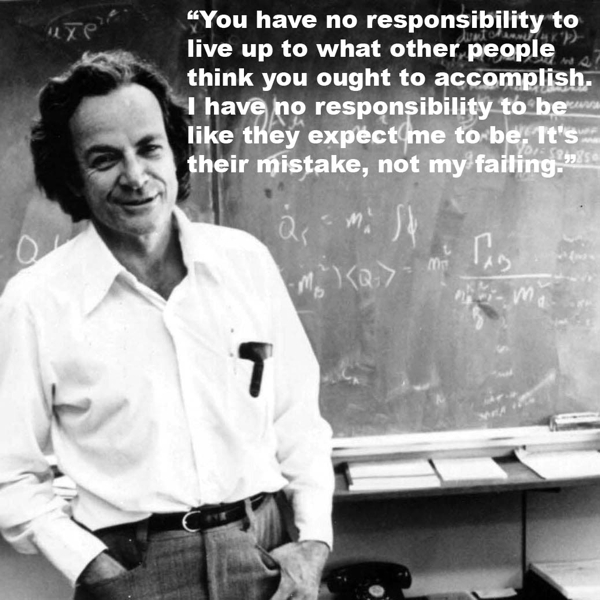
Paraphrasing Richard Feynman on “Price” Importance

Trend followers trade the “price”. It’s the number that can’t be faked, the real indicator of the past, now and the future. Richard P. Feynman adds:

“You can know the name of a bird in all the languages of the world [think of all those so-called market fundamentals], but when you’re finished, you’ll know absolutely nothing whatever about the bird…So let’s look at the bird and see what it’s doing — that’s what counts.”

What is the market doing right now? That’s what counts. The price.

richard feynman


How can you move forward immediately to Trend Following profits? My books and my Flagship Course and Systems are trusted options by clients in 70+ countries.

Also jump in:

• Trend Following Podcast Guests
• Frequently Asked Questions
• Performance
• Research
• Markets to Trade
• Crisis Times
• Trading Technology
• About Us

Trend Following is for beginners, students and pros in all countries. This is not day trading 5-minute bars, prediction or analyzing fundamentals–it’s Trend Following.

Give Me the Data; Don’t Whine

You have a trading strategy that works? Prove it. Give me the empirical data. Or you can go this direction:

When people see something they love is under threat, their first reaction is to build an “impenetrable” wall, a Maginot Line–and just to be extra safe they decide to enclose a bit more territory, a buffer zone, inside its fortifications. It seems like a good, prudent idea. It seems to protect us from the awful slippery slope, the insidious thin edge of the wedge, and as everyone knows, if you give them an inch, they’ll take a mile. Dig the moat! Build the wall! And as far out as you can afford. But this policy typically burdens the defenders with a brittle, extravagant (implausible, indefensible) set of dogmas that cannot be defended rationally–and hence must be defended, in the end, with desperate clawing and shouting.

Start with the data. Then clawing and shouting go away.

connectome

Source: Dennett, Daniel C. (2013-05-06). Intuition Pumps And Other Tools for Thinking (p. 204). W. W. Norton & Company. Kindle Edition.


How can you move forward immediately to Trend Following profits? My books and my Flagship Course and Systems are trusted options by clients in 70+ countries.

Also jump in:

• Trend Following Podcast Guests
• Frequently Asked Questions
• Performance
• Research
• Markets to Trade
• Crisis Times
• Trading Technology
• About Us

Trend Following is for beginners, students and pros in all countries. This is not day trading 5-minute bars, prediction or analyzing fundamentals–it’s Trend Following.

Not Even Close

From CNBC recently:

“Such [trend following] funds use computer models to predict trends in the prices of stocks, bonds, currency, commodities and other markets, betting that valuations tend to revert to a mean following swings up or down.”

On the basic description of trend following strategy how does he get it so wrong? Not even close. Predictions? Valuations? Mean reversion?

Note: My email exchange with the author:

Me: In your piece you say this: “Such funds use computer models to predict trends in the prices of stocks, bonds, currency, commodities and other markets, betting that valuations tend to revert to a mean following swings up or down.” On the basic description of the strategy how do you get it so wrong? Like not even close. Curious.

CNBC: Thanks for the feedback. What about it do you think is off?

Me: When did trend following become about predictions, mean reversion and value? If you did not know and got it wrong, ok. But should correct it.


How can you move forward immediately to Trend Following profits? My books and my Flagship Course and Systems are trusted options by clients in 70+ countries.

Also jump in:

• Trend Following Podcast Guests
• Frequently Asked Questions
• Performance
• Research
• Markets to Trade
• Crisis Times
• Trading Technology
• About Us

Trend Following is for beginners, students and pros in all countries. This is not day trading 5-minute bars, prediction or analyzing fundamentals–it’s Trend Following.
Inequality, Free Markets and Crashes

Nassim Taleb and Mark Spitznagel talk about how government intervention postpones the inevitable. Excerpts:

Taleb: Mark, your book is the only place that understands crashes as natural equalizers. In the context of today’s raging debates on inequality, do you believe that the natural mechanism of bringing equality — or, at the least, the weakening of the privileged — is via crashes?

Mark: Well straight away let’s ask ourselves: Are we really seeking realized financial equality? How can we ever know what is the natural or acceptable level of inequality, and why is it even the rule of the majority to determine that? That aside, one can absolutely say logically and empirically that asset-market crashes diminish inequality. They are a natural mechanism for this, and a cathartic response to central banks’ manipulation of interest rates and resulting asset-market inflation, as well as other government bailouts, that so amplify inequality in the first place. So crashes are capitalism’s homeostatic mechanism at work to right a distorted system. We are in this ridiculous situation where utopian government policies meant to lessen inequality are a reaction to the consequences of other government policies — a round trip of market distortion. After we’ve been run over by a car, the assumed best treatment is to back the car over us again.

Taleb: I see you are distinguishing between equality of outcome and equality of process. Actually one can argue that the system should ensure downward mobility, something much more important than upward one. The statist French system has no downward mobility for the elite. In natural settings, the rich are more fragile than the middle class and we need the system to maintain it.

More:

Spitznagel: Well straight away let’s ask ourselves: Are we really seeking realized financial equality? How can we ever know what is the natural or acceptable level of inequality, and why is it even the rule of the majority to determine that? That aside, one can absolutely say logically and empirically that asset-market crashes diminish inequality. They are a natural mechanism for this, and a cathartic response to central banks’ manipulation of interest rates and resulting asset-market inflation, as well as other government bailouts, that so amplify inequality in the first place. So crashes are capitalism’s homeostatic mechanism at work to right a distorted system. We are in this ridiculous situation where utopian government policies meant to lessen inequality are a reaction to the consequences of other government policies — a round trip of market distortion. After we’ve been run over by a car, the assumed best treatment is to back the car over us again.

More:

Spitznagel: The main metaphor of my book is the “Yellowstone effect”: A massive fire in Yellowstone Park in 1988 opened the eyes of foresters to the fact that a century of wildfire-suppression, and with it competition- and turnover-suppression, had only delayed, concentrated, and by far worsened the destruction — not prevented it. This isn’t just about dead-wood accumulation creating a fragile tinderbox network. The real issue is how our tinkering artificially short-circuits the fundamental capacity of the system to allocate its limited resources, correct its errors, and find its own balance through the internal communication of information that no forestry manager could ever possibly possess. (The more this is mocked by technocratic naïfs like Geithner, the more valid it is.) But that capacity is still there, and homeostasis ultimately wins through a raging inferno. This is a cautionary tale for our economy. A crash, or the liquidation of assets that have grown unimpeded by economic reality (as if there were more nutrients in the ecosystem than there actually are), looks to academics and bureaucrats — and just about everyone else as well — like the system breaking down. It is actually the system fixing itself.

Food for thought.


How can you move forward immediately to Trend Following profits? My books and my Flagship Course and Systems are trusted options by clients in 70+ countries.

Also jump in:

• Trend Following Podcast Guests
• Frequently Asked Questions
• Performance
• Research
• Markets to Trade
• Crisis Times
• Trading Technology
• About Us

Trend Following is for beginners, students and pros in all countries. This is not day trading 5-minute bars, prediction or analyzing fundamentals–it’s Trend Following.