
Subscribe now and watch my free trend following VIDEO.

Great Teachers that Shape My World

Great Teacher: Alan Watts

Charles Faulkner has been featured in many Trend Following Radio episodes and across all of my books. An excerpt from “The Little Book of Trading”:

Perhaps you have heard the expression about living in the moment of now. What do I mean? The past is gone and the future is unknowable, but we have right now. That does not mean we cannot consider our past experiences or mistakes as useful references. Nor does that mean we cannot prepare and plan for the future. It does mean that making decisions based upon what is actually happening in the moment of right now is how great trend following traders organize their lives and produce their fortunes.

While not primarily a trader, Charles Faulkner brings a tremendously useful insight to the table. In all my years I can think of no one who does a better job of bringing traders and investors to a better understanding of themselves. Understanding yourself as a trader is the needed introduction to the journey of success in trend following profits.

Faulkner sees the world from a very wide and novel perspective, and you should too.

Case in point: A crucial lesson to understand is that when entering the market game, losses are part of the game. No matter the amount of experience you have, there will always be losses. That said, you want to make sure your losses are ones that you can handle—knowing that they are emotionally going to affect you.

People in sports understand this. Professional game players understand that to build your skill, you need to take losses and learn from them. You hope to play against people better than you because that is what makes you better.

Studying traders is very useful because everything in their world is extremely focused due to the intensity of their profession. What might take months or years to unfold in an ordinary life can unfold very quickly for traders.

For example, for many people the biggest purchase they make is a house or a car. And for many successful trend traders that kind of money can go through their hands within an hour, or even minutes.

This means, when trading, you don’t want to view money in terms of dollars as if you were going to buy a new car, but rather use the dollars to keep score. Putting yourself into that mental framework is critical. Releasing your mind from how you value money in terms of shopping, and instead focusing on it as a score during the game, is a huge first step.

A nice email came across my desk:

Good day Michael,

First I want to thank you for sharing your work with me and the rest of the world. I first read your work about 5 years ago and have not missed a podcast. Many podcasts I have returned to repeatedly for the timeless information and thought-provoking content. Another resource I don’t miss is the Epsilon Theory notes by Ben Hunt (thanks for introducing me to his work as well). I just wanted to suggest to you if you have not already read Ben’s latest note “I know it was you, Fredo” it is worth the time, like all of his notes. The information you have shared has not only changed my approach to the market but to nearly every aspect of my life. The exposure you provided me to the works of Charles Faulkner and Alan Watts two examples of many that have shaped the way I think about the world.

I felt it was time I thanked for what your work has meant to me.

Best regards
[Name]

Welcome!


How can you move forward immediately to Trend Following profits? My books and my Flagship Course and Systems are trusted options by clients in 70+ countries.

Also jump in:

Trend Following Podcast Guests
Frequently Asked Questions
Performance
Research
Markets to Trade
Crisis Times
Trading Technology
About Us

Trend Following is for beginners, students and pros in all countries. This is not day trading 5-minute bars, prediction or analyzing fundamentals–it’s Trend Following.
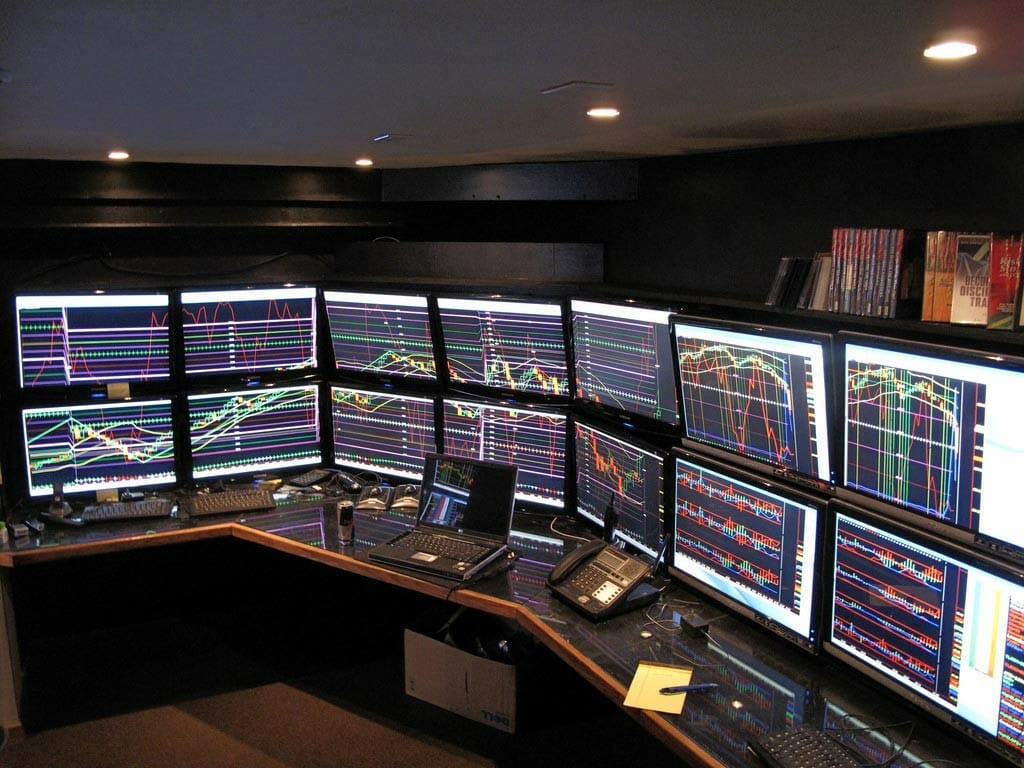

Limitations with Day Trading

Feedback in:

Hello, I am interested in learning about Day Trading Russell 2000 Mini Futures. Would any of your products help me with that?

Thank you,
[Name]

That is not my focus, but if you accept my wisdom I just made you a lot of money (or you could say ‘saved’).

The wisdom: day trading is a dead end.

On the other hand if you want to investigate a valid strategy like trend following I can help.


How can you move forward immediately to Trend Following profits? My books and my Flagship Course and Systems are trusted options by clients in 70+ countries.

Also jump in:

Trend Following Podcast Guests
Frequently Asked Questions
Performance
Research
Markets to Trade
Crisis Times
Trading Technology
About Us

Trend Following is for beginners, students and pros in all countries. This is not day trading 5-minute bars, prediction or analyzing fundamentals–it’s Trend Following.

The Australian Financial Review: David Harding

david harding

David Harding is one of the most successful trend followers alive. I have had the opportunity to meet with him several times. An excerpt from The Little Book of Trading:

Who doesn’t want to make a billion dollars? Yes, I imagine there are downsides to that type of wealth, but it must be one helluva ride to produce that kind of success— especially from essentially nothing. Is it a reasonable goal for you to make a billion dollars? Well, the odds are probably not on your side for that.

However, sometimes in this world, this crazy and often chaotic world of ours, people win the lottery. They buy a scratch-off ticket and win millions. They didn’t practice. They didn’t struggle. They didn’t do anything except buy a scratch-off ticket.

On the other side are people like David Harding. Harding struggled mightily early. However, Harding stuck with it for decades and is now a true billionaire. Don’t get me wrong—Harding, like many success stories, has had luck on his side.

However, that’s not the takeaway here. The takeaway is perseverance. The takeaway is not quitting. That’s how Harding really hit it big. Without perseverance, Harding would have had no chance for luck to shine through.

What can you do? You can learn to think like a trader who has made a billion dollars. And if you think like him, and if you model how a trader like that views the world, you can put yourself in a place to possibly make your billion. Note, I said possibly. The real reason, the honest reason to think like a billionaire, is to make your first million. Anyone with guts and determination can figure a way to make their first million, but you have to stick with the ups and downs. Known as the commodities king (primarily because the press always talk about some of the markets trend followers trade as opposed to their strategy), London’s Harding could be called an overnight trading sensation— only 30 years in the making.

His trend following trading has produced, on average, nearly 20 percent a year for 20 years. Let that digest for a second as you ponder the buy and hold investments in mutual funds you may have, slowing eating away at your capital and your sanity.

These days, the white-haired financial wizard (still under 50) enjoys collecting books on economic history, some dating back to the 1860s. In my time with him, he carried that distinct American entrepreneurial spirit center stage, along with a salty tongue of randy one-liners, all wrapped in a quintessential British flair.

Feedback from a listener who spotted David Harding in the news recently:

Hi Michael,

I hope you are well. Great work with the podcast. I thought I’d let you know that David Harding made front page news of the Australian Financial Review (23 November 2015).

Not too sure whether you can access the above given online version is subscription based. I’ve attached a PDF of the article for your reference. Looking forward to the next time David Harding makes an appearance on your show.

Cheers,
[Name]

Thanks!


How can you move forward immediately to Trend Following profits? My books and my Flagship Course and Systems are trusted options by clients in 70+ countries.

Also jump in:

Trend Following Podcast Guests
Frequently Asked Questions
Performance
Research
Markets to Trade
Crisis Times
Trading Technology
About Us

Trend Following is for beginners, students and pros in all countries. This is not day trading 5-minute bars, prediction or analyzing fundamentals–it’s Trend Following.

Human Behavior: Core to Trend Following

Calm
Calm

Consider an excerpt from Trend Following:

Perhaps not surprising, trend followers have spent as much time observing and understanding human behavior as they have trading. Understanding human behavior and how it relates with markets is commonly referred to as behavioral finance.

Behavioral finance evolved out of a contradiction between classical economic theory and reality. Economic theory is based on the assumption that people act rationally, have identical values and access to information, and use rational decision making. The truth is people are irrational and seldom make completely rational decisions even if they think they do. I have had the good fortune to learn from some of the top minds in the field of behavioral finance. From Nobel Prize winner Vernon Smith to Charles Faulkner, my eyes have been opened. Faulkner outlined the core issues:

“The current proliferation of electronic technologies— computers, the Internet, cell phones, 24-hour news, and instant analysis—tend to distract us from the essentially human nature of markets. Greed, hope, fear, and denial, herd behavior, impulsiveness, and impatience with process (‘Are we there yet?’) are still around, and if anything, more intensely so. Few people have absorbed the hard neuroscience research that reasons arrive afterwards. That given the choice between a simple, easy-to-understand explanation that works and a difficult one that doesn’t, people tend to pick the latter. People would rather have any story about how a series of price changes happened than that there is no rational reason for it. Confusing hindsight with foresight and complexity with insight are a few more ‘cognitive illusions’ of Behavioral Finance.”

Faulkner is correct, but that doesn’t make his words easy. The problem is that by not accepting that truth, you will get into trouble one way or another, as Carl Sagan reminds us:

“It is far better to grasp the universe as it really is than to persist in delusion, however satisfying and reassuring.”

A few years after writing Trend Following I came across another great mind in the field of human behavior and psychology, Alan Watts. Consider some feedback from a listener:

Mike,

Thanks for turning me on to Alan Watts through your podcasts. Below is a link to an audiobook that I think you may find interesting, considering your interests in yoga and other eastern traditions. Andrew is a Lama (not a llama) and an old friend of mine: Here

Enjoy!
[Name]

Thanks!


How can you move forward immediately to Trend Following profits? My books and my Flagship Course and Systems are trusted options by clients in 70+ countries.

Also jump in:

Trend Following Podcast Guests
Frequently Asked Questions
Performance
Research
Markets to Trade
Crisis Times
Trading Technology
About Us

Trend Following is for beginners, students and pros in all countries. This is not day trading 5-minute bars, prediction or analyzing fundamentals–it’s Trend Following.
Twisting the Data: The Fed, Correlations and Intoxication

It is amazing how quick people are to forget how wrong one prediction is, only to move onto believing in another prediction. An excerpt from the chapter “Intoxication”, in Trend Commandments:

A bipolar prediction came across my desk recently: “If the market rises over the next several weeks, today will have been a good day to buy. However, no one can know the answer today. Every day there seems to be a surprise. We don’t know how to predict the behavior of foreign countries or their attacks.”

The nonsense doesn’t stop there. While on the East Coast recently, I was listening to an AM radio finance show. An older man called in to ask how he could buy into various commodity markets. He was worried that they had run too far already. The female host assured him that there was plenty of time and to jump into the market. The caller mentioned that he liked to buy low and was waiting for a pullback. The host told him to start preparing for hyperinflation. She named an African country to enhance her theory and leaned the conversation toward food insurance, needed of course for the coming descent into anarchy.

Think not knowing what you are talking about is new? Think again. President Herbert Hoover circa May 1930: “While the crash only took place six months ago, I am convinced we have now passed through the worst—and with continued unity of effort we shall rapidly recover. There has been no significant bank or industrial failure. That danger, too, is safely behind us.” Can’t just pick on old-timers. Consider the current day. Lloyd Blankfein (head of Goldman Sachs) said his firm would have survived the credit crisis without government help. The firm’s president, Gary Cohn, was more definitive: “I think we would not have failed. We had cash.” Treasury Secretary Timothy Geithner countered, “None of them would have survived” without government help.

More contradicting rhetoric from a 2010 60 Minutes interview reinforces the propaganda spell cast:

Scott Pelley: “Is keeping inflation in check less of a priority for the Federal Reserve now?”

Ben Bernanke: “No, absolutely not. What we’re trying to do is achieve a balance. We’ve been very, very clear that we will not allow inflation to rise above two percent or less.”

Pelley: “Can you act quickly enough to prevent inflation from getting out of control?”

Bernanke: “We could raise interest rates in 15 minutes if we have to. So, there really is no problem with raising rates, tightening monetary policy, slowing the economy, reducing inflation, at the appropriate time. Now, that time is not now.”

Pelley: “You have what degree of confidence in your ability to control this?”

Bernanke: “One hundred percent.”

That confidence seems misplaced when you consider Bernanke’s words but a few years before:

In 2005, Bernanke said: “We’ve never had a decline in house prices on a nationwide basis. So, what I think is more likely is that house prices will slow, maybe stabilize, might slow consumption spending a bit. I don’t think it’s going to drive the economy too far from its full employment path, though.”4 In 2006, Bernanke said: “Housing markets are cooling a bit. Our expectation is that the decline in activity or the slowing in activity will be moderate, that house prices will probably continue to rise.”

In 2007, Bernanke stated: “At this juncture…the impact on the broader economy and financial markets of the problems in the subprime markets seems likely to be contained.”

Worse yet? Bernanke told the Senate Banking Committee in March 2011 that he saw “little evidence” that the stock market was a bubble, but provided certainty with this ditty of a response: “Of course, nobody can know for sure.” Why again do we care what this man says?

Not only can the pros not understand the data, but the conclusions they draw are almost always wrong.

Feedback in that adds to my thought:

Hi Mike, thought you might enjoy these. I listen to some of the BBC “More or less” podcasts, found this one (spurious correlations) when scrolling through their archives. So many out there (not just in finance) tend to torture data to find what supports their bias. The podcast and site do a good job at poking some fun at those tendencies.

Thanks!

For the audience:

Podcast “More or less: Behind the stats”: http://www.bbc.co.uk/programmes/p0201hpg

Spurious Correlations website: http://www.tylervigen.com/spurious-correlations


How can you move forward immediately to Trend Following profits? My books and my Flagship Course and Systems are trusted options by clients in 70+ countries.

Also jump in:

Trend Following Podcast Guests
Frequently Asked Questions
Performance
Research
Markets to Trade
Crisis Times
Trading Technology
About Us

Trend Following is for beginners, students and pros in all countries. This is not day trading 5-minute bars, prediction or analyzing fundamentals–it’s Trend Following.

Trend Following: The Best Fit For Your Lifestyle

Michael Covel
Michael Covel

Consider a chapter titled “Convert” from one of my latest books, Trend Commandments:

Over the years, my firm’s trend following research work has put me in contact with thousands of investors and traders spread across more than 100 countries. That was never expected with the simple launch of a five-page web site in late 1996 titled TurtleTrader®. Back then I paid a 22-year old programmer $4,000 for that bit of web design. He quickly disappeared back to Russia, and I became a self-taught HTML coder.

Today, out of that humble beginning, there is no one type of person who reaches out for trend trading insight. Readers and clients include men and women, young and old, from college students to billion-dollar hedge funds. My sites have become a central clearing for all that is systematic trend following trading.

One of the most interesting aspects of spreading this gospel is conversion. People who once viewed trading one way, but who were influenced to change via my work. An example? A new client signed on recently. He has a very popular national radio show and has been working with private clients for decades. His specialty? Putting his clients’ money to work using fundamental analysis. How much trend trading experience did he have prior to my books? None that I am aware. My research firm helped him to move in the right direction, but that was not what especially struck me in this case.

He was very open in telling me why he became a client. There was one basic reason: After the market bottomed in Spring 2009, he saw no fundamental reason for equity markets to trend up, but they did. He decided at that moment, and in the context of seeing my books, that he needed new tools to deal with that clear discrepancy as soon as possible.

Our conversation and exchanges were inspiring. After decades of providing a service to his clients, he knew something was wrong. He understood that he had to make an adjustment in his business. Not many people do that. Many are like the arrogant professors at the University of Chicago believing markets are efficient, people are rational, and it’s my way or the highway. Don’t be like the professors. Be a sponge. Be open to the new.


How can you move forward immediately to Trend Following profits? My books and my Flagship Course and Systems are trusted options by clients in 70+ countries.

Also jump in:

Trend Following Podcast Guests
Frequently Asked Questions
Performance
Research
Markets to Trade
Crisis Times
Trading Technology
About Us

Trend Following is for beginners, students and pros in all countries. This is not day trading 5-minute bars, prediction or analyzing fundamentals–it’s Trend Following.

Curiosity Should Take The Drivers Seat

I have written multiple books. All from a different perspective, but still all having trend following connective tissue. Consider an excerpt from the preface of my first book Trend Following:

Trend Following challenges much of the conventional wisdom about successful trading and traders. To avoid the influences of conventional wisdom, I was determined to avoid being influenced by institutionalized knowledge defined by Wall Street and was adamant about fighting “flat earth” thinking. During my research, starting with an assumption and then finding data to support it was avoided. Instead, questions were asked and then, objectively, doggedly, and slowly, answers were revealed.

If there was one factor that motivated me to work in this manner, it was simple curiosity. The more I uncovered about trend followers, the more I wanted to know. For example, one of the earliest questions (without an answer already) was learning who profited when Barings Bank collapsed. My research unearthed a connection between Barings Bank and trend follower John W. Henry (now the majority owner of the Boston Red Sox). Henry’s track record generated new questions, such as, “How did he discover trend following in the first place?” and “Has his approach changed in any significant way in the past 30 years?”

For those that follows my work, you can see how my foundation has remained the same over the past 15+ years:

Hi Michael,

Would you please clarify the chronology of your 4 books? What order were they written and published? Thank you.

[Name]

Trend Following
The Complete TurtleTrader
Trend Commandments
The Little Book of Trading

That is the order, but the content can be read in any order. Timeless.


How can you move forward immediately to Trend Following profits? My books and my Flagship Course and Systems are trusted options by clients in 70+ countries.

Also jump in:

Trend Following Podcast Guests
Frequently Asked Questions
Performance
Research
Markets to Trade
Crisis Times
Trading Technology
About Us

Trend Following is for beginners, students and pros in all countries. This is not day trading 5-minute bars, prediction or analyzing fundamentals–it’s Trend Following.