My guest today is John Mauldin, a noted financial expert, a New York Times best-selling author, a pioneering online commentator, and the publisher of one of the most widely read investment newsletters in the world.
The topic is finance.
In this episode of Trend Following Radio we discuss:
Credit card rates and zero interest rate policy
The improper use of credit
Debt spirals
Central bank policies that keep whipsaw periods going
The actions in Japan and how they can spread across the world
The justifications that Mauldin sees behind the scenes
Black swans and boom-bust periods
How the 2008 financial crisis wasn’t a true black swan event
The “why” behind zero interest rate policy
The specter of Keynesianism over the world
Listen to this episode:
Listen to this podcast on iTunes. (Please leave a rating!)
My guest today is Robin Hanson, an associate professor of economics at George Mason University and a research associate at the Future of Humanity Institute of Oxford University.
The topic is outside the box economic perspectives.
In this episode of Trend Following Radio we discuss:
Prediction markets
Vernon Smith and coming up with the “why” for booms and busts
Dealing with a complex world based on our limited abilities
Steering towards humanity’s future
Hanson’s physics background, and how he came to where prediction markets became a passion
How prediction markets can make us pay more attention to the truth
Hayek and Mises, and some of their thinking early on
What taboos and idealogical beliefs might stop one from making optimal decisions
If people have employed particular trading strategies to the prediction markets
Stop losses as information and as risk preference
Setting up a market to bet on geopolitical events in the Middle East, and the controversy based around that
Why DC politicians often cannot handle the research Hanson does
Why Hanson has elected to have his head cryonically preserved after medical death based on a cost-benefit analysis
Listen to this episode:
Listen to this podcast on iTunes. (Please leave a rating!)
My guest today is Harry Markowitz, the third Nobel Prize winner to appear on this podcast. Markowitz is an American economist who received the 1989 John von Neumann Theory Prize and the 1990 Nobel Memorial Prize in Economic Sciences. Markowitz is a professor of finance at the Rady School of Management at the University of California, San Diego.
The topic is modern finance.
In this episode of Trend Following Radio we discuss:
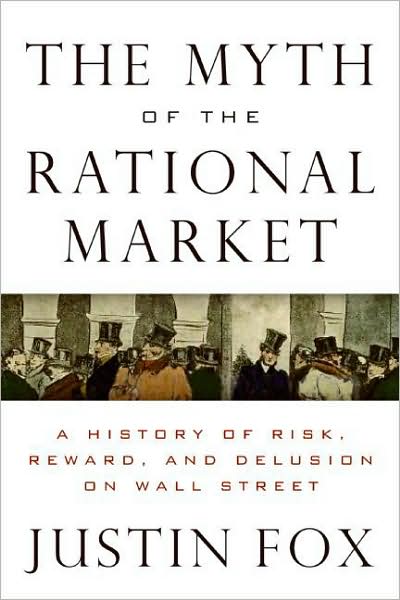
Justin Fox and “The Myth Of The Rational Market”
Markowitz’s beginnings, and the Nobel Prize
Markowitz’s 1952 paper
How Markowitz felt about some of his prescriptions and ideas being interpreted into dogma
Why Wall Street was not interested in Markowitz’s theories at one time
Diversification for the right reason
Markowitz’s new four-volume book
Advice on maintaining mental acuity at an advanced age and sounding like you’re 35 when you’re 86 years young
Markowitz’s attraction to the philosopher Hume
If it was fifty years later, if Markowitz would be a quant running a hedge fund today
Markowitz’s legacy
On being comfortable vs. being rich
The leveraged long-only hedge fund industry and being coaxed into putting your money into these institutions
Long Term Capital Management and portfolio theory
Listen to this episode:
Listen to this podcast on iTunes. (Please leave a rating!)
My guest today is Justin Fox, an American financial journalist, commentator, and writer born in Morristown, New Jersey. He is a Bloomberg Opinion columnist and former editorial director of the Harvard Business Review Group and business and economics columnist for Time magazine.
The topic is his book The Myth Of The Rational Market: A History of Risk, Reward, and Delusion on Wall Street.
In this episode of Trend Following Radio we discuss:
Harry Markowitz, Bayesian statistics, and making smart decisions in an uncertain world using quantitative tools
Stocks, beta, and the importance of making useful predictions
Commodities Corporation and trend following trading in the early 1970’s
Why a market in which everyone was rationally anticipating the future would be a random market
Amos Hostetter
How the behavioral mindset started to unfold in the 1970’s
Eugene Fama and the efficient market hypothesis
The Capital Asset Pricing Model
Why well-designed markets and well-informed investors are prone to manias and panics
Individuals making errors vs. the group getting it right
Listen to this episode:
Listen to this podcast on iTunes. (Please leave a rating!)
My guest today is Marc Faber, a Swiss investor based in Thailand. He is the publisher of the Gloom Boom & Doom Report newsletter and the director of Marc Faber Ltd, which acts as an investment advisor and fund manager.
In this episode of Trend Following Radio we discuss:
Current state of Russia
Changing geopolitics
Faber’s experience living through the Cold War
The difference between Crimea’s value to the west and its value to Russia
Why the Russians perceived the uprising in Kiev to be financed by western power
China’s reaction to the situation in Crimea; the construction boom in China
The difficulty of forecasting China’s geopolitical changes
Positive and negative valuations of the market, and finding investments to be “cheap” or “expensive”
Faber’s advice to young people following his path today in the face of money printing and bailouts
What can be done about wealth inequality
Central banks’ role in wealth inequality
Why money printing leads to bubbles
Warren Buffett’s involvement with the bailouts, and how his government connections have helped his investments
How governments are assimilating everything
“Capitalism and Freedom” by Milton Friedman
The cost of large government in the US and elsewhere
Faber’s views on relationships, contrasting the West and Asia along with Facebook fame
In this episode of Trend Following Radio:
The geopolitics of Russia, China, and the West
Faber’s view on the situation in Crimea
How trading is different in the world of instant communication
Faber’s trading advice to young people today
How money printing leads to bubbles, directly and indirectly
Wealth inequality, the central banks’ role in it, and what can be done about it
How Warren Buffet’s government connections affected his investments
How the governments today are different from a hundred years ago
Faber’s view on relationships and freedom, contrasting the West and Asia
MICHAEL: Today on the show I have Marc Faber. Marc is the editor and publisher of “The Gloom, Boom & Doom Report.” Everyone knows Marc, even if by his voice alone. Fantastic voice. My conversation today was with Marc in Chiang Mai, Thailand, in his office. We discuss a wide variety of topics. To be in Marc’s office is to see a fantastic cathedral ceiling, just walls filled with books. It’s a great opportunity to really pick the mind of a man who’s seen one tremendous amount of econ geopolitics. He’s seen quite a bit.
So today, we have a historical narrative. We talk about Russia; we talk about China. We also bring up Warren Buffett. Marc expands on Warren Buffett and some of his success. Also, we talk about relationships in Asia. A wide ranging conversation. Very fun. I was very excited to do this interview in person. Just a blast. I hope you enjoy.
MICHAEL: So we’ve got no shortage of current events, Marc. Speak to me a little bit about how you – and maybe I’m wrong about this, so speak to me a little bit about how you see what’s unfolding in Russia. I’m not old enough to remember all the details of the Cold War, but I grew up in the ’80s, teenager in the ’80s, and I have a feeling of what that fear was like, and it sure looks like to me that by Putin basically grabbing Crimea, isn’t that giving a signal to other players in the world that normal geopolitics might have changed?
MARC: I think if we look at international tensions or geopolitical trends as a function of economics, then it’s very clear that the dominance the U.S. had until the ’50s, ’60s, has relatively diminished, and other players have come up who have funds, like the Chinese has become a large economy, and a very prosperous one in totality. So the Chinese have certain territorial aspirations in Asia which, from their perspective, has to be clearly understood, because for them to have access to resources and guaranteed the access to resource, very important, so they can’t afford to be encircled and blackmailed by a foreign power such as the United States.
Even if the U.S. does at the present time not have any bad intentions, but for security reasons, they need to have let’s say control over the supply lines. Similarly, I lived through the Cold War, and actually I went in August 1968, I just completed my studies to Czechoslovakia at the time, and the day I arrived, at night, at 2:00 in the morning when I came out of a night club, I saw planes flying over Prague, and then I asked around what was happening, and they said “The Russians are coming.” At that time, there was a Czech string under Dušek,and the Russians invaded Czechoslovakia and occupied Czechoslovakia against the will of the people, because they wanted essentially to break loose from the Soviet Union. As most former Soviet countries, they resented to be part of the Soviet Union.
But this is quite different in Ukraine, and certainly in Crimea, where most of the people are on the eastern side of Ukraine, Russians, and in Ukraine and in Crimea, I think about 80% of the people are Russians. And Crimea has practically no value to the Western world, but it has huge strategic value to Russia. So I think that the American foreign policy of trying to encircle Russia and also China has some limits, where these countries simply will say “This is as far as you go and no further.”
MICHAEL: Crimea could be a crack.
MARC: And Crimea is basically Russian, has always been Russian; they have their most important navy ports there for the Navy, and the Black Sea fleet is stationed there, and through the Black Sea they have access to the Mediterranean, which is very important if there are conflicts. And don’t forget that part of the reason for the invasion of Libya, which has now turned to be a complete catastrophe, a complete catastrophe, by the Western power, part of that reason was that the Russians were either building or considering building a naval base in Libya. They also have a port in Syria.
So for them, Crimea is very important, and the Russians perceived the uprising in Kiev to be essentially financed by Western power. Because Putin, he didn’t like the Ukrainian Premier. He didn’t like him at all; he thought he’s a fool and corrupt and everything. But he didn’t like the involvement of foreign powers in Ukrainian politics, and strategically, Ukraine is important, and if it were part of NATO, Russia would have NATO in front of its door.
So we have to understand it in this context, and I think the Western powers will do, aside from some cosmetic sanctions, will do precisely nothing. Because A, they don’t have the money, and B, I think most people in the Western world have actually sympathy for Putin, given that the Americans invaded Iraq, given that the Americans invaded Afghanistan, and everybody knows if a foreign power, China or Russia, were to start trouble in Guam, where the U.S. has a major naval base, then obviously the Americans will also make sure that Guam stays in the American fold. So I think most people have sympathy. But of course, politicians can’t stand there and say “Yes, we agree, this is Russian territory,” so they have to bark.
But we can also see that basically, the Western politicians are complete ignorant politicians and basically have no power compared to someone like Putin, in his territory.
MICHAEL: This extends – and I’ve seen you make this comment, but what does this say to China? China has territorial disputes. What does this say?
MARC: Well, the reaction of China will be very clear. First of all, I have to say that the Chinese are not the greatest supporters of Russia, because Mongolia was part of the Soviet Union before, and the Chinese perceive Mongolia as their own territory. But it gives a signal to China – from my perspective, living in Asia, it’s not a dangerous signal; it’s just a fact of life: China one day, if they have territorial disputes with Japan, like the Senkaku Islands, they will just one day occupy them. That’s it. Who’s going to start a World War because of the Senkaku Islands? You understand?
MICHAEL: Yeah.
MARC: So there are some borderlines, say if someone were to build – say the Chinese would build a major naval and military base in Mexico or in the Caribbean, I suppose the Americans would not let it happen, because that’s their territory. Similarly, the Chinese are surrounded by American military and naval bases, plus the Americans have 11 aircraft carriers. At these bases in South Korea, 25,000 Americans are still in South Korea. For what, nobody really knows. They have bases in Japan, in Guam, in Hawaii, and they have actually military practically in every country in Asia. We also have Americans here, of the military, in Thailand. They come from the Philippines, but they’re every year a few times here, training.
So from the perspective of China, one day they will make a move. They will not invade Cambodia, they will not invade Myanmar, they will not invade Thailand. Basically, the Chinese already own Southeast Asia because, as you know, the leading businessmen in Malaysia, in Indonesia, in the Philippines, Thailand, Hong Kong, Singapore, are all Chinese. So they already own it. Why would they take the territory? They have a territory large enough, they have a population large enough, they have problems enough. But they need oil, and they need copper and iron ore, and they can’t afford that one day the U.S. or Japan or anybody would block the access to these resources.
MICHAEL: So as I sit in your office – I wanted to start with that question – I can see a few books in your office, and I wanted to just pick your brain a little bit about the geopolitics, but I want to shift into the investment side of things. I know you have a deep respect and fondness for Asia. I do, too. As an American, I do, too, and I really appreciate being here for the last year.
MARC: Well, anything is better than America. Let’s put it this way.
MICHAEL: That’s in context. There’s a lot of reasons, and you’re well known for stating why you say that, so it’s pretty clear. Last year, I took the bullet train from Shanghai to Beijing, and I’ve never – that’s about the distance from Washington, D.C. to Orlando, Florida. I’ve never seen more construction in my life. So you’ve got an absolutely astounding economic miracle going on that the average American or European that have never traveled to China can’t even begin to appreciate by reading news articles. It’s impossible. You have to see it.
MARC: Correct.
MICHAEL: But given that context and so much success and so much redevelopment, fantastic growth… there’s a lot of this real estate is empty. It reminds me of Las Vegas and Arizona, pre-bubble. What’s going to unfold with this whole thing, Marc?
MARC: We have to understand the construction boom in China from an essentially economic, historical perspective, because under the Communists, until the opening under Deng Xiaoping in 1978, nothing got developed, and people lived very poorly. And even until 1990, very little happened outside of the special economic zones in the South. But after 1990, they began to build the infrastructure and to build housing for people and so forth and so on. So here, you have a country who is essentially 1.3 billion people that had no infrastructure until 20, 25 years ago, and there is a huge catch-up phase, which explains the colossal investments in infrastructure and in construction.
But as the business cycle theory explains, there is always the error of optimism and then the error of pessimism, and in my view, in the last few years, there was an error of optimism among developers and among people that real estate prices would always go up and so forth, and so we have overbuilding in China and we have a gigantic credit bubble. The economy grew soundly, I would say, until about 2007, and the response to the global crisis and the downturn in exports and in economic activity was, in China, a massive fiscal stimulus that was, as a percent of the economy, larger than in the U.S., and massive money printing.
In other words, credit growth exploded on the upside, and very few or no country has ever had an expansion of total credit as a percent of the economy as rapid as China in the last five years. Total credit has grown as a percent of the economy by 50%. This is incredible rapid growth, and of course, there are lots of mal-investments. My sense is that we are headed into a significant downturn in China. Will it turn out to be negative contraction in the economy, in other words, negative rates of growth, or will growth simply slow down from say – who knows what growth was in the first place, because you can play around with statistics – but say it was between 8% and 12%. That will slow down to say 4%, or has already slowed down to 4%.
MICHAEL: As I look at how you describe China, it’s very difficult to put a prediction, a time prediction, on these situations.
MARC: Yes. In everything that concerns the future, forecasts are of no great value, and number two, I would say we can say okay, a market is high; it doesn’t mean that it can’t go higher before it goes down. But say if you look at the total market cycle, stocks or commodities or real estate and so forth that go up and down, you can say that something is relatively inexpensive when, say, stocks or properties sell below book value, below replacement costs, and they’re high when they sell at the substantial premium to replacement costs or the book value. So there are some ways to say something is relatively inexpensive and something is relatively expensive.
But to put the finger on, say, a date, and say “The Chinese bubble will unravel on April 15th, 2014,” that is impossible for the simple reason that with monetary measures, you can postpone a lot of the problems. In 2009, I remember very well, because at that time, I thought stocks had become very cheap in the world and that they would go up. Not necessarily because of a significant economic improvement, but because of low valuations and extremely negative sentiment among investors, and some investors, when the S&P was at 666, were heavily short the S&P, and some of the – say among the five most well known strategists in the world, at least four of them predicted an S&P of 400.
So I would say at that time, sentiment was very negative and valuations were low; today, sentiment certainly in the U.S. is very positive and valuations are high. So if we look at cycles, we can say there are times when asset prices become inexpensive. Can you say they will bottom out on such-and-such day? No. Can you buy at the low of a market? No. And there are times when markets become expensive. Can you sell everything at the day the market peaks out? No. Moreover, a market consists of thousands and thousands of different stocks. Not every stock will bottom out and peak out on the same day.
Similarly, a real estate market consists of – in the U.S., you have what – we have to ask Mr. Obama how many states there are; perhaps it’s 51 states. So in one state, the real estate market may go up, and in another one, it may go down and so forth, and some properties within a state, like high end properties, by and large in America, they are now at the record. If you go to Aspen, if you go to the Hamptons, the better locations in New York, San Francisco, Newport Beach and so forth, it’s all at the record. Whereas the middle end of the market and the lower end is still way below the peak.
So we have to distinguish, what are we talking about? Are we talking about a broad index, or are we talking about individual opportunities?
MICHAEL: Let me take a step back. So you got your Ph.D. in econ age 24?
MARC: Yes.
MICHAEL: Young man. If somebody else is going down a similar track today, has what we have seen in the last five or six years since ’08, this kind of unicorn-style printing money, “everything’s rosy, we can resurrect stocks from the dead,” so to speak and make everything rise, make everything levitate with no downside, how is a young person today supposed to dig through this landmine field and try and make sense of it? It seems terribly difficult.
MARC: Well basically, he has to think for himself. If money printing would make a society rich or the world rich or a country rich, then nobody would work. We would all have a printing machine on the beach and we would be printing money, and each central bank around the world would just be printing money, and there would be no businessman. You understand? Nobody would produce anything. So the money printing per se, if we have an economic system – say I have this room, and suddenly the quantity of money doubles in this room, it’s still the same room. It’s just that the unit of account, money, has changed and has depreciated.
Now, the problem with money printing – and that is misunderstood by a lot of people – is that they focus on the impact of money printing, say on inflation or deflation and so forth, but the viciousness of money printing is that the more money you print, the more prices will go up. The problem is that they don’t go up at the same time and with the same intensity. So if I print money in this room, what can happen is that for a while, where you sit, real estate prices go up, and then after awhile, they become relatively expensive compared to say equities, to stocks, and the money flows out of the real estate market and then the real estate market goes down and the stock market begins to rise. Then the money can flow out of stocks and go into commodities, and then commodity prices go up. Or it can go into wages of people and into consumer prices and so forth.
But it doesn’t happen all at the same time; it happens very irregularly, and I have maintained that the expansionary monetary policies of the central bankers around the world, most of whom are basically neo-Keynesian; they want to intervene into the free market because they think – that’s their thinking, certainly not mine – they think that they are so smart that they can just guide the economy the way you drive your car. You accelerate in front, and then you brake, and then you turn left and then you turn right, although in traffic you can have accidents.
Basically, the idea of these central bankers – and that has been the idea already of the pre-Keynesian and of Keynesianand so forth – is to intervene into the free market with fiscal and monetary measures and to smoothen out – that is basically the idea – to smoothen out the business cycle. In other words, when there are downturns, you try to prevent the downturn from becoming severe as it was in the Great Depression, and when there is a boom, you should essentially take the punch bowl away and try to slow down the economy and the asset prices that inflate too much. Unfortunately, the central bankers in the world, they’ve done just the opposite, basically. They let the boom go, and when there’s a crash, they just print more money, and that then leads to numerous unintended consequences, including – I started to write about this four years ago – including this huge increase in wealth and income inequality.
MICHAEL: Well, there’s no doubt we have that. I guess the issue – and that seems to be the buzz in just about every piece of news media that you can find – but what can be done about wealth inequality?
MARC: Well, there are many things that you can do. And I have to say, there will always be wealth inequalities. You go to a horse race, some horses are faster than others, and they win the race. There are some factors in today’s world that essentially have led to an economy where the winner takes all. In other words, say you were a singer in America in the 1940s. Your audience was basically American; you went from concert to concert, and so your audience was limited. Today, with instant communication around the world and with globalization, if you have a successful tune or song, immediately it can be heard all over the world. So your audience has become that much larger, and so people that become famous, whether that is in soccer or in motor racing or in any other sport, in golfing, or in the show business, these people, they earn much more relative to the rest of the world than they earned before. Some of them have become billionaires.
I’m not saying that central banks are the only ones responsible for higher wealth inequality, but very clearly, when you print money, who does it benefit the most? It benefits people the most that already have assets. That should be clear. “I have a house, I have stocks, I have bonds, I have gold,” and so forth. These assets, in a money printing environment, tend to appreciate. Farmland as well. So people that don’t own these assets, they suffer relative to the ones that own them.
MICHAEL: One example of that would be that there’s no more interest income. In the last five or six years –
MARC: Yes, absolutely, yes. They call it financial repression; I call it to penalize decent people, because you cannot force an individual to speculate in stocks and in bonds and in commodities. My grandmother, she never owned shares unless they were companies where she grew up, so she had a few shares of the air cable company and so forth and so on, and the electricity company. But her money was basically cash in the bank. My parents, they also had mostly cash in the bank and occasionally they would own some shares, but in a very limited way. These people have now been penalized very badly.
Number two, again, what I alluded to before, that the fed’s policy creates more volatility, because the money printing leads to bubbles. We had an emerging market bubble in ’97, ’98, and then a collapse, which was very vicious, particularly here in Asia; then we had the NASDAQ bubble and the collapse, and then we had the housing bubble in the US and then the collapse, and so forth. The problem is that in bubbles, when this has been observed already by so many economies, already by Copernicus and by David Hume and by Irving Fisher, the majority of investors lose money and the minority makes the money.
So it shifts money essentially from the majority to a limited number of people, and when the bubble collapses – say stocks drop 50% or properties drop 40% or 50% and so forth – a lot of poor people are wiped out. Then assets become relatively cheap, and the rich people, represented nowadays by hedge funds and private equity funds, they have then the opportunity to buy thousands of homes in the U.S. at below construction cost, which an individual can’t buy because he has no access to credit. But the private equity fund, they can borrow money at 2% or 1.5%. That then takes essentially the ownership away from the middle class and lower classes and transfers it to the moneyed class.
It’s interesting if you look at say the list of the richest people in the world 100 years ago; they were industrialists, either in steel or in manufacturing and so forth and so on. And then in 1970, the richest people were basically still largely in manufacturing, had industries, and there was in 1980 just six billionaires in the world. Now we have probably officially around 2,500 billionaires. I have a book here, The Penniless Billionaires.
So now we have among the list of richest people, lots of people that have actually never done anything in terms of industries. They are just money shufflers: the hedge fund managers, the bankers, the real estate guys, and private equity guys and so forth. It’s an amazing world. The money printing has led to this huge monster, Dracula, basically, the financial service industry. This financial service industry has become disproportionately large to the real economy, and I think one day it will be deflated very badly.
MICHAEL: You brought up the example of the wealthy going ahead and having extra opportunity when there’s a collapse.
MARC: Yes.
MICHAEL: I’m thinking of a particular individual who I don’t intend to denigrate at all, but I remember in the fall of ’08, Mr. Buffett swooped in and got these homerun deals with Goldman Sachs and whatnot. And there’s nothing wrong with that. He’s in the position – I mean, you might argue there’s something wrong with it, but he’s in the position, he makes the deal. I think what’s more interesting about when he makes those deals is that I watch in America; the same people that are getting burned by these very situations that you just described then turn around and cheer Mr. Buffett for taking advantage of the situation. It’s become certifiably wacky.
MARC: Yes, yes, but I want to say one thing. I’m not blaming any rich guy who takes advantage of the system. I’m in the financial sector. Had I not gone into the financial sector, I don’t think I would have the assets that I have today. So I’m not complaining as an individual, but you have to look at the cause of Mr. Buffett being able to take advantage of all these situations. Basically it’s money printing and government intervention, because in fact, AIG should have gone bust. It was bust. If AIG went bust, Goldman Sachs is also bust.
MICHAEL: Morgan Stanley.
MARC: But the government came in and bailed them out, and Buffett, he had presumably the information that this would happen, so he made a favorable deal with Goldman Sachs – a deal that you and I couldn’t do. You understand? And he also influenced the government, because in America, the corporate sector, with the lobbyists and all these characters, they have a huge influence on politicians. They basically bailed out the banks. And Mr. Buffett, he would have probably gone bust if the banks hadn’t been bailed out. You understand?
So this has be very clearly viewed, and an increasing number of people see Mr. Buffett from the perspective I have: he pretends to be kind of the small American, normal American, hardworking, frugal person, farmer from Omaha, Nebraska, and the reality is he flies in private planes. He has a luxury condo in New York City and so forth and so on. The reality is quite different than what he portrays to be. Now, I’m not saying – I have nothing against him. I met him; I don’t think he’s that great an individual, but he was a great investor.
Now, in the last few years, his great investments were made possible by his government connections, and as I said, the private equity guys, they can go and buy a thousand homes. You as an individual, you can’t do that. You don’t have the money and you don’t have access to the credit. But they have it. So we no longer have what I call a level playing field. Some people are very privileged. But I’m not blaming Wall Street, I’m not blaming Mr. Buffett. He acts as a capitalist. He just takes advantage of the money printing and the intervention by the government. But to the detriment – we have to see this very clear, to the detriment of the majority of people.
MICHAEL: Two questions left, unless you want to keep going more here, but one kind of more serious and a big philosophical and one a little more fun, about the world that we’re in right now. Maybe you won’t want that one public, but we’ll see. As I look at government and I look at people’s desire for government to help them across the world – and a friend of mine wrote a book combining government and monopoly, and he was looking at it from the standpoint that government is assimilating everything. Just slowly but surely, the government assimilation just marches on. He was calling it “Govopoly”, which is the idea of corporate monopoly and government kind of combined into one, and that is assimilating the entire system, making it harder and harder for the average guy to break in.
You’ve actually talked and touched a lot about those issues, but maybe you might touch on the idea of that. If you see it from a similar perspective, if you see that the role of government in our lives just seems to expand and expand and expand. And instead of people questioning it and saying, “Hey, I really don’t want this. I might want to live in Thailand or I might want to do this or I might want to do that,” they just kind of accept it and say, “Hey, great, Daddy Government, take care of me.” What’s happened to us, Marc?
MARC: Well, I am not sure that everybody endorses that, but let’s look back say 150 years. In a period of rapid economic growth in the 19th century, before there was a federal reserve, and actually we had stable prices between 1800 and 1900, and real, in other words, inflation-adjusted GDP per capita in the U.S. grew at a faster pace than after we had the federal reserve. Government in all developed countries of the West, including the U.S., was never more than 20% of the economy. All of it. State, local, municipal, and so forth. The government at the time was very small, and the economy was growing rapidly.
Under the influence of the Keynesian, and already before him, the government has become bigger and bigger. But as Milton Friedman – and this is really a book that I recommend to anyone, because it’s easy to read even for someone who has no economic background – Capitalism and Freedom by Friedman, he precisely talks about this in many different chapters, about monetary policy, about fiscal policy, about labor and so forth and Social Security. He precisely explains the larger the government is, of course, the less freedom you have.
And you also have to see very clearly now we have recently IBMed. They announced suddenly that the Dutch subsidiary has 170,000 employees. Of those, 200 work in the Netherlands. But they can save tax, and so their tax rate is very low. They have an army of lawyers and an army of accountants and auditors and so forth, and lobbyists, and so they can do with the government more or less what they want. The small businessman is fucked. You understand? Because my friends, who are well-to-do but they are small businessmen, suddenly the government comes and audits the tax. Then they waste two weeks’ time collecting all the receipts and so forth, and the government can basically shut down their business because the government has an army of lawyers and they can waste these people’s time endlessly. The small businessman in America or in Europe, he doesn’t have the option to move his staff to a Netherland subsidiary, as IBM does. So he’s at the disadvantage.
But we have to see this very clearly. As maybe your friend said, or wrote – I don’t know, I haven’t read the book – basically a large government implements more and more regulation. You look at the tax code in the U.S.; it’s gone from a few hundred pages to, I don’t know, more than 70,000 pages, the IRS federal income tax law. The large corporations, they love regulation, because they know they can influence regulation and laws through their lobbies, and they know the more regulation there is, the more difficult it is for a competitor to come up.
MICHAEL: It’s like building that moat around Angkor Wat, huh?
MARC: Yeah, you understand, that’s why the larger the government is, the more concentration of power you will have among a few players in the United States, the less competition, and the more crisis will be relatively high. It’s like the U.S., for the average household, the typical household – I’m not talking about the people at Goldman Sachs and so forth – but for the typical household, real compensation, real household income has been down for many years, maybe 12 years. Wages in real terms are down for more than 20 years. But the corporations have record profits. You have to think about this: why is it that corporations have record profits and wages are so low? Something is not right.
My view about this is this money printing – we have to also look at it from this perspective – has actually, with its artificial low interest rates, allowed the government to become bigger and bigger and bigger. Because the government can borrow money essentially at zero interest rates by issuing T-bills. They can borrow money at 2.7% yield on 10 years. Can you as an individual borrow at those rates? I mean, my friends here in Thailand, if they wanted to borrow some money to buy a house, they would have to pay 8% interest. So you understand, the government can borrow all this money at very low rates; as a result, it becomes bigger, has more regulation, and harasses the businessman even more.
MICHAEL: Marc, I appreciate you taking the time today. That kind of ends my more serious question. I have one question, though, and if you don’t want this to be a part of the podcast, we’ll cut it out. As a single man, I came to Asia last year, and it’s quite the experience. I heard you make some comments on a radio show that I think have been well listened to now, where you were kind of giving an introduction to people on nightlife and ladies in general across Asia. Look, when I left – I was in Asia all last year and I flew back to the States for the holidays. I left Bangkok and landed in Zurich. What a transition. It’s smiling and happy. Your home city is not smiling and happy.
So what would you tell to those gentlemen out there in the West, Europe, America, and maybe they’ve not really figured out what they want to do with relationships or they’ve not had a great time or this or that – what is it about this part of the world? It’s a big question. I know it’s a big question. If you want to expand, I’d love to have you expand.
MARC: Basically, we in the Western world, we have, again, regulations and laws. We have so-called democracies. I don’t believe that we really have a democracy. The closest to democracy is probably a country like Switzerland, where we have referendums, and where the local governments, the so-called Gemeinde and the Canton, they have relative high autonomy. But in general, in the U.S., whether you have the Democrats in power or the Republicans, not much changes. The one party steals money for that, for warfare, and the other party steals money to buy robes. Obama. So it’s all the same mafia, basically. It’s a cancer government. Everywhere, not just in the U.S.
The government – some people are still naïve, because they go to school and then the teachers tell them that democracy is the best system and so forth, and maybe it is the best system. I don’t know. But I lived in Hong Kong; we never had democracy. I live in Thailand. We never – well, we have kind of a democracy, but it’s not much of a democracy. But we have a lot of freedom. That is the difference. You can do things. And in Hong Kong, the government was always relatively small compared to the economy.
It has some disadvantages. The disadvantage is basically people have to rely on themselves. You can’t say “Oh, my back hurts. Now I need disability insurance.” Nobody will give it to you. You understand? Whereas in the Western world, the entitlement society has gone far too far in the sense that young people, they don’t want to pay a lot of tax, but if something happens to them, they want the benefits from the government. It just doesn’t matter – we don’t have a sufficient tax base to pay for all the obligations that will come to you in future, the so-called unfounded liabilities arising from Social Security, Medicare, Medicaid, and so forth. The system is basically broke.
In Asia, we don’t have really democracies, but we have a lot of freedom. You just can’t go and say something very nasty in Singapore about Lee Kuan Yew, and you can’t say something very nasty in Thailand about the King and so forth. But okay, then we don’t say that, but we have, on the personal level, a lot of freedom. And this extends essentially to one’s personal life. In Europe – basically men everywhere in the world have mistresses and girlfriends and go to whore houses and nightclubs and so forth and so on – and women do the same, by the way, as we know.
But at least here in Asia, it’s done openly in the sense that everybody knows that it’s happening, but it’s done in a more elegant way in the sense that if someone is in high society, then he seldom will have a girlfriend also from high society. He may have a mistress from a different society level. So there is less competition for the wife. She doesn’t compete against the mistresses. And as a bachelor, of course, you have a wide open area. We have in Asia 56% of the world’s population, so we’re talking about almost 4 billion people, and of those, half are women, and so 2 billion are women. Of those, say half are in the age bracket between 18 and 40, so you have a billion women in front of your door. As a man. As a woman, you have a billion men in front of your door. So it’s a very free society in this respect.
Of course, if there is a rape case, it will be prosecuted, but there is very rarely a rape case because most people do it with consent, and afterwards, they don’t go to a lawyer and say “Oh, can I maybe sue this guy because he’s a rich guy? Maybe I can extort some money from him.” The legal system in Europe and in the U.S. is conducive to people spending half their life suing each other. This doesn’t exist in Asia. We have a problem, we may discuss the problem, or if the problem is not resolvable, I’ll kill you. Simple as that. That’s a much better solution.
MICHAEL: No more drama.
MARC: Yes. It’s a clean solution. I’m not saying that I’ve been killing people.
MICHAEL: Yeah, I have not been killing people either.
MARC: But you understand, the point is usually, baseless disputes, certainly in the Chinese community, they are discussed among people, and you try to find some solution. If really no solution can be found, then nowadays, more and more because we have now structured corporation, which didn’t exist before, now occasionally lawyers get involved and so forth. But frequently, the dispute will be solved with some unpleasant consequences.
MICHAEL: You know, I love your wit about things. When I heard you talk about this, you said to the effect, that if you’re a Western guy and you’re planning on getting married, come to Asia, and that problem will be solved.
MARC: Yes. I would say first of all, in the Western world, if you are a man and you work hard and you have some money to get married, it’s from a risk-reward point of view very unfavorable, because when you divorce, you have to basically give 50% of your money to your wife. And I can tell you, I know lots of people in Switzerland; they were employees at banks and so forth, and still are, and suddenly after 20 years, the wife has a young boyfriend or whatever it is. And she walks away. Then he has to pay half his salary to her, half his pension, and after living in decent conditions, he then lives in a one bedroom apartment. I tell you, many of them. Equally, I know women, they married a poor man; the man walks away with millions.
So I think that system is a disincentive towards actually forming a family. If I were European or American nowadays, or if I were a divorced guy, never again marry in my life. But never again. I happen to have a reasonably good relationship with my wife because she lives most of the time in Bangkok and I live here in Chiang Mai. Living apart keeps marriage happy a long time.
MICHAEL: Those are great words of wisdom. I appreciate you taking the time today, Mark.
That was the end of my official interview. I’ve got a few minutes of extra banter with Marc that I thought was appropriate to add on as an addendum conversation.
MARC: I don’t understand why not more young people from the West come to Asia, because as you say, I also go to Zurich and have fun and have my group of friends and so forth and we go out, but if someone is interested in sex and in women, nothing beats Asia. Nothing. If someone goes to Brazil, I tell him, yes, I’ve also been to Brazil many times, but you never will have the quantity that you have in Asia. Never. You go to a nightclub in Brazil, there are 20 girls or 30 girls. Here in Asia, there are clubs with a thousand girls.
MICHAEL: It’s kind of hard to talk about, too, without some people listening in and thinking, “Hey, these are just two guys with a randy conversation.” It’s bigger than that. It’s kind of hard to explain it till you get here. You’ve kind of got to get on the plane and go, don’t you?
MARC: Yes, but many people, they have a comfortable life in America, and as you say – and this I will never understand – they actually kind of support the government, and they think that government is good. Because they’ve been brainwashed by the media, “Oh, the government will do this and the government will do that.” As Milton Friedman said, “Government programs are judged by their intentions and not by their results.”
MICHAEL: A few more minutes of extras, as I shift into one final subject with Marc.
I have these gut-level feels about where it’s all going to go. I always kind of feel like if they can’t keep the Dow and the S&P levitated, that’s when the shit hits the fan.
MARC: Yeah, sure. The whole expansion – which has been weak, but there has been an expansion – is partly because of rising asset price. So the rich guys, they make money. Then they go to restaurants, they spend. It’s like my friends, we go out in Southern California. Then he invites eight, ten people. The dinner is maybe a thousand dollars or whatnot. He gives the waiter a 20% tip, maybe 25%, so the waiter, in one night, he makes $300. Easily. Easily. Assuming he works 30 days a month, because he can work in two different restaurants, he makes $9,000. Mostly tax-free. He has to pay some tax, because they have now become tougher on that, but a good waiter, he can make a lot of money. A lot.
MICHAEL: Yeah, no doubt.
MARC: This is also – a lot of people, they prefer to serve at the bar in a place or as a waiter in the restaurant because it’s also more fun than to be on the factory floor. So you have a shortage of qualified workers. Then you have all these idiots with the Facebook. They all want to be famous. This is the bit tick nowadays.
MICHAEL: Famous with no work. No work. Just be famous for the sake of being famous.
MARC: Yes, yes. Famous and no accomplishment. And actually, fame today is valued more highly than money.
MICHAEL: It is.
MARC: If people come to me and say “Oh, you’re very famous,” I say, “What?”
MICHAEL: Yeah, whatever. It’s like the last thing you’re thinking about.
MARC: Yes.
MICHAEL: If you want to learn how to be a trend-following trader, the first place to go is trendfollowing.com. My firm can help you with educational, research, and systems trading packages to get you started immediately. Take advantage of my 15 years of experience. Take advantage of all the insights that I’ve accumulated and put into one research and educational package. These are systems that you can use immediately to start making money. Once again, go to trendfollowing.com.
Join over 12,000 others on the Trend Following mailing list.
Have a question or comment about this episode? Post it below. I hope that you enjoyed some of the Marc Faber Gold given out in this episode. If so you’ll may enjoy some of the following of my podcasts:
My guest today is Ed Seykota, a commodities trader, who earned S.B. degrees in Electrical Engineering from MIT and Management from the MIT Sloan School of Management, both in 1969. In 1970 he pioneered Systems trading by using early punched card computers to test ideas on trading the markets.
The topic is his book Govopoly in the 39th Day.
In this episode of Trend Following Radio we discuss:\
Trend Following
Seykota’s concerns about our economy
The assimilation model and how Seykota sees assimilation happening today
The definition of “govopoly”
How Seykota’s mentor’s work plays into Seykota’s work today
Thinking about systems
What we can do to “fix” the economy, or to at least prepare yourself
The exponential curve that assimilation takes
Noticing things before they’re important
Why Seykota doesn’t provide a “solution” to the problem and instead advocates for the system to correct itself
What we can do as people in response to the system
Detroit as a microcosm of the US
Ways to make money during the assimilation
In this episode of Trend Following Radio:
What “govopoly” means to Seykota
The concept of assimilation in economics and how it affects us
Why noticing and understanding exponential growth can be difficult
Why sometimes the best course of action is to leave the system to play itself out
Detroit as a microcosm of the United States
What the US government has in common with the duckweed
Making money despite government assimilation and bubbles
“You have to view a system as a whole as opposed to the cause and effect mentality prevalent today” – Ed Seykota – Tweet this
MICHAEL: Today on the show I have Ed Seykota. Ed was famously first featured in the original “Market Wizards” book. He was also featured in my book, “Trend Following.” I consider Ed a friend and a mentor. He has educated me greatly over the years. I always welcome his wisdom. Today comes something a little different, though: Ed has a new book out called “Govopoly.” It’s worth checking out. Our conversation today gets into a tiny bit of trend following, but it’s mostly about his new book. And like anything Ed does, it’s coming at it from a different perspective. I hope you enjoy.
MICHAEL: You’re pretty well known for being a very successful trader, and you’ve now gone ahead and put a book together called Govopoly that I think is going to surprise people. It’s a little bit different. So what inspired you? What were you feeling that you decided to put this book together?
ED: It doesn’t exactly flow from my work in the markets, or trend following. My market work is all about trend following. I have some deep concerns about our economy, and I wanted to share those. As I say in the introduction to my book, I’ve had those concerns for most of my life. I spent the last probably four years now trying to clarify what it was that was going on in our economy and see if I could make some sense of it. As it started coming together, I found myself writing this book, and then the book becomes an obsession, and then – now it’s done, and I feel good about having it behind me.
But originally, the motivation was I had a feeling. I had a feeling something wasn’t right about the economy. Something just wasn’t moving the right way, and I couldn’t quite put my finger on what it was, and so I said “Well, I need to think about this for awhile.” I came up with a theory, and it seems to make sense, and I built computer models of it, and the computer models verify at least that the theory makes sense. It explains the symptoms. So that’s the origin of the book. It doesn’t exactly flow from the premise of why would someone who plays the markets want to write a book. I see them as fairly separate things.
MICHAEL: Let me jump into – I’m holding your book right now, and there’s a very somber-looking Ed Seykota on the front cover, and there’s a lot of – if someone just picks it up, there’s probably a lot of things when you’re looking at the cover, thinking “What are the meanings here? Where is Ed standing?” And then on the back, the first word you see is the word “assimilation,” which is a very powerful word. Why don’t you talk about the idea of assimilation and how you see that word in our society today. What’s going on? What’s being assimilated?
ED: The premise of the book, and the model, which I call the assimilation model, has to do with the assimilation or takeover or absorption of the free competition sector of our economy by what I call the govopoly system. Govopoly means monopoly by government sanction. As the economy matures, the government becomes more powerful and forms alliances with the various groups to award them monopoly status, and this prevents free competition, and eventually it stifles the economy. This overall cycle is the main cycle that I’m talking about, how that happens and how that comes about and the evolution of it. Assimilation means takeover or absorption, and if you look at the assimilation of the free competition sector by the govopoly system, that assimilation explains most of the things that are going on in our economy.
MICHAEL: Let me take a step back just for people that are new to this. I think what’s so interesting about your book is that you’re not coming from a left perspective or a right perspective in terms of partisan politics. You’re really just trying to explain what you’re observing in the economy. But essentially, you’re laying out a scenario that you see, eventually, at some stage of the game, the assimilation of our economy by government, meaning government essentially runs, controls, owns everything, to some degree? Is that really the thinking process?
ED: It’s not the government. Again, it’s not the government. It’s the alliance between the government and its ability to award monopolies. So you have people on both sides of the political spectrum gain, in the short run, and receive benefits from the government, either protection from competition or outright awards, and there is no limit to a particular political party that can receive these kinds of benefits.
I don’t have a political bias. This phenomena transcends politics and it transcends the, as you call it, left and right politics. It doesn’t have to do with politics, it doesn’t have to do with who’s to blame or anything like that. It has to do with the overall evolution, basically since the mid-1800s till where we are today, and it shows what’s happening and what’s likely to happen from here. It doesn’t have anything to do with partisan politics.
MICHAEL: Let me take a step back to something that you said initially, that you’ve been having this feeling for a long time that there was something wrong. I share that with you, and I was quite happy to see where you went with your book, because I knew something was coming. I knew your new work was coming, but I didn’t know where it was going. So when I saw it, for me it was frankly an “aha” moment. It was like, “Oh, this is a way that I can understand this system that feels so uncomfortable and so wrong for me.” But when did you first start having that deep in your gut feeling? Was this 5 years ago, 10 years ago, going back decades? When did you first start to know that this govopoly system was unfolding?
ED: I had a sense there was something that wasn’t exactly right – oh, when I first graduated from college, I started thinking about it. That’s many, many decades ago. It wasn’t until I started viewing it and saying “Yeah, I don’t like it, and it doesn’t feel right, but the system itself has a logic of its own. The system is doing what it needs to do,” and I stopped trying to make the system wrong and stopped trying to blame people and said, “What’s really going on? How does the thing work?” When I started thinking that way, then the thing started getting clearer to me. The whole notion that there was somebody to blame and it isn’t doing what it’s supposed to do, all those notions were interfering with my thinking. Once I got around to “Here’s what it’s doing; let me try to understand what it’s doing instead of not liking it. Let’s try to understand it.”
MICHAEL: Growing up as a young man, you were heavily influenced by a professor at MIT, a Jay Forrester. I’m curious; how did Jay Forrester’s work, his systems dynamics work, how did that influence you and how has that played in a role in, for you, understanding this system that you’ve been observing?
ED: Forrester I think is just an amazing person in many ways. He’s also responsible for putting together one of the first working computers and had tremendous work and positioning servodynamics and also holds some basic patents on core memory, back when they used to wind them out of magnets and so forth. He’s a tremendously inventive guy, and he had this notion of looking at things in terms of a system of interacting elements. This is a point of view which is easy to talk about in a couple words.
To fully get an idea of how to analyze systems, I wish there was a way – and so does Forrester – I wish there was a way to convey that in a couple words. The people that seem to really understand it are the people that have come up through engineering and deal with circuit designs, servodesigns, and see that if one thing changes, it changes everything else, and everything regulates and changes everything else. So you have to view a system as a whole as opposed to what’s popular and prevalent today, which is viewing things as trigger models. I call them trigger models because you say “What’s the cause?” There’s this cause and effect mentality, and that guides our governmental policymaking and it guides our thinking. Trigger models just don’t work. You identify the cause, you think that’s the cause, and it’s not really the cause; it’s just one of the events that sets it in motion.
In the book, I use an example of a pendulum, where you ask someone how does a pendulum work, they say “You have to give it a good swing and it’ll just keep going.” So they’re talking about the event that sets it off, but the whole dynamics of how do you account for it going back and forth, and how do you account for the particular period it has, or the frequency of its oscillation, and what happens when you shorten the string or when you increase the mass of the bob on the end – you have to understand the dynamics of how it works to come to terms with those issues.
Forrester had this notion that you could apply system thinking from engineering to solving business problems and look at social systems the same way, and that was his enormous contribution. I was fortunate enough to be at MIT at the time he was active in teaching these things, and it changed my thinking enormously, as it has countless other people. He’s made an enormous contribution to thinking in general.
MICHAEL: Just to interject, it was the systems dynamics thinking, this also led – I’m not going to go there right now, but this was part of your thinking as well for your trading career, too. His foundation, a lot of the things you learned with him, was foundation for your whole life.
ED: Oh yeah, enormously. Yeah, the work I do in the Trading Tribe and the role thing and the psychology, how we approach how you adjust attitudes and so forth, we look at that in terms of a system. Everything I do is in terms of system thinking and putting together some of my trading systems the same way. At the time that I started doing that, there weren’t a whole lot of people doing it. I was one of the first that started it, mostly because digital computation appeared just about that time, and I said “Oh, let’s use computers to look at the markets and let’s build systems and see how they work.”
So yeah, I’ve been very active and interested in how systems operate, and I’ve done some work on looking at fluid dynamics and how a lift works and airplane wings and found that there were some – if you look at the system dynamics of lift, you find a lot of things in textbooks now that are, I believe, questionable. I have been interested in looking at that, and the Bernoulli principle as well. Yeah, everything I do, every thinking process is based on systems.
MICHAEL: Let me go to I think the big issue that many people might have with your book. I know you, I’ve known you for a long time. You’re a good-natured guy. You’re straightforward, you’re honest, you’re direct, though, and I think sometimes that straightforward, direct, honest, people might say – for example, if you’re talking about assimilation model, the govopoly system, and you’re essentially saying that resisting this through elections and that kind of stuff really can’t work, people could step back and say “That’s kind of somber. That’s very negative,” perhaps. I look at it the other way. I say hold on, this is actually enlightening. This actually makes me feel better, because I can wrap my arms around how this system works.
I think many people, though, in America that are used to the 24/7 news circuit are going to say to themselves, “This is great. Ed Seykota has written a book that says it can’t be stopped, the assimilation can’t be stopped, and he’s got a model to show that.” But I think most people in America just think “The next election can solve it. Can’t we stop assimilation?” Why can’t we stop assimilation, Ed?
ED: You raise a good issue there, and I do expect a wide variety of responses, and I think that’s certainly a response I expect, is people saying “Why can’t we do something about it?” I draw an analogy, if someone learns they have terminal cancer, in which cancer cells assimilate healthy tissue in the body, and they say “Why can’t we stop it?” It’s sad, and eventually they have to come to terms with it, and eventually it’s all self-correcting anyway. It finally corrects itself.
But my thesis in the book is that this moves forward. At this point, it has to move forward, and it’s in the process of delivering its own cure. The whole political process is part of the way it works. I’m sure a lot of people would rather hear “Oh yeah, here’s the fix,” and if you examine the bookshelves, all the books that are on the economy – and there’s no end of books on the mess we have in the economy – and most of them advocate a political solution. We ought to do this or we ought to do that. They’ve been saying that right along, and we know that doesn’t work. You certainly can get books that tell you if you vote for this guy or you pass this law or you un-pass the other law, it’ll fix everything or set it back the way it was, but there’s no foundation for that thinking. I think this is how the system works.
I’m glad to have people disagree; I’m okay if people don’t like it. I think hopefully, this can serve as a point around which people can debate this issue. I think that’ll be of some service; if some people want to debate it, I’d certainly like to promote that, some discussion of these ideas. If someone comes up with a model that’s better than mine, I’d like to know about it. I’d like to fix my model to reflect the better information. I did the best job I could on this. I expect someone will come along with a better idea sometime; in the meanwhile, I invite all kinds of opinion and reaction, and I have a website where people can write in their opinion, publish what they have to say. Whether or not they agree with me, I think it’s important to provide a forum for people to express their feelings and thinking about it.
MICHAEL: What I think is so interesting – and I’ve had quite a few guests on my podcast that share an overall similar view about the economy and the issues that we have, but I notice – and you point this out as well – I notice that most everyone ends with this – they lay out this somber scenario, they say “This doesn’t look well; the system is broken”, so to speak, and at the very end they go, “But we can all rally together and fix it.” It almost feels like a dark comedy to me, where all these very bright people lay out a very strong scenario of why things are not going right in the economy, and then “We can all rally around and fix it.” I keep thinking to myself, “When does that happen?” And that was why, when I saw your book, I was like, ah, okay. This gives people a place to hang a hook on, to think about this topic from a different vantage point. I think that’s terribly important.
ED: Yeah, I’m glad to have you pick up on that. Yeah, there are things you can do. Personally, there are things you can do to prepare yourself financially and psychologically, emotionally. There are things you can do to prepare yourself locally. I don’t know of anything anyone can do politically. All the political things tend to make the system go more towards assimilation. Everything political moves towards more assimilation until finally the thing self-corrects. So what you can do is come up with a plan to deal with what I believe is inevitable and stop wasting time trying to figure out which political move makes more sense.
I had a friend, a very bright guy, and he ran one of the most successful medical drug firms in the world, and he had a brain tumor. He got all the king’s horses and all the king’s men, and he could afford anything, any amount of medical care, and he knew all of the brightest doctors in the world. I mean, if anybody could get medical care, he could get it. And there was nothing they could do to solve this tumor. It was assimilating his brain.
Sometimes, there’s no way to set it back. It just goes forward. Time goes forward, and things, sometimes they assimilate and they take over, and that’s the way they work. I understand people don’t like it, and it’s probably a lot easier to sell books if you promise some medication, if you say “Well, let’s do this and vote for this guy or that guy or pass this law or un-pass that law and things will get better,” and you promise them salvation. I call those books medicinal. They medicate your feelings, and they maybe make you feel better, but they’re not really laying it out how it is.
What I try to do is say “Here’s what’s going on. Here’s a model that really explains it.” This model explains the situation we’re in, explains how we happen to be in this situation, and it shows that there’s nothing in the system, the system that generates the situation, there’s nothing in the system that can move it backwards, move it the other way. There is nothing there. If there were something in the system to move it back, it would be moving it back, but there’s nothing there.
And there’s people complaining about it, and there’s certainly an increase in popularity of media outlets, radio, TV, and internet and magazines that complain about it and come up with all kinds of ideas for fixing it, and they’re ineffective, but there’s more and more of them because as we head into more and more pain, there’s more and more need for this medication. More and more people want to say “What can we do about it?”
My claim is that it’s doing what it’s supposed to do. The system is already working. It already works. People don’t like what it does, but this is how it works. So that’s the message of the book. Here’s how it works. It doesn’t pretend that it works differently than it does, and it doesn’t pretend that if you go out and complain about it, anything’s going to change. I think the model there is – there’s lots of examples in nature of assimilation, and a predatory behavior – in the animal kingdom, all kinds of animals invade other animals and consume them. It’s a very natural process.
In childbirth, you have an organism living inside of its mother, and it’s basically consuming its mother. Now, in that case, the child actually emerges and then stops consuming the mother’s body, and maybe consumes her in other ways. But that’s a different kind of a parasite; that’s one where, by design, it discharges and separates itself from the host.
What we have here, in the assimilation model of the economy, we don’t have that kind of assimilation. The government does not by design intend to separate itself from the host and let the host alone. It just doesn’t work that way. This is more like cancer that metastasizes in the body, it appears everywhere, and there’s no way to get rid of it, and there’s no clinic. There’s no clinic you can go to to remove it. If you look at the overall system, this is what it’s supposed to do. This is how it works. If you look at it as a system, this is what the system does, this is how it’s supposed to operate, this is how it operates, and that’s that. And then you can have your feelings about it.
I suppose, my guess is, the reaction to my book, I expect about 90% of people expressing feelings about it – I’ve had a lot of that – and a few people actually address the issue, like what you’re doing. You seem to be open to addressing the issues. So I’m delighted to have someone interested in what the book actually says. I also expect it’s likely to excite a lot of feelings, because there’s something about it that brings up all of the feelings about what they don’t like. For that purpose, too, I tried to stay very apolitical about it and not further go down the line of polarizing people.
I’m just looking at the system, and I’m not wanting to polarize this in terms of who’s right and who’s wrong and whose policies – if you look at the evolution, every administration, every group of people, they all start out idealistic, and then they wind up being absorbed and assimilated into the system, too. So that’s not how you have – you have this and this champion, and they say “We’re going to fix the system,” and then they get into the actual how does the system work, and they can’t get their agenda to work, and some of them move over to the other side, and that’s how the system works.
MICHAEL: Ed, you bring up another issue; as we move towards assimilation, as you describe in your book, you attach a wrinkle as we move towards assimilation, and the wrinkle, as I see it – and it’s clearly evidenced with a unique picture on the front cover of your book – is the exponential growth, the exponential curve that assimilation takes. Because I think if people dig into your work and they start to follow this, they might think in the typical way maybe that human beings like to think, which is kind of a linear progression.
But the way that you see this, the way you see the assimilation model unfolding, is that at some stage of the game, there’s going to be an exponential growth rate in the assimilation model as it moves towards the takeover, so to speak. Why don’t you explain that? Maybe even talk about duckweed and how you made the analogy to explain this exponential process. I think this is very difficult for people to maybe accept and even understand.
ED: Yeah, thank you for bringing up that issue. That’s probably the other major point of the book, is that this process of assimilation has an exponential characteristic. It’s exponential. That means it has a doubling time, and things that double, they tend to – when they’re small – and that’s why I use duckweed. I chose duckweed because that’s one of the fastest growing plants, that some species can double in a day or two. If there’s only a few duckweed in your pond, you don’t care, but when it gets to the point when you notice it, it’s already too late to do anything about it.
It’s the same way with any process. The same thing with cancer. There’s certainly a lot of wisdom behind the idea of check often and get it early. If you wait until you notice it and it starts to cause symptoms, it’s too late to deal with it. This is the nature of exponential growth. It’s probably one of the least well understood mathematical principles, and the most important one, how exponentials work. They work so that you don’t notice them until they become important, and when they become important, then it’s too late to do anything about it.
In your language, in phrases, you say “Things are getting exponential now.” Well, it’s not exactly accurate. It’s been exponential all along; they’re just getting noticeable now. Something that’s really small – if you have a penny, and it doubles, well, great, you’ve got two pennies. That’s probably not going to do much to your net worth. And then you have four, and then you have eight, and sixteen and so forth. You don’t notice it, but to the point where maybe you have a million dollars, and then you have two million and whatever, you start to notice it. By the time you notice it, it becomes important.
In this case, it’s important to notice that this is now to the point we have the last phases, where the govopoly system is now assimilating the free competition sector at a rate which is enormous, and we have now the lowest percentage of people with jobs. That is the number of people in jobs divided by the number of people, without the advantage of all of the mathematics about who’s available and so forth. But the actual employment, number of people in jobs divided by the total number of people, that’s at an all-time low for the last 30 or 40 years. Manufacturing is down. You’ve got personal freedom down.
You’ve got all of these symptoms showing up now, and we’re now noticing them. At the point we’re noticing them, it’s way too late to do anything about them, because the process itself has now grown to the point where it’s important, inexorable, and it can’t be stopped. It has to stop itself. So eventually, I think we’re going to get increasingly volatile markets, bubbles. We have a long-term trend towards lower standard of living. That’ll show up as higher debt, and eventually inflation. Huge dependency on government. We have more class warfare, a lot of waste, loss of personal freedom.
All of these symptoms, and people want to address the symptoms, are part of a system which is larger and explains all of these factors. The system has been growing along for a hundred years exponentially. It’s been growing, but now we start to notice it, because now someone you know lost their job, someone you know had to close his business or went out of business. So it’s getting personal, and it’s getting close to people. It’s been going on, but it’s been small.
But as it grows and it grows exponentially – on the cover of my book, I have myself standing in a pond of duckweed. That’s one of my main metaphors, is how does duckweed grow, and there I am, playing my banjo in duckweed, and part of my conclusion is you might as well do what you like to do and just accept the fact that the duckweed is here. It’s here to stay, and it’s going to be here to stay until it kills everything else in the pond – that’s what duckweed does; it eventually smothers everything else in the pond, and that releases additional nitrogen that the duckweed likes. But I have a picture of me playing my banjo in the duckweed, and I just accept it. You don’t see me doing anything to try to eliminate the duckweed. I’m just out there doing what I need to do, which is playing my banjo.
MICHAEL: I think this is where you point of view will probably cause some people some discomfort, because you’re saying that the typical ways that many people in society want to address these problems that you see, you’re pointing out, “Hey, this hasn’t worked. It’s moving towards assimilation,” and that’s going to cause many people who have entire lives and careers built around providing this medicine – either political medicine or actual medicine, whatever – but many people are going to feel threatened by a model that says “Hey, the model is in place. It’s moving forward. We can’t stop it, we can’t control it. It’s going to do what this particular model wants to do,” and that’s going to be alarming for some people. This is not a message – and you know this, Ed – this is not a message that is out there in other books. It’s not in mainstream media at all.
ED: No, it’s not. Yeah, I had trouble getting mainstream media interested in this project, which I wasn’t surprised. I think you’re correct. It’s going to alarm and irritate people, and I see that as a benefit. If people can develop a sense of unease and irritation that something isn’t right and there’s nothing they can do to fix the system, then they can divert their attention to something meaningful and worthwhile, which is to align themselves so that they’re going with assimilation instead of against it.
And yeah, I project a lot of people may find themselves in a deteriorating situation, their quality of life, without work or suddenly without work, and if they can get irritated to think about this before it happens, maybe they can prepare themselves a little bit for what’s happening or what’s on the way. It would be, I suppose, fantasy to think “Okay, everybody’s going to get the book, everybody’s going to read it, everybody’s going to see how the system doesn’t work, and everybody’s going to get together and change the system.” But I don’t think that’s realistic either. I think a few people may catch on and see “This is how it works,” and maybe they’ll agree with me. Maybe they won’t. But I don’t think that changes the system.
So I think yeah, you’re right. People are going to look at this, and this is not a medicinal book. This doesn’t leave you feeling like there’s a policy we can change to fix it, and it doesn’t do the distraction thing. “You’ve got to get on the right side or the left side or the blue side or the green side or the red side and let’s take up the banner of our group and let’s march into battle and set things straight.” I think that’s medicinal, too. It gives people a distraction. You get them on a team to fight something that they can’t win anyway.
But I don’t do that. I don’t exhort people to fight or do anything. I say “Here’s what’s going on; here’s what I think you can expect to happen. If you agree with this, the thing you can do personally to prepare yourself…” I think part of that process, part of that dynamic, would be an awareness that “Whoa, this is major, and it’s imminent.” I think that’s likely an uncomfortable feeling, so I think one of the ways the book can serve people is by making them uncomfortable. I’m not going the other way. I know you can sell more books by promising some salvation and making them feel good, but that’s not what I’m doing here. I have no idea how the book is going to run. Some people like it, some people don’t. But it’s not medicinal. I’m not promising a solution, and purposely so. I think the very thing you point out, it’s likely to irritate people, well, great. Then I’ve accomplished my mission.
MICHAEL: I think that’s selling yourself a little short. I think your mission is bigger than that. For someone like myself, and there’s many other people like me, I read it, and I actually walked away feeling good. I walked away feeling like “Oh, wow, I’ve got a place, I’ve got a way in my mind to look at society and look at what I’m in the middle of, growing up, my formative years in the ’90s and the 2000s here, and I can kind of make sense of this all.”
What’s so nice – and I think maybe we can shift there, because I don’t want people to think this is all somber – is that you say to people, “Hey, go enjoy life. Do something fun. Paint a picture, learn the banjo, trade. Enjoy life. But just don’t spend an infinite amount of time glued to the cable news shows or debating politics or this or that, because the system is going to do what it’s going to do.” So for me, I love that message, because then it’s just like “Hey, you’re right. We’ve got limited time on this planet. Let’s go enjoy ourselves.” I’m barking up the right tree, aren’t I, Ed?
ED: Yeah, I’m glad you got to that point with it. You got through the irritation and you went through to the personal resolution and “here’s what I can do as a person to cope with it.” That’s the ideal, is to go with what you feel in your heart, and you’re happy anyway. That’s what makes people happy, is when they find something they can do and they share it with other people. That’s about as good as it gets. I think you always want to do that, but especially now.
If people can just find that whatever it is inside them that they want to express and find a way to express it, that’s how the new society is going to have to form anyway. You might as well start practicing. People that make it through whatever’s going to happen, however this thing is going to fall apart and reform, it will reform around people who are doing something they like doing that’s of service to others, and eventually we wind up with a solution. Because the system has to fall apart. There’s no way you can basically replace work with printing money. You can’t do that, although we’re running that experiment again to prove it.
So yeah, I think if you can get to that point, where just find something you like to do – personally, I’m spending much more time now playing banjo. I’m starting a band, and I’m out playing maybe three, four times a week. I just decided that’s one of the things I like to do. As you say, it’s more fun doing that than watching the news.
MICHAEL: Absolutely, absolutely.
ED: My solution to it is right on the cover of the book. You don’t really have to read the book; you can just look at the cover. There’s duckweed everywhere, it’s smothering the pond, so do what you want to do. In my case…
MICHAEL: I just would’ve voted for Ed smiling on the cover instead. Ed in the duckweed, smiling, playing the banjo. Right?
ED: Well, yeah. There was a lot of discussion about that, and I was looking for the smiley thing too. I thought that would work. But I have experts. The photographer was just over – I had a panel of people who were helping me pick the picture, and we had some that were smiley, and they said it’s not the best look. I said okay. Of course, I authorized the picture. It was my choice. I listened to people and they thought that the smiley –
MICHAEL: Well, they’ll hear your smile on the podcast interview.
ED: Yeah, they have to. There’s plenty of pictures inside to hopefully elicit smiles.
MICHAEL: Yeah, you’re good-natured about it. Very much so. Hey, I’ve got a couple more things I want to address with you, but one thing I think people could – some critics would probably say “Ed, this is very alarmist” or “This is well off into the future.” Of course, you address that by discussing exponential. But I saw a show recently on CNN, and it was Anthony Bourdain’s new travel show on CNN, and he was in Detroit. The entire episode was basically going through the ruins of Detroit, this entire failed city. Now, the critics could say “That’s just Detroit,” but it’s also very alarming that a major American city has become a ghost town, a fallen Rome. People can say “Hey, this is alarmist,” but then if you look at the facts, the facts say here’s a great example. Look at Detroit.
ED: That’s the experience of the whole country. Detroit’s a little ahead of the curve. The same policies there, the same policies that account for the demise of Detroit are the same policies we’re using around the country. So that’s a really good precursor. If we assimilate all the assets of the free competition sector, you find Detroit, where we had manufacturing, manufacturing in Detroit – now where is all the assets? Well, if you want to find all those assets, go look in the suburbs of Washington, D.C. There you’ll see the house prices are going up and they’re hiring people and people are driving expensive cars, and you could have a dealership that sells really high end cars. I mean $300,000 and up. You can’t keep them in stock. So if you want an example, where did Detroit go? Well, go look at Washington, D.C. suburbs, and you’ll find it. That’s assimilation.
MICHAEL: Well, if you look at my situation right now, I own property in Fairfax County, Virginia. I grew up in this county, and it used to be kind of – I almost want to say a little bit of a redneck-ish county growing up. Today, in 25 years, it has shifted gears, and if you tell most Americans, “Hey, the highest median income in the country is in Fairfax County, Virginia,” they look at you like you’re crazy. “Hold on, you mean it’s not Greenwich, Connecticut? It’s not Los Angeles? It’s not Manhattan?” No, it’s Fairfax County, Virginia.
ED: I think if this podcast thing doesn’t work out for you, you can always go into real estate advising. I think your perspicacity is most impressive. One other thing I want to round out – when we were talking about trend following, once you get to the point where you see the thing is basically going chaotic, we’ve got bubble markets and so forth, then it comes right back full circle. The only way to really deal with this, you have to go with the trends, because they’re going to be enormous trends. You might get a deflation based on credit implosion, and then you might get an inflation based on printing more money. You might get them at the same time.
Right now, they’re kind of in balance, and they have been for the last several years, so you haven’t had a whole lot of trends because those two forces have been in balance, and both of them are getting larger. But eventually, it’s going to resolve one way or another, and the deflation may win in the short run, and then inflation in the long run. But whenever, it’s very difficult to predict these things, so you have to go with the trends. Once you get to the point where you say “I don’t know what’s going to happen except the economy is assimilating,” then at that point, you have to say “then I have to just go with whatever trend is going.”
In your case, real estate in Virginia. Smart investment. You turned out to be one of the – I guess you’re qualified now as a real estate guru, because you happen to have real estate in the very – and how you happen to have that and so forth, that’s the trend, and the trend has been going up for quite awhile. And the trend, if you look at your house, over the last 20 years, or 30, and you look at a similar house at the start in Detroit, you’d see the Detroit house has gone down –
MICHAEL: To zero.
ED: To a fraction, a small fraction of what it was worth, and your house has probably gone up five or ten times.
MICHAEL: Look, it’s great for my personal situation, but I freely admit that it’s a terrible situation. It really is, that cities – and look, even cities like Las Vegas, you’re seeing 80% of homes underwater, many towns and cities in Arizona, southern California. I mean, real estate has just not recovered. But then you look at this area that I’m in right now, and you see standard issue suburban-style homes selling for $1.5 to $1.8 million? I mean, Ed there’s nothing here. There’s no water, there’s no beaches, there’s no mountains. There’s asphalt.
ED: You’ve got it in a nutshell there. You’ve summed up the whole last part of my book, which is you basically have some mixed feelings about the economy going down, and you happen to be on the right side of it. You’re aligning yourself with assimilation, and you don’t like it personally, and you’re making money at it. So I think that’s what, basically, you’re already doing. You’re already doing what I recommend people do, is figure out a way to align with it. You’ve seen the example of the economy is assimilating, and you figure out a way to make money on it. There’s always opportunity. You’re under a good trend there. I don’t know how long it’s going to last, but you’re certainly under a good trend, and selling Detroit real estate and buying Virginia real estate, that’s a good real estate spread.
MICHAEL: Let me get you to talk a little bit more about – because we’ve talked about some somber issues, or at least some people might perceive them as somber; to me, I perceive them as like “Hey, I can wrap my arms around something.” But you do very clearly at the end – and we’ve already talked about this some – but you say “Hey, look. It’s going to be chaotic. Enjoy the ride. Have a good time.” And you do lay out a way to make money. You do point out that a trend-following trading perspective – you point this out in Govopoly – will be your – I don’t necessarily want to use the word “best”; it might not be the word you would use, but one of your best opportunities to profit from all this unknown chaos that is sure to happen, as you say, as the assimilation model moves forward.
ED: Yeah, there’s ways to do that. It’s like you’re doing with your real estate. You go with the trend, and as things become increasingly chaotic and volatile, and as the system gets to the point where there’s very little left to assimilate, then you get into enormous trends, and if you find out a way to align with those, you can probably do better than you can staying stuck in one asset class or trying to figure it out. I don’t think there’s any way of understanding anything in chaos. When things get chaotic, there is by nature no way to understand it.
So if you have an investing system based on trying to understand things, particularly if you have – I point this out as well – particularly if your system says when you’re wrong, the market says you’re wrong on your idea, and some people double up on it, you only have to be wrong once to be wiped out on that. So you have to find some way of following trends. I point out some ways in my book to do that.
I want to make it very clear, I don’t publish any particular system in the book, and I don’t promise anybody it’s going to make any money. This isn’t, by any means, this isn’t a book that promises some system to get rich on. I don’t have a system in the book. I claim that you have to do your work and you have to find a system that fits yourself and so forth. I don’t have a magic way to get rich in there. Nothing to do with that. There’s plenty of that out there, and I’m not doing that. But I am saying that of all the strategies that you can employ to protect yourself and perhaps prosper during these times, you have to have some degree of ability to detect trends and act on them, and do so with appropriate risk control.
MICHAEL: Ed, we didn’t talk about it in this interview, but you do talk about a lot of very specific issues in the book. You talk about the pros and cons of bailouts, you talk about whether or not American debts can be paid off. You get into the very, very basics of good economics, stuff like tool-making. You get into issues talking about the government, essentially, is there to take care of the govopoly system. It’s really just you break these issues down.
But let me ask as a final question: is there anything that I did not address today, or is there something important on your mind that you really want to leave listeners with? Maybe it’s even summing up what we’ve been talking about. Is there something that I missed that’s near and dear to you?
ED: I’m happy that we couldn’t exhaust the topics in the book in an interview. There’s more to the book than we talked about, so that maybe motivates people to take a look at it. I think I’d like to mention the link. If they want to learn more about the book, go to www.govopoly.com. Govopoly, like government monopoly. Look on govopoly.com, and you can get a sample of the writing, if people are interested in it. So yeah, I would hope that maybe our interview would motivate some people to take a little closer look at it, maybe want to read it. We could go on for a long time.
MICHAEL: For hours, yeah.
ED: I spent four years thinking about this.
MICHAEL: I’m a very hopeful guy for myself. I’m not hopeful for the system that you describe in your book. That system, as you describe so eloquently, will do what it wants to do and do what it’s supposed to do. But I’m very hopeful for my personal situation, for my friends, my family, and I think that’s the positive message that you lay out.
ED: I also want to mention there’s about 360 pages, and I have a picture on every page. So at 1,000 words per picture, that’s 360,000 words that you can get. I think one of the last pictures in the book sums it up, and I think that the point of the book is, bottom line, the point of the book is share the love. If you remember that, you’ll do okay.
MICHAEL: Yeah, I think that’s your – yeah, I’m looking at that picture right now. I’m not going to tell people what it is. They’ll have to go check it out. But I think you’re right on with that, and I always enjoy talking to you. I always learn something. That’s my definition of a good friend, is someone that always teaches me something, every time I talk to them. So I appreciate your time today, Ed.
ED: I learned a lot, too, visiting with you, and I appreciate the fact that you prepared yourself, you read it, and you asked questions that were pertinent to the content. I always enjoy talking to you, and particularly enjoyed this interview.
MICHAEL: Thank you, Ed. Appreciate it.
ED: Thank you.
MICHAEL: As a little extra today, I want you to go check out YouTube and see Ed’s video on the whipsaw song. Here’s a little of the music going out.
Song lyrics:
You get a whip and I get a saw, honey
You get a whip and I get a saw, babe
You get a whip and I get a saw
One good trend pays for ’em all
Honey, trader, baby mine
Now what do we do when we catch a trend, honey
What do we do when we catch a trend, babe
What do we do when we catch a trend
We ride that trend right to the end
Honey, trader, baby mine
So you get a whip and I get a saw, honey
You get a whip and I get a saw, babe
You get a whip and I get a saw
One good trend pays for ’em all
Honey, trader, baby mine
If you want to learn how to be a trend-following trader, the first place to go is trendfollowing.com. My firm can help you with educational, research, and systems trading packages to get you started immediately. Take advantage of my 15 years of experience. Take advantage of all the insights that I’ve accumulated and put into one research and educational package. These are systems that you can use immediately to start making money. Once again, go to www.trendfollowing.com.