Subscribe now and watch my free trend following VIDEO.

Alexander Ineichen on Following the Trend

Some research (PDF) from Alexander Ineichen. Nice to see my book Trend Following in the bibliography.

Remember: “The aim of the wise is not to secure pleasure, but to avoid pain.” –Aristotle


How can you move forward immediately to Trend Following profits? My books and my Flagship Course and Systems are trusted options by clients in 70+ countries.

Also jump in:

• Trend Following Podcast Guests
• Frequently Asked Questions
• Performance
• Research
• Markets to Trade
• Crisis Times
• Trading Technology
• About Us

Trend Following is for beginners, students and pros in all countries. This is not day trading 5-minute bars, prediction or analyzing fundamentals–it’s Trend Following.

“Good Morning Mr. Dennis!”

My book on the Turtles serves up lessons that never go stale. An excerpt:

People were willing to do just about anything to get Dennis’s attention [to get hired as one of his student traders]. Of all the approaches his students took to get themselves admitted to his trading school, Jim Melnick’s was the most extreme and inventive. He was an overweight, working-class guy from Boston who was living over a saloon in the Chicago suburbs. However, Melnick was determined to get as close to Dennis as possible. He actually moved to Chicago just because he’d heard about Richard Dennis. He ended up as a security guard for the Chicago Board of Trade and every morning would say, “Good morning, Mr. Dennis” as Dennis entered the building. Then, boom, the ad came out and Melnick got selected. Dennis, who was loaded with millions and power, took a guy off the street and gave him the opportunity to start a new life. The story of Melnick is pure rags-to-riches. How did he know that getting that close to Dennis could lead to something? He didn’t, of course, but he hoped it would. His self-confidence was prophetic. Another of Dennis’s students described Jim’s “everyman” qualities: “He reminded me of a truck driver and like magic became a ‘Turtle’ and he still couldn’t believe why or how…as far as where he is today, I have no clue at all.” Mike Shannon, a former actor who had left school at the age of sixteen, made it to Dennis’s door, too. He recalled, “I was working as a broker, and I was a very bad commodity broker.” Through a bunch of floor brokers Shannon found out about the ad, but he knew his résumé was problematic. He had a solution to that: “I made up a phony résumé, and I sent it off to Richard Dennis. I used the school of audacity to get the job.” People get fired or, at the very least, don’t get hired because of falsifying a résumé, but that was not how it worked with the eccentric head of C&D Commodities.

Nice.


How can you move forward immediately to Trend Following profits? My books and my Flagship Course and Systems are trusted options by clients in 70+ countries.

Also jump in:

• Trend Following Podcast Guests
• Frequently Asked Questions
• Performance
• Research
• Markets to Trade
• Crisis Times
• Trading Technology
• About Us

Trend Following is for beginners, students and pros in all countries. This is not day trading 5-minute bars, prediction or analyzing fundamentals–it’s Trend Following.
Amos Hostetter: “Never Mind the Cheese. Let Me Out of The Trap!”

If trend trader Amos Hostetter of Commodities Corporation lost 25 percent, he’d exit:

“Never mind the cheese. Let me out of the trap.”

Everyone gets it?

More.


How can you move forward immediately to Trend Following profits? My books and my Flagship Course and Systems are trusted options by clients in 70+ countries.

Also jump in:

• Trend Following Podcast Guests
• Frequently Asked Questions
• Performance
• Research
• Markets to Trade
• Crisis Times
• Trading Technology
• About Us

Trend Following is for beginners, students and pros in all countries. This is not day trading 5-minute bars, prediction or analyzing fundamentals–it’s Trend Following.

Sunrise Capital: Lessons In Trend Following Persistence

Gary Davis was just about to turn 34 as he started trading with a trend following program he had learned from author J. Welles Wilder, Jr. He lost on his first 17 trades, but once he made one tweak, which he believed is the only reason he is still trading now, he was back in the game.

Davis [then] came to the conclusion, after a period of rigorous and profitable testing with his own money, that there was significant potential in scaling the size of his trading strat­egies. He sought the help of friends and family for capital to seed a larger pool of money.

Davis founded and launched what would come to be known as Sunrise Capital Partners (known as Sunrise Commodities at the time of inception) in 1980—with the gentle prodding of Ken Tropin (who then was with Dean Witter brokerage, but who today runs one of the most successful trend following firms in the world).

Davis was not super high tech at the time. He pre­ferred handwritten charts and price quotes from the print version of the Wall Street Journal. That should be an inspi­ration for those of you who want to make excuses for not having the perfect this or that. Just do it, right?

Note: Excerpt from The Little Book of Trading.


How can you move forward immediately to Trend Following profits? My books and my Flagship Course and Systems are trusted options by clients in 70+ countries.

Also jump in:

• Trend Following Podcast Guests
• Frequently Asked Questions
• Performance
• Research
• Markets to Trade
• Crisis Times
• Trading Technology
• About Us

Trend Following is for beginners, students and pros in all countries. This is not day trading 5-minute bars, prediction or analyzing fundamentals–it’s Trend Following.

The TurtleTraders Had 5 Questions for Their Trading

The Turtles’ core axioms were the same ones practiced by the great speculators from one hundred years earlier:

“Do not let emotions fluctuate with the up and down of your capital.”
“Be consistent and even-tempered.”
“Judge yourself not by the outcome, but by your process.”
“Know what you are going to do when the market does what it is going to do.”
“Every now and then the impossible can and will happen.”
“Know each day what your plan and your contingencies are for the next day.”
“What can I win and what can I lose? What are probabilities of either happening?”

However, there was precision behind the familiar-sounding euphemisms. From the first day of training, William Eckhardt outlined five questions that were relevant to what he called an optimal trade. The Turtles had to be able to answer these questions at all times:

1. What is the state of the market?
2. What is the volatility of the market?
3. What is the equity being traded?
4. What is the system or the trading orientation?
5. What is the risk aversion of the trader or client?

There was no messing around in Eckhardt’s tone, as he suggested that these were the only things that had any importance.

What is it the state of the market? The state of the market simply means. “What is the price that the market is trading at?” If Microsoft is trading at 40 a share today, then that is the state of that market.

What is the volatility of the market? Eckhardt taught the Turtles that they had to know on a daily basis how much any market goes up and down. If Microsoft on an average trades at 50, but typically bounces up and down on any given day between 48 and 52, then Turtles were taught that the volatility of that market was four. They had their own jargon to describe daily volatilities. They would say that Microsoft had an “N” of four. More volatile markets generally carried more risk.

What is the equity being traded? The Turtles had to know how much money they had at all times, because every rule they would learn adapted to their given account size at that moment.

What is the system or the trading orientation? Eckhardt instructed the Turtles that in advance of the market opening, they had to have their battle plan set for buying and selling. They couldn’t say, “Okay, I’ve got $100,000; I’m going to randomly decide to trade $5,000 of it.” Eckhardt did not want them to wake up and say, “Do I buy if Google hits 500 or do I sell if Google hits 500?” They were taught precise rules that would tell them when to buy or sell any market at any time based on the movement of the price. The Turtles had two systems: System One (S1) and System Two (S2). These systems governed their entries and exits. S1 essentially said you would buy or sell short a market if it made a new twenty-day high or low.

What is the risk aversion of the trader or client? Risk management was not a concept that the Turtles grasped immediately. For example, if they had $10,000 in their account, should they bet all $10,000 on Google stock? No. If Google all of a sudden dropped, they could lose all $10,000 fast. They had to bet a small amount of the $10,000, because they didn’t know whether or not a trade was going to go in their favor. Small betting (for example, 2 percent of $10,000 on initial bets) kept them in the game to play another day, all the while waiting for a big trend.

Note: Excerpt from The Complete TurtleTrder.


How can you move forward immediately to Trend Following profits? My books and my Flagship Course and Systems are trusted options by clients in 70+ countries.

Also jump in:

• Trend Following Podcast Guests
• Frequently Asked Questions
• Performance
• Research
• Markets to Trade
• Crisis Times
• Trading Technology
• About Us

Trend Following is for beginners, students and pros in all countries. This is not day trading 5-minute bars, prediction or analyzing fundamentals–it’s Trend Following.

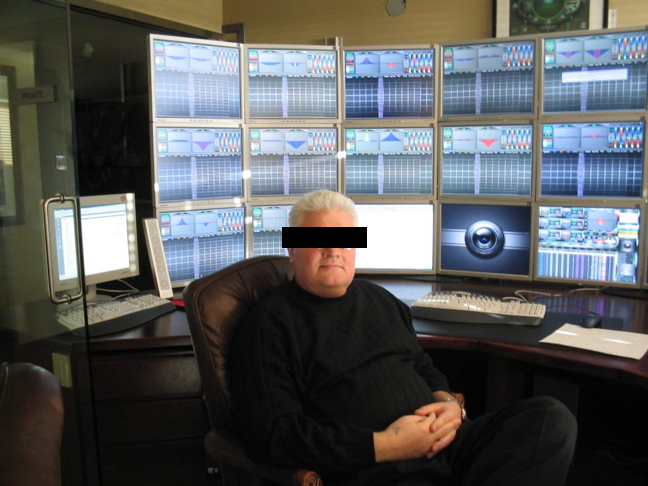
Do You Have 21 Monitors on Your Desk? If So, Why?

This desk has 21 monitors on it. Why?


How can you move forward immediately to Trend Following profits? My books and my Flagship Course and Systems are trusted options by clients in 70+ countries.

Also jump in:

• Trend Following Podcast Guests
• Frequently Asked Questions
• Performance
• Research
• Markets to Trade
• Crisis Times
• Trading Technology
• About Us

Trend Following is for beginners, students and pros in all countries. This is not day trading 5-minute bars, prediction or analyzing fundamentals–it’s Trend Following.

Michael Gibbons: There Is Only the Current Trend and What Is

Feedback in from Michael Gibbons of Gibbons Trading:

As with most things in trading, the least accepted methods are also the most efficacious. One of the least accepted trading methods by both academia and the financial media is the concept of trend following. In it’s most elementary form, trend following is about being long when markets are rising and being short when they are declining. There are no forecasts or shoulds. There is only the current trend and what is.

One of the most effective journalists to popularize trend following is author Michael Covel. He almost single-handedly has raised the consciousness of investors around the world to the effectiveness of trend following. He has brought many of the world’s greatest trend followers to light, and I cannot thank him enough for that.

If trend following was widely accepted, there would be no need for about 95% of the people employed in the securities industry. Needless to say, this fact alone is one of the main causal reasons that trend following is out of the mainstream. Most simply ignore it’s incomparable track record in both rising and declining markets.

Michael Covel has provided the research and the data to a mass audience to show what we trend followers are all about. I cannot express properly how grateful I am for Michael’s efforts. His impeccable journalism is rare in any context, but especially in the field of trading and investments. As a result of his work, the great achievements of trend followers can no longer be ignored nor viewed as just an anomaly.

Michael R Gibbons
Managing Partner
Gibbons’ Trading LLC

Thanks Michael.


How can you move forward immediately to Trend Following profits? My books and my Flagship Course and Systems are trusted options by clients in 70+ countries.

Also jump in:

• Trend Following Podcast Guests
• Frequently Asked Questions
• Performance
• Research
• Markets to Trade
• Crisis Times
• Trading Technology
• About Us

Trend Following is for beginners, students and pros in all countries. This is not day trading 5-minute bars, prediction or analyzing fundamentals–it’s Trend Following.